what are the benefits of smart downlights versus traditional lighting
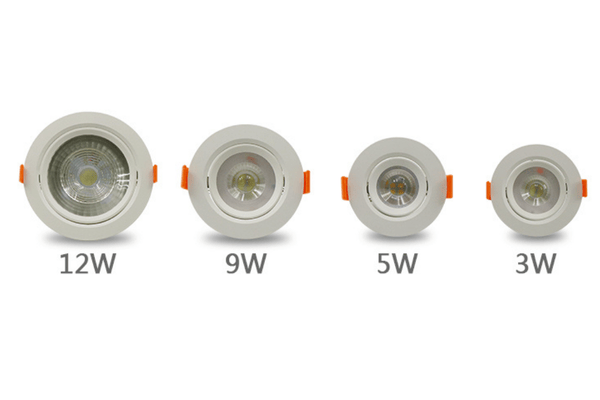
Smart downlights provide superior convenience and control and extensive customization options. Traditional downlights, in contrast, depend entirely on a physical wall switch for operation. This core distinction significantly impacts a home's user experience, ambiance, and long-term energy efficiency. The rapid expansion of the smart lighting market underscores a major shift away from traditional lighting.
Many led light manufacturers now prioritize smart lights. An advanced LED DownLight from a leading LED DownLight Manufacturer replaces older led light fixtures. These smart lights offer dynamic features unavailable in static traditional downlights. The choice between smart lighting and traditional downlights ultimately defines a home's modern capabilities.
Understanding the Core Technology: Smart vs. Traditional Downlights
To appreciate the benefits of modern lighting, one must first understand the fundamental technologies that separate smart and traditional systems. Smart lighting introduces a layer of digital connectivity, while traditional lighting relies on straightforward electrical principles. This technological divide is the source of their distinct capabilities.
What Defines Smart Downlights?
Smart downlights are defined by their ability to communicate wirelessly. This connectivity transforms them from simple fixtures into interactive components of a home's digital ecosystem. The core components of this advanced lighting technology work together to deliver a dynamic user experience.
Wi-Fi and Bluetooth Connectivity
Most smart lights connect directly to a smartphone or home network using built-in Wi-Fi or Bluetooth radios. This connection is the gateway to advanced control. Users can command their lights through a dedicated app, enabling a wide range of functions. Key capabilities include:
Customizable Lighting: Adjusting brightness from 1% to 100% and color temperature from warm (2700K) to cool (6500K).
Voice Control: Integrating with assistants like Alexa and Google for hands-free operation.
Dynamic Effects: Syncing lights with music or selecting from preset scene modes.
The Role of a Central Hub or Bridge
Some smart lighting systems use protocols like Zigbee or Z-Wave instead of Wi-Fi. These protocols create a dedicated mesh network where devices relay signals to one another, extending range and improving reliability.
Note: These systems require a central hub or bridge. The hub acts as the system's brain, translating commands from your Wi-Fi network to the low-energy Zigbee or Z-Wave signal the smart lights use. This prevents congestion on your primary Wi-Fi network.
Integration with Smart Home Ecosystems
The true power of smart lighting emerges when it integrates with broader smart home systems. Smart downlights do not operate in isolation. They can communicate with other devices like thermostats, security cameras, and motion sensors. This integration allows for sophisticated automation, such as turning on lights when a security camera detects motion, creating a more responsive and intelligent home environment.
The Simplicity of Traditional Downlights
The technology behind traditional downlights is fundamentally electrical, not digital. Their design prioritizes a singular function: providing light when a circuit is completed. This simplicity makes them reliable and easy to understand.
Direct Hardwired Connection
Traditional downlights connect directly to a home's electrical wiring. In most residential settings, this involves a standard 120-volt circuit. An electrician connects the fixture's three wires—hot (black), neutral (white), and ground (green or copper)—to the corresponding wires in the ceiling's electrical box. This direct hardwired connection is a time-tested and dependable setup for all traditional downlights.
The Function of the Wall Switch
Control for traditional downlights is exclusively manual. The wall switch is the sole interface, acting as a simple gatekeeper for electricity. Flipping the switch completes the circuit and turns the light on. Flipping it again breaks the circuit, turning it off. There are no remote or automated control capabilities inherent in the system.
Bulb-Dependent Technology (Incandescent, Halogen, LED)
The characteristics of traditional lighting are entirely dependent on the type of bulb installed. The fixture itself is merely a housing. The bulb determines the light's brightness, color temperature, and energy consumption. To change the ambiance, a user must physically swap the bulb. This makes traditional downlights a static system with no dynamic features.
Unmatched Control: The Core of Smart Lighting
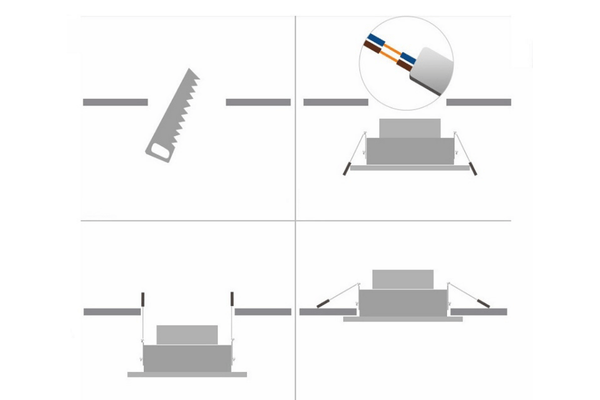
The primary advantage of smart lighting lies in its unparalleled convenience and control. It transforms lighting from a static utility into a dynamic, responsive system that adapts to a user's lifestyle. This level of command fundamentally enhances the user experience, a feat traditional lighting cannot replicate.
The Convenience of Smart Downlights
Smart downlights empower users with a suite of control options that go far beyond a simple on/off switch. These features are designed to integrate seamlessly into daily life, making home management simpler and more intuitive.
Remote Control from Anywhere via App
Users can manage their smart lights from anywhere in the world using a smartphone app. Someone can turn off a forgotten light from the office or switch on entryway lights before arriving home. This remote access provides both peace of mind and practical utility.
Voice Commands with Alexa and Google Assistant
Integration with voice assistants like Amazon Alexa and Google Assistant enables hands-free operation. A simple vocal command can turn lights on, dim them to a specific level, or change their color. This feature is especially useful when hands are full or when moving through a dark room.
Automated Scheduling for Daily Routines
Smart lighting allows for the creation of detailed schedules that automate daily routines. These schedules can be customized for different days of the week, helping manage a household's energy and activities. For example, a family can program their lights for:
Gentle Wake-Up: Lights in a child's room slowly brighten to 50% at 6:15 a.m. to simulate a sunrise.
Time to Leave: Kitchen lights flash at 7:30 a.m. as a visual reminder to head for the bus.
Evening Wind-Down: All house lights dim to 50% at 7:00 p.m. to signal that it is time to relax.
Bedtime Routine: Lights turn red at 7:30 p.m. to indicate bedtime, then switch to a dim reading mode before turning off automatically.
Geofencing for Hands-Free Operation
Geofencing uses a smartphone's location to trigger lighting actions automatically. Lights can turn on as a user pulls into the driveway and turn off when everyone has left the house. This hands-free automation ensures lights are on only when needed without any manual input.
The Limitations of Traditional Lighting
The control mechanisms for traditional lighting are inherently limited by their analog electrical design. This simplicity results in a static and inflexible system.
Manual Operation via Wall Switch
Control for traditional downlights is exclusively manual. The wall switch is the only interface, offering a binary on or off function. There are no native options for remote or automated control.
Dimming Requires Specialized Hardware
Achieving adjustable brightness with traditional downlights requires installing specialized dimmer switches. Older leading-edge dimmers were designed for incandescent bulbs. Modern LED bulbs require newer, LED-compatible trailing-edge dimmers to ensure smooth dimming without flickering or buzzing. This hardware is an additional cost and installation step, not a built-in feature.
Important: Using an incompatible dimmer with LED bulbs can lead to poor performance and may shorten the lifespan of the bulb. Always match the dimmer switch to the bulb technology.
No Remote or Automated Control
Traditional downlights cannot be controlled remotely because they lack the necessary internal components. These fixtures do not have built-in receivers or communication protocols like Wi-Fi or Bluetooth. Without this technology, there is no way for them to receive or interpret signals from a remote, an app, or a smart home hub, isolating them completely from modern automation.
Achieving Superior Energy Efficiency and Cost Savings
Smart lighting offers significant advantages in energy efficiency, leading to lower utility bills and a smaller environmental footprint. The technology inherent in smart lights directly addresses the high energy consumption and waste associated with traditional lighting systems. This financial and environmental benefit is a key driver for homeowners upgrading their lighting.
How Smart Downlights Reduce Bills
Smart downlights reduce costs through a combination of efficient hardware and intelligent software controls. These features work together to minimize energy consumption without sacrificing convenience or performance.
Built-in Energy-Efficient LED Technology
Nearly all smart lights are built with LED (Light Emitting Diode) technology. LEDs are fundamentally more efficient than older bulb types. They can reduce energy consumption by up to 90% compared to incandescent bulbs, delivering the same brightness for a fraction of the power. This core efficiency provides immediate and substantial savings.
Preventing Waste with Schedules and Timers
The scheduling features of smart lighting systems eliminate wasted energy. Users can program lights to turn off automatically when they are not needed, such as during work hours or overnight. This automation ensures that lights are never left on by mistake, directly cutting down on unnecessary electricity use.
Motion Sensing for Automatic Shut-Off
Integrating smart lighting with motion sensors further enhances energy savings. Lights in high-traffic areas like hallways, bathrooms, and garages can be set to turn on when movement is detected and turn off after a period of inactivity. This automated control offers several benefits:
Lowers electricity bills for homeowners.
Reduces a household's carbon footprint.
Prevents energy waste from forgotten lights in unoccupied rooms.
Monitoring Energy Usage Through Apps
Many smart lighting apps include energy monitoring tools. These features provide users with real-time data on their energy consumption. Homeowners can identify which lights use the most power and adjust their habits or schedules accordingly, giving them direct control over their electricity costs.
The Higher Running Costs of Traditional Downlights
The operational costs of traditional downlights are significantly higher over their lifetime. This is due to inefficient technology, shorter lifespans, and a complete lack of automated controls.
Inefficient Incandescent and Halogen Bulbs
Traditional downlights often rely on incandescent or halogen bulbs, which convert most of their energy into heat, not light. This inefficiency results in much higher running costs. A comparison of annual expenses highlights the financial burden of traditional lighting.
Bulb Type | Wattage | Average Yearly Cost* |
|---|---|---|
LED | 10W | $3.11 |
Incandescent | 60W | $18.43 |
*Based on 5 hours of daily use at the national average electricity rate.
Shorter Lifespans Mean More Replacements
The bulbs used in traditional downlights have dramatically shorter lifespans. A halogen bulb may last only 2,000 hours, while a quality LED can operate for 25,000 to 50,000 hours. This means a homeowner must purchase over a dozen replacement bulbs for their traditional downlights in the time a single LED continues to operate, adding significant long-term material and maintenance costs.
The Financial Impact of Forgetting to Turn Lights Off
Traditional downlights have no safeguards against human error. Every time someone forgets to flip the switch, the inefficient bulb continues to draw power, adding directly to the electricity bill. Without timers or remote access, there is no way to mitigate this common and costly problem, making traditional downlights a constant source of potential energy waste.
Total Ambiance Customization for Your Space
Smart lighting gives users complete control over their home's atmosphere, a level of personalization that traditional lighting cannot match. The ability to customize your lighting instantly transforms a room's look and feel, enhancing the overall user experience. This dynamic capability is a defining difference between modern and legacy systems.
Dynamic Customization with Smart Downlights
Smart downlights offer a rich palette of options for tailoring light to any activity or time of day. This flexibility goes far beyond a simple on/off function, turning light into an integral part of home decor and well-being.
Adjusting Color Temperature (Warm to Cool White)
Color temperature is the specific hue of a light source, measured in Kelvin (K). Smart lights provide seamless color adjustment from warm, yellowish tones (2700K) to cool, bluish-white light (6500K). This color adjustment capability allows users to align their lighting with their body's natural circadian rhythm.
Exposure to different color temperatures impacts the body's internal clock. Warmer light in the evening helps the brain wind down for sleep, while cooler light during the day can boost alertness and focus.
Exploring the Full RGB Color Spectrum
Many smart lights feature full RGB (Red, Green, Blue) capabilities, unlocking over 16 million colors. This extensive color adjustment allows for creative expression. Users can paint their walls with light, selecting a deep blue for a movie night or a vibrant magenta for a party. This level of color adjustment is impossible with traditional downlights.
Creating and Saving Custom Lighting Scenes
Users can design and save custom lighting scenes for recurring activities. A "Focus" scene might use bright, cool-white light, while a "Relax" scene could use dim, warm light. This feature lets users create different moods with a single tap or voice command, combining settings for adjustable brightness and color.
Syncing Lights with Music and Movies
Advanced smart lighting systems can synchronize with audio and video. The lights flash and change color in time with music or mimic the on-screen action of a movie. This immersive feature turns a living room into a dynamic entertainment space.
The Static Nature of Traditional Lighting
The ambiance from traditional downlights is fixed and inflexible. The light's characteristics are determined entirely by the bulb installed in the fixture, offering no room for real-time changes.
Fixed Color and Brightness Per Bulb
With traditional downlights, the color and brightness are locked to the specific bulb chosen. A 60-watt incandescent bulb will always produce the same warm, bright light. While these bulbs have a perfect Color Rendering Index (CRI) of 100, this is because they are the standard for measurement, not because they offer flexibility. The user gets one color and one brightness level.
Manually Swapping Bulbs to Change Ambiance
Changing the atmosphere with traditional downlights requires physical effort. A user must manually unscrew one bulb and install another. To switch from a cool task light to a warm ambient light, one must keep different bulb types on hand and climb a ladder to make the change. This makes altering the mood with traditional downlights impractical.
No Dynamic Scene-Setting Capabilities
Traditional downlights operate as isolated fixtures. They lack the connectivity to be grouped or controlled dynamically. The concept of creating and saving a "scene" does not exist. The system is purely functional, providing illumination without any of the sophisticated atmospheric control offered by smart lighting.
The Role of Smart Lighting in Home Automation and Security
Smart lighting extends beyond simple illumination; it becomes an active component in home automation and security. This integration creates a responsive, intelligent environment that enhances the overall user experience. Traditional lighting, by contrast, remains a passive and isolated utility with no ability to interact with other home systems.
Integrating Smart Downlights into a Connected Home
Smart lighting operates as a key player within comprehensive smart home systems. The fixtures communicate with other connected devices, enabling sophisticated automation routines that improve security and convenience. This connectivity transforms a house into a truly smart home.
Linking with Thermostats and Security Cameras
The synergy between smart lights and other devices unlocks powerful capabilities. Homeowners can create routines where devices work together seamlessly.
Security cameras can trigger lights to activate when motion is detected after dark.
Smart thermostats can work with window sensors to adjust the HVAC system.
Hallway motion detectors can turn lights on to a dim, comfortable level for safe navigation at night.
This level of integration makes a home more intuitive and responsive to the occupants' needs.
Creating "Away" Modes to Simulate Occupancy
One of the most effective security features of smart lighting is its ability to simulate occupancy. Security experts recommend using automated lighting to create a convincing illusion that someone is home. A 2017 study in the Journal of Crime Science found that using indoor lights on a timer, among other measures, reduced burglary risk significantly. Smart home systems can program lights to turn on and off in a random sequence, mimicking natural human patterns and deterring potential intruders.
Triggering Lights Based on Security Alerts
Smart lights can serve as a powerful alarm. When a security system is breached, such as a door or window sensor being tripped, the system can trigger all lights to flash or turn on to maximum brightness. This sudden, jarring event can startle an intruder and draw attention to the property.
Traditional Lighting as a Standalone System
The design of traditional lighting inherently isolates it from all other home technology. Traditional downlights function on a simple electrical circuit, which prevents them from participating in any automated or connected tasks.
Complete Isolation from Other Devices
Traditional downlights lack the communication hardware to connect to a network or other devices. They cannot receive signals from a security camera, a motion sensor, or a smartphone app. While a user can replace a standard bulb in a traditional downlight with a hub-less smart bulb from brands like LIFX or Kasa, the traditional downlights themselves remain disconnected. This workaround adds a layer of smart functionality but does not change the fixture's isolated nature.
No Inherent Security Features
Because traditional downlights are isolated, they offer no inherent security benefits. They cannot simulate occupancy, react to security alerts, or be controlled remotely to give the impression that a house is occupied. Their function is purely manual, making them a passive element rather than an active deterrent in a home security strategy.
A Practical Guide to Installation and Setup
The installation process for smart lighting and traditional lighting differs significantly. Smart lights require both electrical and network configuration. Traditional downlights involve a more conventional, purely electrical setup. Understanding these differences helps homeowners plan their projects effectively.
Installing and Configuring Smart Downlights
Setting up smart lights involves a multi-step process. It combines standard electrical work with digital network configuration to unlock the full potential of smart home systems.
Retrofitting vs. New Construction
The installation approach depends heavily on whether the project is a retrofit or new construction. Each scenario presents unique challenges and advantages.
Retrofitting: Installing smart lighting in an existing home can be complex. Running new cables through finished walls and ceilings is often messy and difficult. Some structures, like concrete walls, may make wiring impossible.
New Construction: This scenario offers complete freedom. Electricians can run all necessary cables for fixtures and controls before the walls are closed. This simplifies the process, reduces future costs, and ensures optimal placement.
Connecting to Your Wi-Fi Network or Hub
After electrical installation, the smart lights must connect to the home network. This step can sometimes require troubleshooting. If a connection fails, users should follow a standard diagnostic process:
Ensure the phone is connected to a 2.4GHz Wi-Fi network, as many smart devices do not support 5GHz.
Verify the Wi-Fi password is correct.
Move the smart device closer to the router to ensure a strong signal.
Restart the light, the router, and the smartphone.
Temporarily disable any VPN service on the phone.
Pairing Lights with the Smartphone App
The final step is pairing the lights with their dedicated smartphone app. The app typically guides the user through the process. It involves creating an account, scanning for new devices, and assigning each light to a specific room. Once paired, users can access all control features.
The Straightforward Setup of Traditional Downlights
The installation of traditional downlights is a purely electrical task. It follows a time-tested process that licensed electricians know well. This simplicity offers a predictable and easy installation experience.
Standard Electrical Wiring Process
Installing traditional downlights requires adherence to strict electrical codes to ensure safety. The process is straightforward for a professional but complex for a novice.
Safety First: Electrical codes mandate specific safety measures for traditional downlights. All metallic parts require proper grounding. Fixtures installed near insulation must be IC-rated (Insulation Contact) to prevent fire hazards. Junction boxes must also remain accessible for future maintenance.
An electrician handles the wiring, load calculations, and fixture mounting for all traditional downlights.
No Network or Software Configuration
The setup for traditional downlights concludes once the electrician flips the circuit breaker back on. There is no software to install, no network to connect to, and no app to configure. This lack of digital setup makes the installation of traditional downlights a much simpler, one-step process compared to their smart counterparts.
Cost Analysis: Upfront Investment vs. Lifetime Value
A thorough cost comparison reveals the financial trade-offs between smart and traditional lighting. While smart lights have a higher initial price, they offer significant long-term value through energy savings and longevity. Traditional downlights present a lower barrier to entry but incur higher operational costs over time. This cost comparison is essential for making an informed purchasing decision.
The Financials of Smart Downlights
The financial profile of smart lighting involves a larger upfront expense balanced by substantial long-term returns. Homeowners should view this as an investment in efficiency and convenience.
Higher Initial Cost Per Fixture
Smart lights carry a higher price tag per unit compared to their traditional counterparts. This cost covers the advanced internal components, including Wi-Fi or Bluetooth radios and sophisticated processors. The initial outlay for a whole-home system can be considerable.
Calculating Long-Term Return on Investment
Homeowners can calculate the return on investment (ROI) to understand how quickly the initial expense is recovered. The ROI formula provides a clear financial picture:
ROI (%) = ((Annual Energy Savings - Initial Investment Cost) / Initial Investment Cost) × 100
This calculation demonstrates the financial viability of upgrading to smart lighting, highlighting when the system begins to pay for itself.
Factoring in Energy Savings Over Time
Energy savings are the primary driver of ROI. A homeowner can estimate their annual savings with a simple calculation:
Determine Wattage Savings: Find the difference in wattage between the old bulb and the new LED.
Calculate kWh Saved: Multiply the wattage savings by the annual hours of use, then divide by 1,000.
Find Yearly Savings: Multiply the kWh saved by the local electricity rate. This process quantifies the direct financial benefit of lower energy consumption.
The Financials of Traditional Downlights
The financials of traditional downlights are defined by a low initial purchase price. However, this advantage is often offset by higher lifetime running and maintenance costs.
Lower Upfront Purchase Price
The most appealing aspect of traditional downlights is their low upfront cost. A homeowner can purchase a standard recessed fixture for between $45 and $95. This affordability makes traditional downlights a popular choice for builders and homeowners on a strict budget.
The Cumulative Cost of Replacement Bulbs
The low initial price of traditional downlights is misleading. These systems require frequent bulb replacements, which creates a cumulative expense over the fixture's lifespan. The recurring cost of buying new bulbs adds up significantly over the years.
Higher Lifetime Energy Consumption Costs
Traditional downlights lead to higher lifetime energy consumption costs. Their reliance on inefficient bulbs means they use more electricity to produce the same amount of light. This constant, higher energy consumption makes traditional lighting a more expensive long-term option.
Smart lighting offers a superior user experience through unmatched customization and control. For users prioritizing convenience and integration with a smart home, smart lights are the clear winning investment.
Traditional downlights remain a practical choice for specific needs. The simple installation of traditional downlights appeals to many. The lower upfront cost of traditional downlights suits strict budgets. However, traditional downlights are a static system. These traditional downlights lack the dynamic features of smart lighting.
The final decision balances these key factors:
Budget: The low initial cost of traditional downlights versus the long-term savings of smart lights.
Convenience: The manual operation of traditional downlights versus the advanced control of smart lighting.
FAQ
Do smart downlights use power when off?
Yes, smart lights consume a small amount of standby power to maintain their network connection. This minimal "vampire power" is far less than the energy saved during operation. The overall efficiency of the LED technology ensures significant net savings.
Can smart downlights work with a regular switch?
A standard wall switch can turn a smart light on or off. However, the switch must remain in the "on" position for smart features like app or voice control to function. Rapidly flipping the switch can sometimes trigger a factory reset.
What happens to smart lights if the Wi-Fi goes down?
The lights will continue to operate as standard lights via the wall switch. All smart functionality, including remote control and scheduling, will be unavailable until the network connection is restored. Some hub-based systems may retain limited local automation.
Are smart lights a security risk?
Like any connected device, they carry a potential risk. Users should secure their home network with a strong password and purchase lights from reputable manufacturers. These brands provide firmware updates to patch security vulnerabilities and protect the system.
How long do smart downlights last?
Smart downlights are built with durable LED technology. Most have a rated lifespan of 25,000 to 50,000 hours. This is substantially longer than the 1,000 to 2,000 hours expected from traditional incandescent or halogen bulbs, reducing replacement frequency.
Is a hub necessary for all smart lights?
No, a hub is not always required. Many smart lights connect directly to a home's Wi-Fi network. Other systems use protocols like Zigbee or Z-Wave, which do require a central hub. Product specifications will always indicate the connection method.