Best Commercial LED High Bay Lights for Industrial Spaces
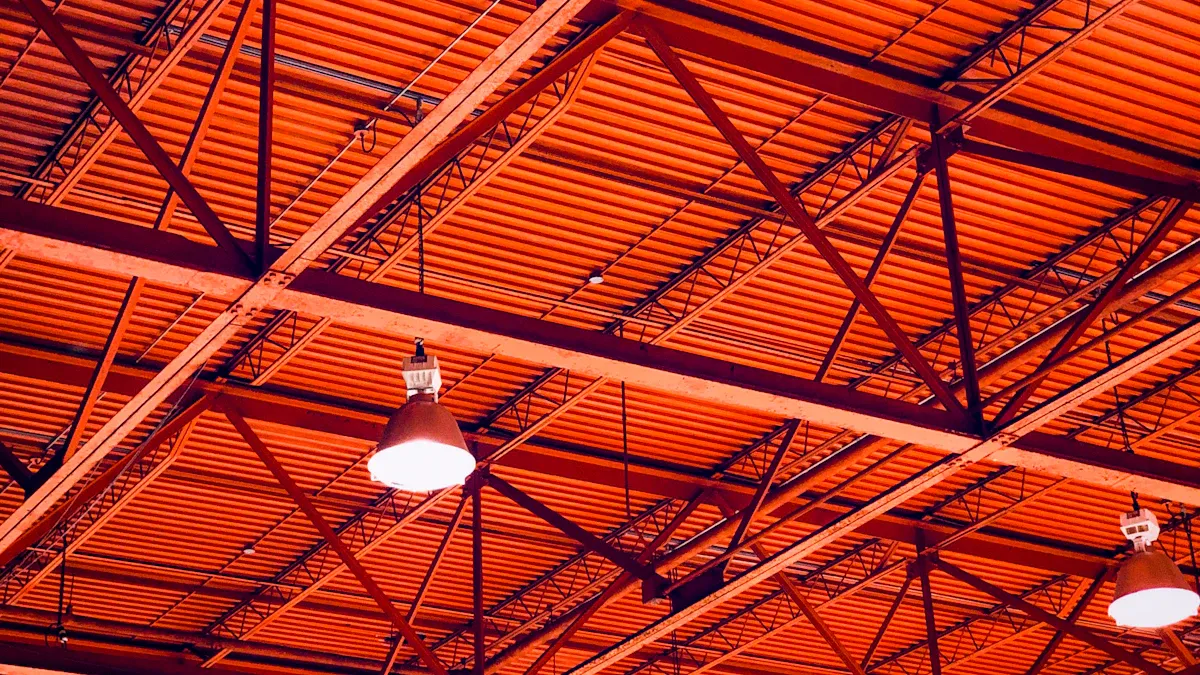
Finding the Best Commercial LED High Bay Lights for an industrial space is not just about picking the brightest one. The right fixture must balance lumen output, energy efficiency, durability, and design for its use. Bad lighting in a warehouse or factory can cause safety risks, lower productivity, and raise energy costs. This guide gives a simple way to evaluate options, from technical specs to comparing UFO and linear designs. It also highlights a top solution from Liyinled, a trusted brand in industrial lighting. By the end, readers will have the knowledge and confidence to choose the perfect high bay light for their facility, ensuring safety, efficiency, and long-term savings.
Key Takeaways
LED high bay lights save energy and last longer than old lights.
Choose UFO lights for open spaces and linear lights for aisles.
Match beam angle and color temperature to your ceiling height.
Use IP65-rated lights for dusty or wet areas.
Calculate your lighting needs with a simple formula.
High Bay Lights: What They Are and Why LED Is Best
High bay lights are made for ceilings that are 20 feet or higher. These spaces need bright light to keep workers safe and get work done. The lights must give off a lot of lumens and point light in specific beam angles. Knowing these basics helps buyers pick the Best Commercial LED High Bay Lights for their building.
What Makes a High Bay Application?
A high bay application is any indoor space with a ceiling height of 20 feet or more. Common examples are warehouses, factories, gyms, and big retail stores. In these places, normal lights cannot reach the floor well. The light must travel far without getting dim.
High bay lights also need to spread light evenly over a large area. A single fixture might light up thousands of square feet. The beam angle (like 60°, 90°, or 120°) decides how the light spreads. A narrow beam works best for very tall ceilings, while a wider beam works for lower ones. Without the right beam angle, shadows and dark spots appear. These create safety risks and slow down workers. So, picking the right fixture type is very important for any industrial space.
Why LED Is the Best Choice for Industrial Lighting
LED technology has replaced old options like metal halide and fluorescent lights. The reasons are simple: LEDs use less energy and last much longer. For example, fluorescent high bay lights give 70 to 100 lumens per watt. LED high bay lights, on the other hand, give 120 to 160 lumens per watt or more. This means LED fixtures use much less electricity to make the same brightness.
LED high bay lights often last 50,000 hours or more, while metal halide lamps last only 10,000 to 20,000 hours.
This long life means fewer replacements and lower maintenance costs. Also, LEDs turn on right away with no warm-up time. They also give off less heat, which keeps the work area cooler and cuts down on air conditioning. Old lights have harmful materials like mercury, but LEDs have none of these. These benefits make LED the clear choice for modern industrial lighting. When looking at the Best Commercial LED High Bay Lights, buyers should choose LED fixtures for their reliability and long-term savings.
Types of Commercial LED High Bay Lights
Two main types of fixtures are used in most industrial lighting. Each type works best for different room layouts and ceiling heights. Knowing the difference helps buyers find the Best Commercial LED High Bay Lights for their building.
UFO High Bay Lights: Compact Power for High Ceilings
UFO high bays got their name from their round, flying-saucer shape. This small design makes them the most popular choice for industrial lighting. The round shape lets LEDs spread light evenly in all directions. These lights work best in open spaces with high ceilings.
One key part of UFO high bay performance is beam angle. The beam angle controls how wide the light spreads from the light. Different models have different beam angles to fit specific needs. Some UFO high bays use a 115-degree beam angle. This narrower option gives more focused light for higher ceilings. Other models use a much wider 240-degree beam angle. This wide spread works well for large open areas that need broad coverage. Picking the right beam angle stops dark spots and wasted light.
UFO high bays also give high light output in a small package. The round shape helps let heat out, keeping the LEDs cool and making them last longer. These lights usually use aluminum bodies for strength. Many models come with an IP65 rating for dust and moisture protection. This makes them reliable in warehouses, factories, and gyms.
Linear High Bay Lights: Optimal for Aisles and Lower Ceilings
Linear high bay lights have a rectangular shape. They work better in spaces with long aisles or lower ceilings. The rectangular shape sends light in a controlled pattern. This cuts down shadows between shelves and racks. Linear lights typically work best for lower ceilings.
The controlled light spread makes linear high bays great for warehouses with narrow aisles. The light follows the shape of the aisle instead of spreading in a wide circle. This puts more light where workers need it. It also cuts glare and wasted energy. Linear lights often come in lengths that fit between ceiling beams or along rows of shelving.
Both UFO and linear designs save a lot of energy compared to old lights. The choice depends on the room layout and ceiling height. Open spaces work best with UFO lights. Aisle-based layouts do better with linear designs.
How to Choose the Best Commercial LED High Bay Lights
Picking the right high bay light means knowing two main things. These are brightness and how light spreads. Brightness comes from lumens and wattage. Light spread depends on color temperature and beam angle. Getting these right makes a safe, productive workspace.
Lumens and Wattage: Balancing Brightness and Energy Use
Lumens show how much light a fixture gives off. Wattage shows how much power it uses. The goal is to get enough light for the space while using as little power as possible. This balance is called efficiency. Efficiency is shown as lumens per watt. Higher efficiency means lower power bills over time.
To find the right number of lumens, start with the room size. Then check the needed foot-candle level. The Illuminating Engineering Society (IES) gives suggested foot-candle levels for different warehouse uses. The table below shows these suggestions:
Warehouse Application | Recommended Foot-Candles (fc) |
|---|---|
Inactive | 5–10 |
Active Rough Bulky | 10–20 |
Active Medium | 20 |
Active Fine | 20–50 |
A foot-candle equals one lumen per square foot. For example, a 10,000 square foot warehouse with an active medium use needs 20 foot-candles, which equals 200,000 total lumens. The number of fixtures needed depends on the lumens per fixture. Choosing a fixture with higher lumens per watt reduces the number of fixtures required, but may have higher wattage per fixture. Buyers must weigh these trade-offs carefully.
Efficiency matters most for long-term savings. A fixture with 150 lumens per watt costs less to run than one with 120 lumens per watt at the same brightness. Over 50,000 hours of use, the power cost difference can be large. Buyers should compare lumens per watt when looking at the Best Commercial LED High Bay Lights.
Color Temperature and Beam Angle: Tailoring Light Distribution
Color temperature changes how light looks and how workers feel. It is measured in Kelvin (K). Lower numbers like 3000K give warm, yellow light. Higher numbers like 5000K give cool, blue light. For industrial spaces, 4000K to 5000K works best.
Cool white lights (4000K–5000K) are ideal for industrial workspaces, as they improve concentration and visibility.
Light with a color temperature between 4000K and 5000K, like daylight, improves how well workers see. This helps them do tasks more accurately and comfortably. A 5000K light makes colors look more natural. It reduces eye strain during long shifts. Workers stay more alert and focused. For spaces with fine detail work, 5000K is the best choice.
Beam angle controls how light spreads from the fixture. Common beam angles for UFO high bay lights include 115° and 240°. A 115° beam provides more focused light for higher ceilings, while a 240° beam provides wide coverage for open areas. The right angle ensures even light spread across the whole workspace, reducing shadows and improving safety.
Choosing the wrong beam angle causes problems. A narrow beam on a low ceiling leaves shadowed corners. A wide beam on a high ceiling sends light sideways instead of down. The right angle ensures even light spread across the whole workspace. This reduces shadows and improves safety for workers moving through the facility.
Durability and Smart Features for Industrial Use
Industrial places are hard on lights. Dust, wetness, changes in temperature, and shaking can ruin lights that are not made well. People looking for the Best Commercial LED High Bay Lights must think about more than just brightness. They need lights that can handle tough places and save power with smart features.
IP Ratings and Thermal Management for Harsh Environments
The IP rating tells people how well a light keeps out dust and water. The first number shows protection from solid things like dust. The second number shows protection from liquids. An IP65 rating means the light is completely sealed against dust and can handle water spray from any angle. This kind of protection is very important in factories, cold storage rooms, and other tough places.
Cold storage rooms have a special problem. These places are cold and also very damp. Water droplets form on lights when warm air touches cold surfaces. Then water gets into lights that are not sealed and breaks the parts inside. Some companies make high bay lights just for these conditions. The SIMPLITZ Highbay Cold Storage series has an IP65 rating for this reason. The Voltedge HB XF250W also has an IP65 sealed housing and works well down to -20°C. The SIGNIFY ECOLINK LED Highbay uses the same IP65 waterproof rating to handle dust and water. These examples show why IP65 is now the standard for industrial high bay lights.
An IP65 rating gives full protection from dust and water spray, so it is the minimum standard for industrial high bay lights.
Controlling heat works together with IP ratings. LEDs make heat when they are on. Too much heat makes them work worse and last less time. An aluminum body solves this problem. Aluminum moves heat away from the LED chips well. The metal body pulls heat out and lets it go into the air. This cooling method has no moving parts and needs no upkeep. It keeps the LED parts at a safe temperature, so the light stays bright and lasts 50,000 hours or more.
Motion Sensors and Dimming for Maximum Energy Savings
Smart controls make good lights into great buys. Motion sensors notice when people are there and change the light level. In places where people come and go, like storage aisles or loading docks, lights can dim low when no one is there. Then they turn bright right away when workers come in. This method saves energy compared to lights that stay at full power all the time.
Dimming features give another way to save. Daylight harvesting uses sensors to measure sunlight coming in through windows or skylights. Then the system dims the lights to keep the same brightness level. On sunny days, lights run at lower power. On cloudy days or at night, they go to full brightness. This keeps the light level steady while using less electricity.
Putting motion sensors and dimming together makes a strong energy-saving system. Lights react to both people and the amount of natural light. They never waste power lighting empty rooms or fighting against sunlight. These smart features also make less heat, which cuts cooling costs in hot months. For places with hundreds of lights, the total savings add up a lot. Smart controls usually pay for themselves in a few years from lower power bills.
Practical Buying Guide for High Bay Lights
Step-by-Step: Calculating Your Lighting Needs
A simple formula helps buyers figure out how many lights they need. The formula is: (Square footage x Foot-candles required) / Lumens per fixture = Number of fixtures needed. This math gives a clear starting point for any lighting project.
Think about a 5,000 square foot warehouse that needs 30 foot-candles for detailed work. That requires 150,000 total lumens. The number of fixtures needed depends on the lumens per fixture. This formula gives a starting point.
Buyers should know that this formula gives a starting number. Real-world conditions may need changes. Ceiling height affects how light spreads. Dark walls soak up light instead of bouncing it back. Dust on fixtures lowers output over time. Adding a safety margin helps cover these factors. This extra buffer keeps the space bright even as fixtures get older.
The formula also helps compare different fixture choices. Buyers must weigh the trade-offs between fewer fixtures with higher wattage and more fixtures with lower wattage.
Comparing Costs: Upfront Price vs. Total Cost of Ownership
The purchase price of LED fixtures often looks higher than older options. Metal halide fixtures cost less at the register. But the real cost shows up over time. Total cost of ownership includes energy use, upkeep, and replacement costs. These ongoing costs far exceed the first purchase price.
Energy savings alone make a strong case for LED. LED fixtures use much less electricity to make the same light output. A facility running hundreds of fixtures sees big savings on monthly power bills. These savings add up year after year.
Upkeep costs also favor LED technology. The table below shows the difference:
Lighting Type | Annual Maintenance Cost per Fixture |
|---|---|
Metal Halide / HID | $45 – $60 |
LED UFO High Bay | $10 – $25 |
Metal halide lamps burn out faster and need frequent swaps. Each swap needs labor time and new bulbs. LED fixtures last 50,000 hours or more, so swaps happen rarely. The lower upkeep cost adds up quickly across a large facility.
Payback periods for LED retrofits usually fall within a reasonable range:
Most facilities get payback within 2 to 4 years.
Utility rebates and tax breaks can shorten this to 1 to 3 years.
Some proven cases show payback in under 2 years, such as a 110,000 sq. ft. manufacturer at 1.6 years.
A factory in Ohio swapped out 400 metal halide fixtures and hit payback in just 14 months. These examples show that the Best Commercial LED High Bay Lights pay for themselves through savings.
Buyers should figure out the 5-year total cost of ownership before deciding. Add the purchase price to five years of energy costs and five years of upkeep costs. Compare this total against the same math for older lighting. The LED option almost always wins this comparison. The long life, low upkeep, and energy savings make LED the smarter money choice for any industrial space.
Spotlight on Liyinled LED UFO High Bay Light
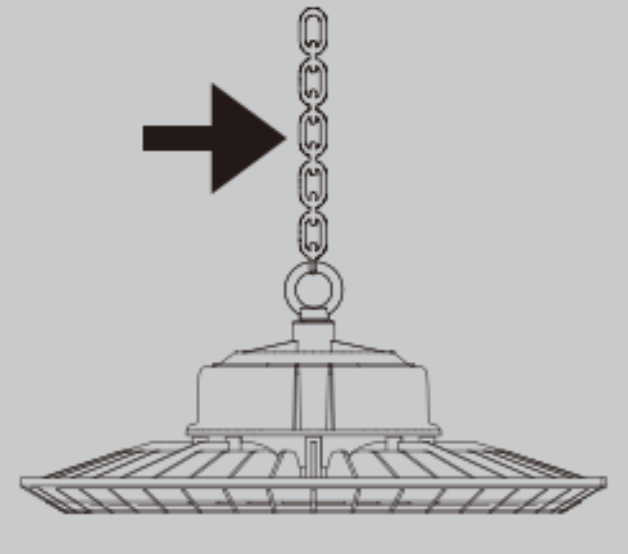
Liyinled is a maker that focuses on quality and new ideas in industrial lighting. Their main product is the LED UFO High Bay Light. It is built to handle the tough needs of today's buildings. The factory uses modern production lines and careful testing steps. This makes sure every light meets high standards before it ships out.
Key Features and Models
The LED UFO High Bay Light has a strong aluminum body. This body pulls heat away from the LED chips well. Good heat control makes the diodes last longer. It also keeps the light steady over time. The IP-rated shell keeps dust and wetness out of the inner parts. This makes the light dependable in warehouses, gyms, and big stores.
Liyinled sells three different models for different setups. The most powerful model is designed for very high ceilings. Another model offers balanced performance for medium to high ceilings. The third model is suited for lower ceilings. Each model works with different beam angles, allowing buyers to adjust the light spread to fit their space.
The product page for each model lists full details. These include exact lumen output, wattage, and size. This open info helps managers compare options side by side. The APL-UFO-06, APL-UFO-05, and APL-UFO-02 pages show light data and setup guides.
Why Liyinled is a Trusted Choice for Industrial Spaces
Liyinled lights have no harmful materials like mercury or lead. They give off less heat than old lights. This keeps work areas cooler and lowers cooling costs. The long life of 50,000 hours or more means fewer swaps. It also means less downtime for repair crews.
The mix of toughness, efficiency, and smart design makes these lights a strong pick among the Best Commercial LED High Bay Lights. Managers who pick Liyinled get a partner that cares about steady performance and long-term value. The company backs its products with quick customer help and full warranties. This gives buyers confidence in their choice.
The Best Commercial LED High Bay Lights are not a one-size-fits-all purchase. Each facility needs a strategic choice based on ceiling height, light distribution, and energy goals. Buyers must understand high bay applications, compare UFO versus linear designs, evaluate lumens, wattage, IP ratings, and smart controls, and follow a structured buying guide.
Liyinled's LED UFO High Bay Light delivers long-term reliability, energy savings, and strong return on investment. Its aluminum housing, IP-rated construction, and high lumen output make it a dependable choice for demanding industrial spaces.
Assess your facility using this framework. Contact Liyinled today for a quote and discover how their products can transform your industrial lighting.
FAQ
How long do LED high bay lights typically last?
LED high bay fixtures operate for 50,000 hours or more. That equals many years of use at eight hours per day. Traditional metal halide lamps last only 10,000 to 20,000 hours. Fewer replacements mean lower maintenance costs and less downtime for facilities.
What energy savings can a facility expect from LED high bays?
LED fixtures deliver 120 to 160 lumens per watt, while fluorescent options produce only 70 to 100 lumens per watt. This efficiency translates to substantial electricity savings. Adding motion sensors can reduce energy consumption in areas with intermittent occupancy.
How does a buyer select the right beam angle?
Ceiling height determines the correct beam angle. A narrower beam angle, such as 115°, works well for high ceilings, while a wider beam angle, such as 240°, provides broad coverage for lower ceilings.
Why does an IP65 rating matter for industrial lighting?
An IP65 rating means the fixture seals completely against dust and withstands water spray from any direction. Factories, cold storage rooms, and loading docks expose lights to moisture and debris. This protection prevents internal damage and keeps the light performing reliably in harsh conditions.
Can Liyinled UFO high bays mount in different ways?
Yes. The LED UFO High Bay Light offers versatile mounting options. The LED UFO High Bay Light is available in multiple models to accommodate different ceiling heights and lighting requirements. This flexibility allows facilities to install the same product line across varied spaces.