Best LED downlight brands to consider in 2026
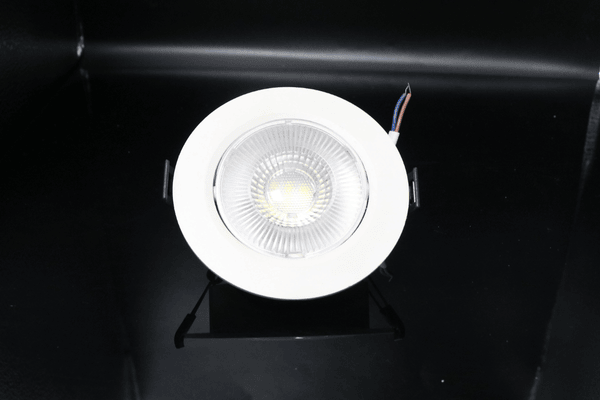
The landscape of led light manufacturers is highly competitive. Our analysis identifies the best LED downlight brands for 2026. Each LED DownLight Manufacturer excels in a specific area, offering specialized led light fixtures. This evaluation pinpoints the premier LED DownLight for various applications.
Our top selections balance innovation, reliability, and value across distinct categories:
Overall Performance: Philips/Signify
Smart Homes: Panasonic
High Efficiency: Cree Lighting
Architectural Design: DMF Lighting
Commercial Value: XHLUX Lighting
Innovation: Osram/LEDVANCE
Advanced Controls: Zumtobel Group
The Top 7 LED Downlight Brands of 2026: A Detailed Review
Choosing the right lighting involves more than just brightness. It requires a deep dive into brand strengths, technological advantages, and ideal applications. This detailed review explores the top contenders among the Best LED downlight brands, giving you the insights needed to make an informed decision for any project.
Philips/Signify: Best for Global Projects & Reliability
Philips, operating under its lighting entity Signify, stands as a titan in the lighting industry. The brand has built an unparalleled reputation for quality, innovation, and global reach. Its products are a benchmark for performance and reliability.
Key Strengths
Philips/Signify demonstrates consistent excellence across several key areas. The brand's commitment to strict quality control results in products that perform reliably for years. Key advantages include:
Instant-on LED technology
Smooth, dimmable brightness control
Broad smart home compatibility
Consistent and accurate color quality
High lumen-per-watt efficiency
Widespread Energy Star certification
Ideal Use Case
The brand is the go-to choice for large-scale commercial, industrial, and public infrastructure projects. Specifiers for airports, hospitals, and corporate campuses choose Philips/Signify. They need lighting solutions that guarantee long-term performance, minimize maintenance, and integrate seamlessly with complex building management systems.
Featured Product Line
The Philips portfolio, including its professional-grade CoreLine and MasterConnect series, showcases its leadership. Performance data consistently places Philips ahead of competitors in critical metrics. The following table highlights the brand's superior reliability and efficiency.
Brand | Reliability | Maintenance Needs | Lifespan (Hours) | Power (Watts) | CRI | Dimmable | Yearly Energy Use (5h/day) |
|---|---|---|---|---|---|---|---|
Philips | High | Low | 25,000+ | 8 | 90+ | Yes | 14.6 kWh |
Osram | Medium | Medium | 15,000-20,000 | 10 | 80 | Some | 18.25 kWh |
GE | Medium | Medium | 15,000-20,000 | 9-11 | 80 | Some | 16.4-20.1 kWh |
Cree | High | Low | 20,000+ | 9-12 | 80 | Yes | 16.4-21.9 kWh |
This data visually confirms Philips' advantage in lifespan and energy conservation, making it a sound long-term investment.
Cree Lighting: Best for High-Efficiency Applications
Cree Lighting has carved out a niche as a leader in LED efficiency. The company consistently pushes the boundaries of what is possible with semiconductor technology. This focus translates into downlights that produce brilliant light while consuming minimal energy.
Key Strengths
Cree Lighting's primary strength is its exceptional lumens-per-watt (lm/W) performance. The brand leverages proprietary LED chip technology to maximize light output from every watt of electricity. This engineering focus results in significant energy savings and a lower total cost of ownership for users.
Ideal Use Case
These downlights are ideal for applications where electricity costs are a major operational expense. Think of retail stores, warehouses, and office buildings operating 24/7. Any project with ambitious sustainability goals or a need to meet strict energy codes will benefit from Cree Lighting's high-efficiency solutions.
Featured Product Line
The Cree Lighting® PRO Series is a prime example of the brand's efficiency-first approach. These products deliver exceptional light quality and output without driving up energy bills. A look at the specifications for a typical product reveals this advantage.
Product | Light Output (Lumens) | Power Consumption (W) |
|---|---|---|
Cree Lighting® PRO Series 4-inch Downlight | 790 | 10.5 |
This product achieves an impressive efficiency of over 75 lumens per watt, turning more energy into usable light and less into waste heat.
Panasonic: Best for Residential & Smart Home Integration
Panasonic is a household name that brings its expertise in consumer electronics and user-centric design to the lighting world. The brand excels at creating downlights that enhance the comfort and functionality of modern homes.
Key Strengths
Panasonic's greatest strength is its focus on human-centric lighting. 💡 The company engineers its products to improve visual comfort and reduce eye strain, a critical factor in residential settings. This commitment is clear in its product descriptions.
Panasonic downlights deliver glare-free, smooth light distribution with no visible hotspots. They also emit photo-biologically safe light, maximizing eye comfort and reducing strain.
This dedication to well-being, combined with seamless integration into smart home ecosystems, makes Panasonic a top choice for homeowners.
Ideal Use Case
Panasonic downlights are perfectly suited for residential new builds and renovations. They are ideal for living rooms, bedrooms, kitchens, and home offices where people spend significant time. Homeowners looking to create a comfortable, automated, and visually pleasing environment will find Panasonic's offerings highly appealing.
Featured Product Line
Product lines like the Panasonic Lumor Slim Downlight and its LED Panel Lights embody the brand's philosophy. These fixtures are designed not just to illuminate a space but to improve its quality of life. They offer the perfect blend of aesthetic design, advanced smart features, and a core focus on the visual comfort of the occupants.
Osram/LEDVANCE: Best for Innovation & Longevity
Osram, along with its LEDVANCE arm, is a powerhouse of German engineering and a global leader in optical solutions. The brand's foundation rests on relentless innovation, a fact supported by its portfolio of over 15,000 granted and applied patents. This deep commitment to research and development translates into downlights known for their exceptional performance and durability.
Key Strengths
The primary advantage of Osram/LEDVANCE lies in its pioneering technology. The company consistently pushes the boundaries of LED science. For example, its IR:6 technology incorporates several key advancements:
Stack Technology: Places two P/N junctions in series, nearly doubling the optical output power.
Thin-Film Chip Technology: Reduces internal absorption and improves light extraction for greater efficiency.
Material Improvements: A new internal reflector and optimized surface roughening enhance light decoupling.
This dedication to core technology results in products that not only perform well upon installation but maintain that performance over an extended lifespan. Other innovations like LED on foil technology and the Open System Protocol further solidify their position as an industry trailblazer.
Ideal Use Case
Osram/LEDVANCE products are an excellent fit for projects where long-term reliability and cutting-edge performance are non-negotiable. Consider their use in industrial settings, healthcare facilities, and research laboratories. These environments demand consistent light quality and minimal maintenance interruptions, making the brand's focus on longevity a significant asset. Specifiers prioritizing a low total cost of ownership over a product's entire lifecycle will find immense value here.
Featured Product Line
The company's portfolio extends beyond simple luminaires into comprehensive lighting solutions. Product lines often feature advanced capabilities that reflect their innovative spirit.
Note: Osram/LEDVANCE often develops solutions that integrate into larger systems, focusing on areas like Human Centric Lighting (HCL), smart energy solutions, and advanced control systems. This makes them a strategic partner for complex, forward-thinking projects.
Their downlights embody this philosophy, delivering not just light but also data, control, and efficiency as part of a cohesive building ecosystem.
Zumtobel Group: Best for Advanced Smart Control
The Zumtobel Group, an Austrian company, has earned its reputation by mastering the art and science of lighting control. While many brands offer dimming, Zumtobel provides a level of granular control that transforms lighting from a utility into a dynamic architectural element. The brand excels at creating sophisticated, networked lighting ecosystems.
Key Strengths
Zumtobel's core strength is its expertise in advanced control protocols. The company specializes in creating intelligent lighting networks. A key component of this strategy is its widespread use of luminaires equipped with DALI drivers. DALI, or Digital Addressable Lighting Interface, allows every single light fixture on a network to be controlled individually. This capability enables:
Precise scene-setting for different moods or tasks.
Daylight harvesting to reduce energy consumption.
Detailed performance monitoring and maintenance alerts.
Seamless integration with building management systems (BMS).
This focus on intelligent infrastructure gives facility managers and designers unparalleled power over the luminous environment.
Ideal Use Case
Zumtobel downlights are the premier choice for architecturally significant projects that demand sophisticated lighting choreography. Museums, art galleries, high-end retail stores, and modern corporate headquarters are perfect applications. In these spaces, the ability to precisely adjust light levels, color temperature, and beam focus on a fixture-by-fixture basis is essential for highlighting products, artwork, or architectural features.
Featured Product Line
Product families like the PANOS downlight series are designed from the ground up for system integration. These are not standalone fixtures but components of a larger, intelligent whole. The design prioritizes optical precision and seamless control, ensuring that the technology serves the architectural vision without compromise. Choosing Zumtobel is a decision to invest in a complete lighting management platform.
DMF Lighting: Best for Architectural & Recessed Lighting
DMF Lighting has carved out a powerful niche by focusing exclusively on modular, high-performance recessed lighting. The brand is a favorite among architects and designers because it provides elegant solutions to complex installation challenges. Its products are celebrated for their clean aesthetics, on-site flexibility, and exceptional quality, making them a top contender among the Best LED downlight brands for design-focused projects.
Key Strengths
DMF's standout strength is its commitment to modularity. The company engineered its systems to be completely interchangeable, giving specifiers and installers unprecedented flexibility. This approach has earned them numerous accolades, including the 2024 Architizer A+ Product Award for their X Series and multiple Architectural SSL Product Innovation Awards for the OneFrame System and DRD5S downlight.
This award-winning modularity is built on several key features:
Universal Housings: A single housing type accepts a wide range of light modules.
Field-Changeable Optics: Beam angles can be swapped on-site without tools, allowing for late-stage design adjustments.
Interchangeable Trims: A vast selection of trims (round, square, flangeless, wall wash) can be changed easily to match any design aesthetic.
Integrated Drivers: Drivers are part of the light module and accessible from below the ceiling, simplifying installation and future servicing.
This system allows housings to be shipped and installed early, with the final light modules and trims chosen and installed later in the construction process.
Ideal Use Case
DMF Lighting is the go-to brand for custom residential projects, boutique hospitality, and high-end commercial interiors. Architects and lighting designers choose DMF when they need to ensure visual consistency across a space while accommodating different lighting requirements (e.g., general, task, and accent lighting). The system's flexibility de-risks the specification process and guarantees a flawless, integrated look.
Featured Product Line
The DCD Series and the revolutionary OneFrame System are prime examples of DMF's philosophy in action. These products are not just lights; they are a toolkit for creating sophisticated, recessed lighting designs. The table below illustrates the core modular concept.
Component | Feature | Benefit |
|---|---|---|
Housing | Universal | Simplifies installation and inventory. |
Light Module | Interchangeable | Allows for late-stage decisions on output and function. |
Optics | Tool-less & Field-Changeable | Provides ultimate on-site design flexibility. |
Trim | Interchangeable | Ensures perfect aesthetic integration and consistency. |
This modular approach empowers designers to achieve their exact vision without compromise.
XHLUX Lighting: Best for Custom Commercial Projects & Value
XHLUX Lighting emerges as a strategic player for businesses that require tailored lighting solutions without an exorbitant price tag. The company operates on a direct-to-business model, specializing in Original Equipment Manufacturer (OEM) and Original Design Manufacturer (ODM) services. This approach provides exceptional value and flexibility, making it a formidable choice for commercial projects where budget and customization are equally important. Its ability to deliver quality at scale solidifies its position among the Best LED downlight brands for value-conscious specifiers.
Key Strengths
XHLUX builds its reputation on a foundation of manufacturing agility and client-focused service. The company translates complex project requirements into reliable, cost-effective products. Its primary advantages empower businesses to achieve their specific lighting goals.
OEM/ODM Expertise: The company excels at creating custom luminaires based on client specifications or developing new designs from the ground up.
Direct-from-Factory Value: By eliminating intermediary distributors, XHLUX offers highly competitive pricing, maximizing project ROI.
Rigorous Quality Control: It maintains strict oversight of the entire production process, from raw material sourcing to final assembly.
Comprehensive Certifications: Products consistently meet international standards like UL, ETL, and Energy Star, ensuring compliance and safety for commercial use.
Supply Chain Reliability: The company provides stable, long-term production and supply for large-scale rollouts and ongoing projects.
Ideal Use Case
XHLUX is the ideal partner for large-volume commercial developments, national retail chains, hotel franchises, and property management firms. These clients often require thousands of units with specific performance characteristics, branding, or design elements. The brand thrives in scenarios where off-the-shelf products do not meet the precise technical or budgetary needs of a project.
For a business planning to outfit 100+ locations, XHLUX can develop a unique downlight that reinforces brand identity, meets stringent energy codes, and delivers a significantly lower total cost of ownership compared to mainstream competitors.
This capability makes it an invaluable asset for procurement managers and project developers focused on achieving both quality and financial efficiency.
Featured Product Line
Instead of a single flagship series, XHLUX's strength lies in its tiered and customizable product architecture. The company offers a framework that clients can adapt to fit their exact needs, balancing performance and cost. This flexible approach is a key reason it stands out in the field of the Best LED downlight brands. The table below shows a typical product structure clients can choose from.
Product Tier | Key Features | Target Application |
|---|---|---|
Value Series | CRI 80+, Standard Dimming, 3-Year Warranty | Budget-conscious projects, back-of-house areas, corridors. |
Performance Series | CRI 90+, 0-10V Dimming, 5-Year Warranty, High Efficacy | Retail spaces, offices, classrooms, healthcare common areas. |
Premium Series | CRI 95+, R9 >50, Tunable White, DALI Control, 7-Year Warranty | High-end retail, galleries, hospitality, architectural spaces. |
This modular product strategy gives clients direct control over the specifications that matter most, ensuring they only pay for the features they need.
How We Chose the Best LED Downlight Brands
Selecting the top brands in a crowded market requires a systematic and objective approach. This review is not based on opinion. It is the result of a rigorous evaluation process. Each brand was measured against a core set of criteria to ensure our recommendations are comprehensive, data-driven, and reliable.
Our Evaluation Criteria
Our analysis focused on four critical pillars. These pillars separate market leaders from the rest of the pack. They provide a balanced view of what makes a downlight brand truly exceptional.
Performance and Reliability
A downlight's long-term performance is its most important attribute. Our evaluation scrutinized technical specifications and third-party data to verify manufacturer claims. Key metrics included:
Lifespan and Warranty: The analysis prioritized products with long rated lives, such as an L70 rating at 50,000 hours. This data is supported by independent LM-80 and TM-21 test reports, which predict lumen depreciation. A strong warranty of 5-10 years signals a manufacturer's confidence.
Driver Quality and Power Factor: The internal driver's quality is crucial. The assessment looked for robust surge protection (2kV–4kV) and a high Power Factor (PF) of 0.9 or greater. A high PF indicates superior energy efficiency.
Heat Dissipation: Effective thermal management directly impacts longevity. The review examined the design of heat sinks, favoring die-cast aluminum for its excellent thermal conductivity.
Certifications and Compliance: Adherence to key safety and performance standards is non-negotiable. The evaluation confirmed certifications like UL for safety and DLC or Energy Star for efficiency.
Innovation and Technology
The lighting industry evolves rapidly. A brand's commitment to innovation is a strong indicator of its future relevance. This review considered a company's investment in research and development. It looked for advancements in areas like tunable white technology, smart controls, and modular designs.
Brand Reputation and Warranty
A strong reputation is earned over years of consistent quality and customer service. The analysis weighed a brand's history, market presence, and feedback from professional installers. The warranty terms also provide insight. A comprehensive warranty covering components and performance is a powerful testament to product quality.
Value for Money
True value extends beyond the initial purchase price. Our assessment calculated the total cost of ownership. This includes energy consumption over the product's lifespan, potential maintenance costs, and installation efficiency. A brand offering excellent value delivers long-term savings and performance.
Why Trust Our Recommendations
These recommendations are built on a foundation of expertise and impartiality. The goal is to empower you with clear, actionable information.
Industry Expertise
This guide is informed by years of experience in the lighting specification and distribution industry. The team understands the technical nuances that define a high-quality lighting product. This expertise allows for a deeper analysis than a simple feature comparison.
Unbiased Research
The selection process is completely independent. No brand provided compensation for its inclusion in this review. The analysis relies on publicly available data sheets, independent lab reports, and direct product evaluations to ensure every recommendation is objective and trustworthy.
Key Factors to Evaluate in an LED Downlight (Buyer's Guide)
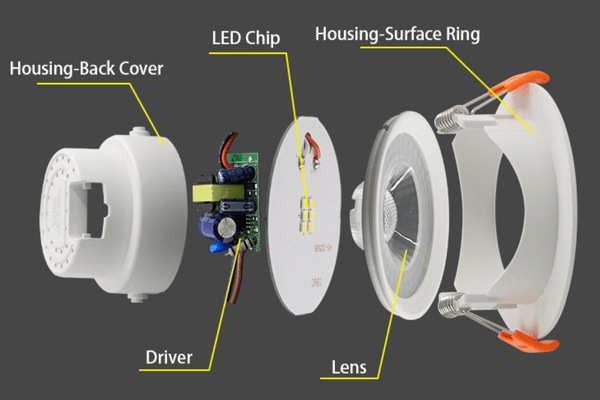
Choosing the right LED downlight involves looking beyond the brand name and understanding the technical specifications that define its quality and performance. This guide breaks down the essential factors to consider, ensuring you select a product that perfectly fits your needs.
Understanding Light Quality
The quality of light profoundly impacts a space's atmosphere and functionality. These four metrics are crucial for evaluating it.
Lumen Output (Brightness)
Lumens (lm) measure the total amount of visible light a source emits. Higher lumen values mean brighter light. Instead of focusing on watts, which measure energy consumption, buyers should use lumens to determine if a downlight is bright enough for their application.
Color Rendering Index (CRI)
The Color Rendering Index (CRI) indicates how accurately a light source reveals the true colors of objects compared to natural sunlight. A CRI of 80 is standard, but for applications where color accuracy is vital, such as kitchens, retail spaces, or art galleries, a CRI of 90 or higher is recommended.
Color Temperature (CCT)
Correlated Color Temperature (CCT) describes the color appearance of the light, measured in Kelvin (K). Different CCTs create distinct moods and are suited for specific environments. Our bodies' internal clocks, or circadian rhythms, respond to these light colors, affecting alertness and relaxation.
CCT Range | Mood/Atmosphere | Functionality/Application |
|---|---|---|
Warm White (2700K – 3000K) | Cozy, inviting, relaxing | Residential settings, restaurants, bedrooms |
Neutral White (3500K – 4000K) | Natural, balanced, focused | Offices, kitchens, retail spaces |
Cool White (5000K – 6500K) | Crisp, energizing, alert | Task-oriented settings, workshops, hospitals |
R9 Value for Color Accuracy
While CRI measures a wide spectrum, the R9 value specifically rates how well a light source renders deep red tones. This is critical for applications where vibrant colors are important, such as in food displays, retail, and healthcare, as it makes skin tones and natural materials look richer.
Performance and Functionality
A great downlight does more than just turn on and off. Its performance features determine its versatility and long-term value.
Dimming & Smart Controls
Dimming capabilities allow you to adjust brightness for mood and energy savings. The control protocol determines how this is achieved.
Feature | 0-10V | DALI | Wireless (e.g., Zigbee) |
|---|---|---|---|
Control Type | Analog | Digital | Digital (Wireless) |
Addressing | Group control only | Individual fixture control | Individual fixture control |
Data Feedback | No | Yes (faults, usage) | Yes (faults, usage) |
Best For | Simple, small-scale dimming | Large, complex commercial systems | Smart homes and retrofits |
Energy Efficiency (Lumens per Watt)
Energy efficiency, measured in lumens per watt (lm/W), shows how much light a fixture produces for each watt of energy it consumes. In 2026, a good commercial downlight should offer 130 lm/W or more, while high-efficacy models can exceed 180 lm/W, delivering significant energy savings.
Beam Angle and Distribution
The beam angle determines the spread of light from the fixture. Narrow beams (15-25 degrees) are great for accent lighting, while wider beams (40-60 degrees) are better for general illumination.
Flicker-Free Operation
Low-quality drivers can cause invisible flickering, which may lead to eye strain and headaches. Quality downlights provide flicker-free operation, ensuring visual comfort, especially in workspaces and homes.
Durability and Safety
A downlight's construction and certifications are key indicators of its longevity and safety.
IP Rating (For Wet Areas)
The Ingress Protection (IP) rating indicates a fixture's resistance to solids and liquids. For bathrooms, showers, and outdoor soffits, look for downlights with a rating of IP44 or higher to ensure they are protected against water splashes.
Lifespan and Thermal Management
An LED's lifespan is directly tied to how well it manages heat. Fixtures with robust, die-cast aluminum heat sinks dissipate heat effectively, preventing premature failure and ensuring they reach their rated life of 50,000 hours or more.
Warranty & Certifications (UL, Energy Star)
A manufacturer's warranty reflects its confidence in the product. While a 5-year warranty is standard, premium brands often offer 10-year warranties.
Note: Warranties are conditional. They typically require proper installation and do not cover damage from misuse or power surges. The warranty period starts from the date of purchase, not installation.
Always look for certifications like UL or ETL, which confirm the product has passed rigorous safety tests. The Energy Star label indicates superior energy efficiency verified by a third party.
How to Choose the Right LED Downlight Brand for Your Project
Selecting the ideal brand depends entirely on the project's specific demands. A solution for a home is vastly different from one for a commercial skyscraper. This guide matches top brands to common project types.
For Home Renovations and New Builds
Home lighting must balance comfort, aesthetics, and modern functionality. The goal is to create inviting and practical living spaces.
Top Recommendations
Panasonic: Its focus on human-centric design and smart home features makes it a premier choice for residential settings.
DMF Lighting: The brand's modular systems offer unparalleled flexibility for custom builds, ensuring a clean, integrated look.
Key Considerations
Homeowners should first define their lighting goals. This includes deciding between ambient, task, or accent lighting for each room. Key technical factors follow:
Color Temperature: Warmer lights (2700K–3000K) create a cozy atmosphere ideal for living rooms and bedrooms.
Smart Technology: Integrating smart lights and motion sensors enhances convenience and optimizes energy use.
Fixture Placement: Proper planning prevents unwanted glare and shadows, ensuring each room is lit effectively for its function.
For New Commercial Buildings
Commercial projects operate under strict regulations. They demand reliability, efficiency, and compliance on a massive scale.
Top Recommendations
Philips/Signify: A top choice for large-scale projects needing guaranteed long-term performance and system integration.
Cree Lighting: Its high-efficiency products help projects meet stringent energy codes and reduce operational costs.
XHLUX Lighting: An excellent partner for large-volume projects requiring custom solutions and maximum value.
Key Considerations
Specifiers must navigate a complex web of regulations. Compliance is non-negotiable.
Project plans must adhere to energy codes like ASHRAE 90.1 and safety standards from OSHA. These codes often mandate the use of advanced controls like occupancy sensors and daylight harvesting systems to minimize energy waste. Emergency lighting is another critical component, requiring independent power for at least 90 minutes.
For Retail and Showrooms
In retail, lighting is a powerful sales tool. It must attract customers, accurately represent products, and create a memorable brand experience.
Top Recommendations
Zumtobel Group: Its advanced control systems allow for dynamic lighting scenes that highlight products and guide customer attention.
DMF Lighting: Provides a sophisticated, seamless aesthetic that keeps the focus on the merchandise, not the fixtures.
Key Considerations
The single most important factor in retail lighting is color accuracy.
High CRI is Essential: A Color Rendering Index (CRI) of 95 or higher is crucial. This ensures that product colors appear vibrant and true-to-life, which is vital for customer satisfaction.
Create an Atmosphere: Beyond function, lighting sets the mood. A positive lighting experience encourages customers to browse longer, which can directly increase sales.
Accentuate Products: Using spotlights with excellent CRI can highlight the specific textures and features of merchandise, making it more appealing.
For Industrial and High-Ceiling Applications
Industrial environments like warehouses, manufacturing plants, and distribution centers present unique lighting challenges. These spaces require powerful, durable, and highly efficient illumination to ensure safety and maintain productivity across vast, open areas.
Top Recommendations
Cree Lighting: The brand's leadership in high-efficiency LEDs makes it a prime choice for reducing the significant energy costs associated with lighting large industrial facilities. Its high-bay fixtures deliver exceptional lumens per watt.
Philips/Signify: Known for its robust and reliable product lines, Philips/Signify offers industrial-grade fixtures designed for long life and minimal maintenance in harsh conditions.
Osram/LEDVANCE: This brand's focus on innovation and longevity results in durable fixtures that withstand the rigors of industrial use while providing consistent, high-quality light.
Key Considerations
Adequate brightness is crucial for safety and productivity in industrial spaces with high ceilings. Specifiers must prioritize fixtures that deliver high lumen output to properly illuminate work areas from significant heights. The primary considerations revolve around meeting strict standards and selecting the right hardware.
Safety regulations are non-negotiable in industrial settings. The Occupational Safety and Health Administration (OSHA) mandates specific minimum light levels to prevent accidents.
Lighting plans must meet these legal requirements. OSHA requires at least 5 foot-candles in general work areas and 10 foot-candles in aisles and passageways. However, task-specific needs often demand much higher illumination.
General Tasks: Warehouse activities typically require 30 to 50 lumens per square foot.
Detailed Work: Packing or sorting stations need brighter light, around 75-100 lumens per square foot.
Specialized Zones: Maintenance workshops performing intricate repairs may require up to 150 lumens per square foot.
For ceilings 20 feet or higher, High Bay LED lights are the industry standard. UFO High Bay lights provide powerful, widespread illumination for large open areas. Linear High Bay fixtures are better suited for long, narrow aisles. Beyond brightness, durability is essential. Fixtures should have a high IP rating for dust and moisture resistance and superior thermal management to ensure a long operational life. Integrating motion sensors and control systems can also generate substantial energy savings in these 24/7 environments.
Future Trends in LED Downlighting for 2026 and Beyond
The evolution of LED downlighting extends far beyond simple illumination. The industry is moving toward smarter, healthier, and more sustainable solutions. These future trends will redefine how people interact with light in their daily environments.
Human-Centric Lighting
Human-Centric Lighting (HCL) is an approach that considers the visual and non-visual effects of light. It aims to produce positive outcomes for human health and well-being.
Tunable White Technology
Tunable white technology is a cornerstone of HCL. It allows users to adjust the light's color temperature from warm to cool. This feature enables the creation of dynamic lighting scenes. A space can have energizing, cool light during the day and transition to warm, relaxing light in the evening.
Circadian Rhythm Support
HCL actively supports the body's natural circadian rhythms by mimicking the daily cycle of sunlight. A systematic review of 60 studies confirmed that integrative lighting strategies significantly impact alertness, mood, and sleep quality in office workers. Poor lighting can negatively affect work efficiency and cause visual fatigue. By providing biologically effective light, HCL enhances productivity and contributes to overall health.
Sustainability and Circular Economy
The lighting industry is embracing sustainability. Manufacturers are shifting focus toward a circular economy model that minimizes waste and extends product life.
Modular and Repairable Designs
Future downlights will increasingly feature modular designs. Instead of replacing an entire fixture, users will be able to swap out individual components like the driver or LED module. This approach reduces electronic waste and lowers the long-term cost of ownership.
Recycled Materials
Manufacturers are incorporating more sustainable materials into their products. The use of recycled aluminum for heat sinks and recycled plastics for trim components is becoming more common. This practice reduces the environmental impact of production.
Smarter, More Integrated Controls
Control systems are becoming more intelligent and user-friendly. The goal is to create seamless, automated lighting experiences that adapt to user needs.
AI-Powered Automation
Artificial intelligence will enable lighting systems to learn user preferences and occupancy patterns. An AI-powered system can automatically adjust brightness and color temperature based on the time of day, the amount of natural light available, or the specific task being performed in a room.
Matter Protocol Adoption
The Matter protocol is set to revolutionize smart lighting. It acts as a unifying standard, ensuring devices from different brands work together reliably.
Matter serves as a seal of approval for consumers. It removes the guesswork from purchasing and allows them to build a secure, seamless connected home with products from a wide range of trusted brands.
This interoperability simplifies setup and makes the smart home more accessible. For manufacturers, Matter accelerates product development by providing a reliable IoT compatibility standard, allowing them to focus on innovation.
Selecting from the Best LED downlight brands depends entirely on project requirements. No single brand fits every application. A buyer's final choice should align with specific needs.
Key Takeaways for Your Project:
Residential: Panasonic offers an ideal mix of user comfort, smart features, and aesthetic design.
Large Commercial: Philips/Signify and Zumtobel Group lead in reliability and advanced controls for major installations.
Value Commercial: XHLUX Lighting provides excellent value for custom projects on a budget.
Always prioritize technical specifications. A CRI above 90, strong energy efficiency, and a comprehensive warranty ensure long-term satisfaction with any of the Best LED downlight brands.
FAQ
What is the most important factor when choosing a downlight?
The ideal choice balances multiple factors. A buyer should prioritize high light quality (CRI 90+), strong energy efficiency (lumens per watt), and a comprehensive warranty from a reputable brand. No single factor outweighs the others; they work together to define a quality product.
How many downlights does a room need?
The number depends on ceiling height and room function. A general guideline helps with planning.
For an 8-foot ceiling, space downlights approximately 4 feet apart. For a 10-foot ceiling, space them about 5 feet apart. This provides even, overlapping light coverage without creating dark spots.
Can LED downlights be used in a bathroom?
Yes, with the correct rating. Fixtures in wet locations require specific protection.
Damp-rated lights are suitable for general bathroom areas.
Wet-rated lights (IP44 or higher) are necessary for installation directly inside a shower.
What is the difference between CRI and R9?
💡 Both measure color accuracy. CRI measures how well a light renders a wide range of colors. The R9 value specifically measures how accurately a light source renders deep red tones. High R9 is crucial for making skin tones and natural materials look vibrant.
Why do some LED downlights flicker?
Flickering usually indicates a low-quality internal driver or an incompatible dimmer switch. Reputable brands use high-quality components to ensure smooth, flicker-free power delivery. This provides visual comfort and prevents eye strain, making it a key performance metric for quality lighting.
Is a longer warranty always better?
A long warranty signals a manufacturer's confidence. However, the terms are critical. ✅ A buyer should review what the warranty covers (e.g., parts, labor, lumen depreciation). A 5-year warranty from a top brand is often more valuable than a 10-year warranty from an unknown company.
See Also
Leading LED Recessed Lighting Brands: A 2026 Comparative Analysis
Flicker-Free LED Downlights: The Best Options Reviewed for 2026
Discovering The Premier LED Ceiling Lights For Modern Homes 2026
Exploring Top LED Ceiling Can Light Brands And Their Models
Emerging Trends In LED Ceiling Lighting Design For The Year 2026