What Are CCT Selectable Commercial LED Downlights and Their Benefits
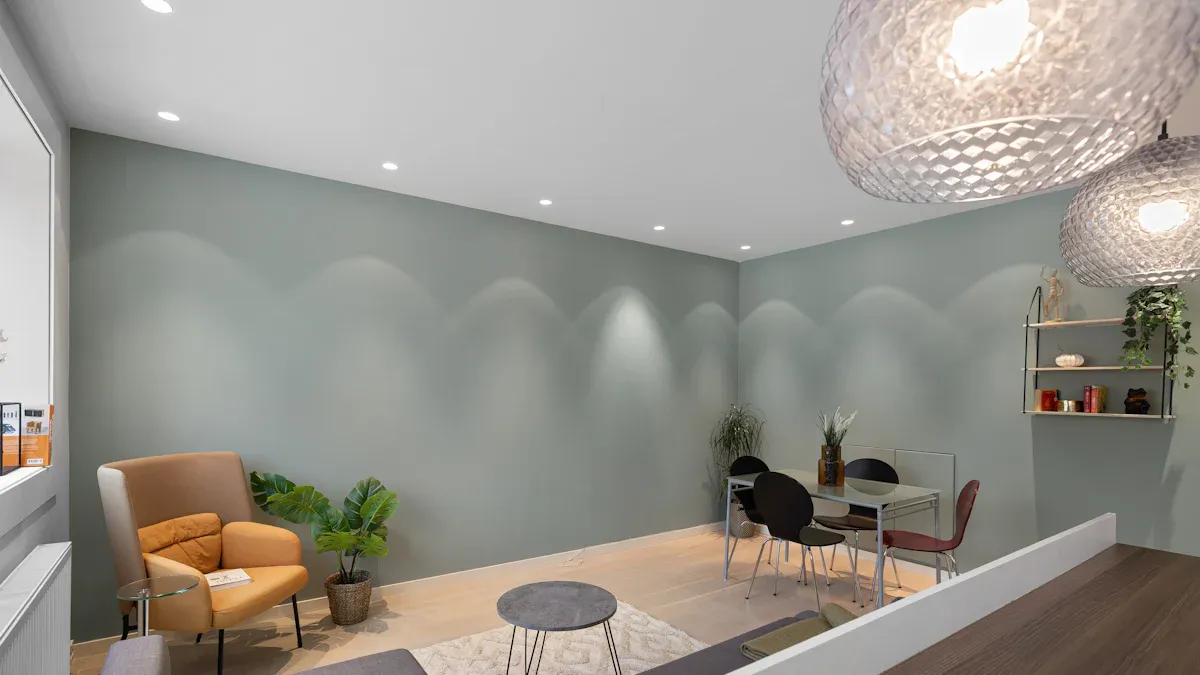
A shop owner stands in an empty showroom, flipping between warm and cool light switches. Neither setting works well for every corner of the space. Many commercial property managers face this common problem and need flexible lighting solutions.
CCT selectable commercial LED downlights solve this problem. These fixtures have a built-in switch that lets users adjust color temperature, choosing from presets like 2700K, 4000K, or 5000K. One fixture adapts to different moods, tasks, or times of day.
This technology offers flexibility, cuts costs, and improves ambiance. Modern businesses gain from this smart choice. The next sections explain how these LED Downlights work, their benefits, and answers to common questions, helping readers choose the right option for their projects.
Key Takeaways
CCT selectable downlights let you change light color with a switch, so one fixture works for many spaces.
Using one fixture type can cut inventory by up to 67%, saving money and making projects simpler.
LED technology cuts energy costs and lasts more than 50,000 hours, so you spend less on upkeep and replacements.
Changing the color temperature can boost your mood and get more done. Warm light helps you relax, while cool light helps you stay focused.
High color rendering and flicker-free light make colors look true and keep eyes comfortable, improving how customers feel.
What Are CCT Selectable LED Downlights?
Defining Correlated Color Temperature (CCT)
Correlated color temperature, or CCT, tells us how warm or cool a light looks. The scale uses Kelvin (K) units. Low Kelvin values give off warm, yellowish light like a candle. High values make cool, bluish light like daytime. The table below shows common Kelvin ranges and what they look like.
Kelvin (K) | Appearance |
|---|---|
1,500K – 2,000K | Candlelight, warm flame |
2,200K – 2,700K | Warm white |
2,700K – 3,000K | Soft white |
3,000K – 3,500K | Warm neutral |
3,500K – 4,000K | Neutral white |
4,000K – 5,000K | Cool white |
5,000K – 6,500K | Daylight |
6,500K+ | Cool blue-white |
Correlated color temperature (CCT, Tcp) means the "temperature of a Planckian radiator whose perceived color looks most like a given stimulus at the same brightness and under set viewing conditions." The SI unit is the Kelvin (K).
CCT matters a lot in commercial spaces. Different places need different light qualities. A cozy restaurant works well with 2700K lighting, which gives a warm, welcoming glow. A lab may use 6000K lighting, which gives a cooler, bluish-white light for exact work. Standard names help buyers talk about what they need. Warm white is 2500K to 3300K. Cool white is 3500K to 4500K. Daylight covers 5000K to 6500K.
How the Selectable Switch Works
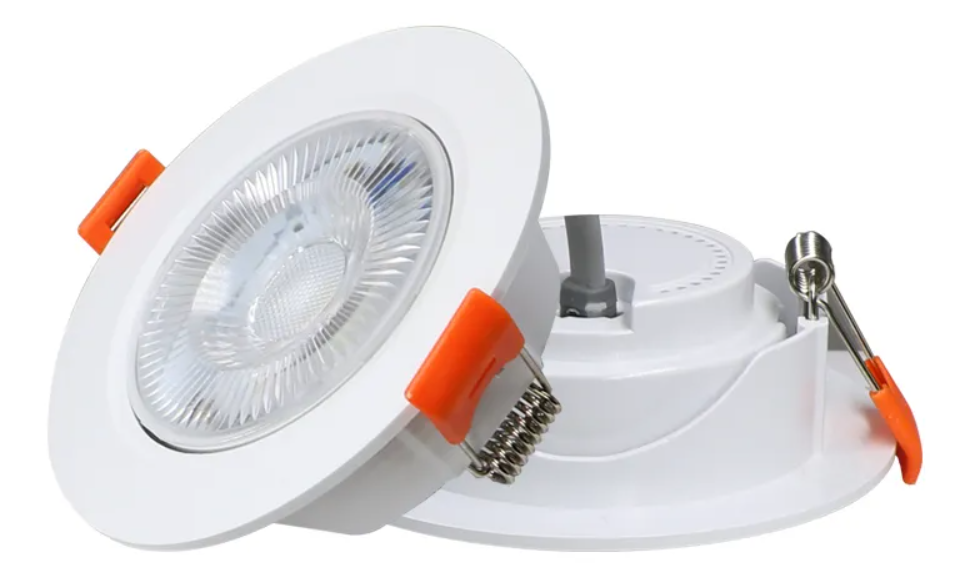
CCT selectable LED downlights have a physical dip switch or slide switch. This switch sits on the fixture body or the driver. Users move the switch to pick between preset color temperatures. Common options include 2700K, 4000K, and 5000K. The switch connects to the driver circuitry, which changes the output.
The device works simply. Each switch position matches a specific Kelvin value. Flipping the switch changes the light output right away. No rewiring or extra tools are needed. This design is different from tunable white technology. Tunable white allows steady change across a wide range. Selectable CCT uses fixed presets only. Users pick from the options instead of setting an exact value.
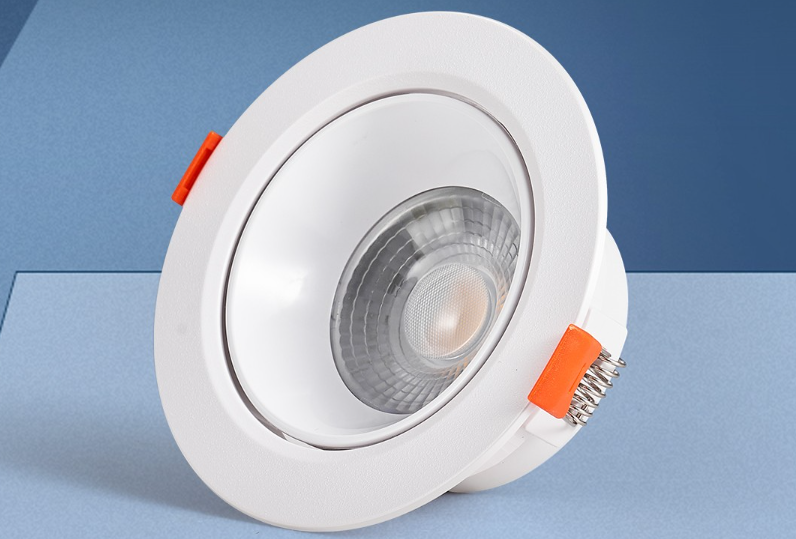
Liyin's APL-PB-2510B model shows this feature well. This LED downlight has a tri-color adjustable function with a dip switch. Users choose power settings from 5W to 22W. They also pick among three color temperatures. This flexibility works for living rooms, bedrooms, and offices. The fixture adapts to different tasks and moods without needing many products.
The selectable switch offers useful benefits. Contractors install one fixture type across a project. They adjust each unit on-site to match the space. Distributors keep fewer SKUs, so they stock less inventory. Designers can try different lighting schemes. The switch mechanism stays reliable for years. Good construction means steady performance.
This technology is a big step forward for commercial lighting. One fixture replaces several special products. The flexibility makes planning and installation easier. Businesses get the right feel without compromise. The next section looks at the key benefits of these flexible LED downlights in more detail.
Key Benefits of CCT Selectable Downlights
Flexibility for Various Commercial Settings
One fixture can do many jobs when it lets you pick the light color. A store might want warm light for fancy clothes and cooler light for electronics. One CCT selectable downlight can handle both. The user just flips the switch to get the right feel. This flexibility means you do not need many different light types for one project.
Different businesses need different light colors. The table below shows good color choices for common places.
Environment | Recommended CCT | Key Context |
|---|---|---|
Retail | 3000K | Luxury décor, furniture, fashion, warm material displays |
Retail | 4000K | Technical products, electronics, pharmacies, functional displays |
Office (commercial) | 4000K | Clean, focused professional workplace |
Office (home) | 3000K or 4000K | 3000K for residential feel; 4000K for extended technical work |
Hospitality | 3000K | Hotel rooms, restaurants, cafés, lounges, reception spaces |
Liyin's APL-PB-2510B model shows this flexibility well. This LED downlight has a tri-color switch. Users can set power from 5W to 22W and pick from three light colors. The fixture works in living rooms, bedrooms, and offices without needing extra products. Contractors can install the same unit everywhere and adjust each one on-site for the room.
Changing CCT on-site also saves time and makes work easier for lighting contractors. Several practical benefits come from this:
Adjusting CCT with a dip switch means no need to stock many SKUs, cutting inventory and storage needs.
One fixture covers many light color needs, so no return trips to swap lamps after tenant feedback, saving time and travel costs.
Features like quick-fit connectors, loop-in/loop-out terminals, slimline profiles, and built-in drivers speed up installation and reduce parts handling.
This method helps with void refurbishments, reactive repairs, and planned maintenance where different areas need different CCTs, letting one product serve many uses.
Reducing Inventory and Simplifying Projects
Distributors and contractors often struggle with managing many different light fixtures. CCT selectable downlights fix this by combining many products into one flexible unit. A distributor can stock one SKU instead of three or four separate fixtures. This cuts storage costs and makes ordering easier.
The numbers show the benefit clearly. In a mixed-use project needing three different light colors—offices at 4000K, lobbies at 3500K, loading docks at 5000K—fixed-CCT fixtures would need three separate SKUs. Using CCT-selectable fixtures cuts that to one SKU, a 67% drop in inventory SKUs.
In a mixed-use project requiring three different color temperatures (offices at 4000K, lobbies at 3500K, loading docks at 5000K), fixed-CCT fixtures would need three separate SKUs. Using CCT-selectable fixtures reduces that to a single SKU, achieving a 67% reduction in inventory SKUs.
This simplicity goes beyond inventory. Designers can pick one fixture type for a whole building. Contractors carry fewer parts to job sites. Project managers avoid delays from ordering the wrong light color. The choice becomes easy when one product covers all needs.
Liyin, a manufacturer with strict testing and a focus on reliability, builds these downlights with strong die-cast aluminum. The APL-PB-2510B model shows this engineering approach. Its tough design ensures long-lasting performance in many uses. Businesses feel confident their lighting investment will last.
The money savings grow over time. Fewer SKUs mean less cash tied up in inventory. Faster installation lowers labor costs. The flexibility of CCT selectable LED Downlights makes them a smart pick for any commercial project wanting efficiency and adaptability.
Economic and Energy Efficiency Advantages
Lowering Operational Costs with LED Technology
CCT selectable LED downlights use much less energy than older lights. This means lower power bills for commercial property owners. LED systems give 110 to 150 lumens per watt. Fluorescent tubes only give 50 to 100 lumens per watt. This gap means LED fixtures make the same light with about half the energy. This matters a lot in big spaces with many lights on for long hours.
The savings over five years are big.
Scenario | Halogen Annual Energy Cost | LED Annual Energy Cost | 5-Year Energy Savings |
|---|---|---|---|
Commercial retail (50 x 60W halogens, 12 hrs/day) | $1,708 | $256 | $7,260 |
Industrial warehouse (100 x 400W halogens, 16 hrs/day) | $30,368 | $11,388 | $94,900 |
A retail store saves $7,260 over five years. A warehouse saves nearly $95,000 in that time. Many Liyin models, like the APL-PB-2510B, can dim. Dimming lets users lower brightness during slow times. This adds more savings on top of the efficient LED tech.
Long-Term Savings and Durability
The money benefits go beyond power bills. Halogen bulbs last only 2,000 to 4,000 hours. In commercial use, that means swapping them every six to twelve months. LED fixtures run for 50,000 hours or more, lasting over eleven years in normal use. This long life removes repeat replacement costs and labor fees.
Liyin's LED Downlights use strong die-cast aluminum. This material spreads heat well, keeping parts from getting too hot. Good heat control extends the fixture's life and keeps light steady over time. The factory tests each unit to meet strict durability standards.
Maintenance savings add up fast. A building with 200 halogen fixtures replaced twice a year at $8 per bulb plus $15 labor costs $9,200 yearly. With LEDs, this cost goes away. Over five years, avoided maintenance totals $46,000. Lower energy use, longer life, and less upkeep make CCT selectable LED downlights a smart money choice for any commercial project.
Enhancing Lighting Quality and User Experience
Improving Mood and Productivity with the Right Light
Color temperature changes how people feel and work. Warm light near 2700K makes a space feel cozy and calm. Cool light near 5000K looks like daylight and helps people stay alert. Studies back these effects. Chellappa and colleagues found that 2700K light led to faster reaction times during focus tasks. Another study by Huang showed that 4300K gave the best scores for focused attention. Higher CCT values also lower melatonin more, which keeps workers awake and involved.
CCT (K) | Observed Effect | Relevant Study |
|---|---|---|
2700 | Faster reaction time in sustained attention tasks | Chellappa et al. |
4300 | Highest focused and stable attention score | Huang et al. |
6500 | Greater melatonin suppression and faster reaction time | Chellappa et al. |
CCT selectable downlights let businesses match light to the job. An office might use 4000K in the morning for deep work. The same fixture switches to 3000K for afternoon meetings or group talks. A University of Greenwich study found that blue-enriched light boosted work output and cut tiredness. Workers said they felt happier and more awake. This flexibility improves employee well-being without needing extra fixtures.
Ensuring Visual Comfort and Accurate Color Rendering
Flicker-free lighting lowers eye strain and headaches. Liyin's LED Downlights use stable drivers that stop visible flicker. This stability matters in commercial spaces where people spend hours under artificial light. Even light spread also removes harsh shadows and bright spots.
Color rendering index (CRI) shows how well a light shows true colors. Standard commercial fixtures often score around 80 CRI. Retailers selling clothing, furniture, or cosmetics need 90+ CRI for accurate product display. A 2022 study showed that visual misdiagnoses in dermatology rose by 18% under low CRI lighting. High CRI prevents costly mistakes in medical and retail settings.
Research from the Cornell University School of Hotel Administration found that diners in softly lit environments stayed 16-20% longer than those in brightly lit settings. The result? An increase in total spend per table.
Warm, dim lighting encourages longer visits and bigger purchases in restaurants. CCT selectable fixtures allow hospitality venues to adjust ambiance throughout the day. Lunch service might use brighter 4000K light for efficiency. Evening service switches to 2700K for an intimate atmosphere. This adaptability creates the right experience for every moment.
CCT selectable LED downlights deliver flexibility, energy savings, and superior lighting quality in one fixture. Businesses adjust color temperature on-site, reducing inventory needs and simplifying projects. These fixtures lower operational costs through efficient LED technology and durable construction, offering long-term financial benefits.
Liyin's range, including the APL-PB-2510B, demonstrates reliable engineering with die-cast aluminum bodies and tested performance. These LED Downlights adapt to retail, office, and hospitality settings, making them a future-proof investment. Property owners should explore Liyin's product lineup and consult their team for tailored solutions. Choosing the right lighting enhances business success and customer satisfaction, creating spaces that work harder and perform better.
FAQ
What Spaces Benefit Most from CCT Selectable Downlights?
Retail stores, offices, hotels, and restaurants gain the most flexibility. One fixture adapts to different zones within a single building. A boutique uses warm light for fitting rooms and cooler light for product displays. Property managers adjust settings without replacing hardware.
How Does the Dip Switch Installation Work?
Installers mount the fixture like any standard downlight. They locate the small dip switch on the driver housing. Flipping the switch changes the color temperature instantly. No rewiring or special tools are needed. The process takes less than a minute per unit.
Can These Fixtures Work with Dimmer Switches?
Many CCT selectable models, including Liyin's APL-PB-2510B, offer dimming capability. Users control brightness separately from color temperature. This dual control allows precise ambiance adjustments throughout the day. Businesses save additional energy by lowering light levels during slow periods.
What Should Buyers Check Before Purchasing?
Buyers should verify the fixture's power options, CCT presets, and dimming compatibility. They should confirm the housing material suits their environment. Die-cast aluminum construction, like Liyin uses, ensures better heat dissipation and longer lifespan. Checking warranty terms and testing standards also protects the investment.
How Do These LED Downlights Compare to Fixed CCT Fixtures?
CCT selectable LED Downlights cost slightly more upfront than fixed versions. However, they eliminate the need for multiple SKUs and reduce installation errors. The flexibility prevents costly rework when lighting needs change. Over time, the savings outweigh the initial price difference.