a complete guide to LED track lighting systems
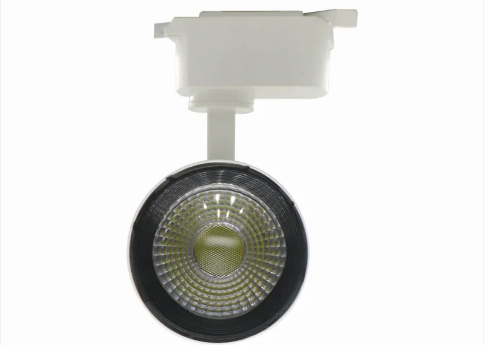
LED track lighting systems offer a versatile lighting solution. They feature adjustable led light fixtures, called heads, mounted on a linear track that supplies power. The global LED Track Light market was valued at approximately USD 3.2 billion in 2023 and is projected to reach USD 6.8 billion by 2032, a testament to its growing adoption. This popularity, recognized by every leading LED Track Light Manufacturer and many led light manufacturers, stems from key benefits.
Primary Benefits of LED Track Lighting:
Unparalleled flexibility in directing light.
Significant energy efficiency.
A clean, modern aesthetic.
This adaptability makes track lighting a superior choice. The led technology provides excellent accent, task, and ambient lighting. Its use is ideal for residential, commercial, and retail environments, making modern track lighting systems an effective lighting upgrade.
What Are LED Track Lighting Systems? A Component Breakdown
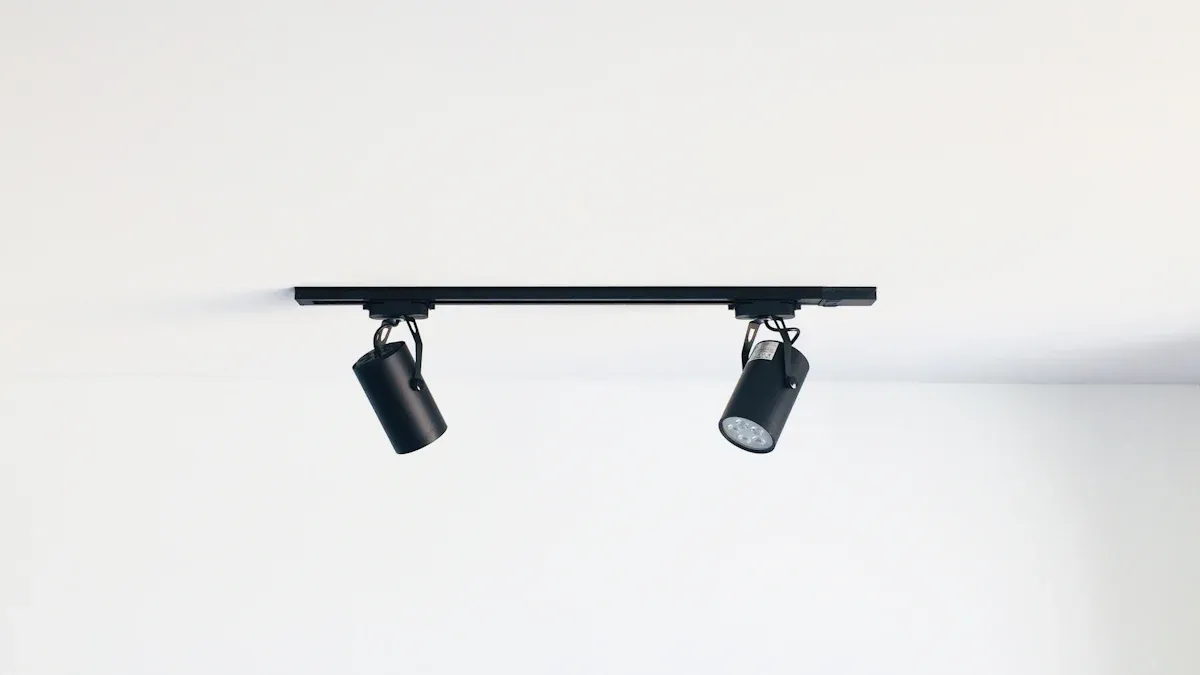
Understanding the components of a track lighting system is the first step toward a successful installation. Every system consists of three core parts: the track rail, the light fixtures, and the power components. Each part plays a crucial role in the system's function and flexibility.
The Foundation: Track Rails and System Types
The track rail is the backbone of your lighting setup. It physically holds the track lights and delivers electricity to them. Most standard track lighting systems fall into one of three main categories, each with unique specifications.
H-Type (Halo) Systems
H-type tracks are a popular three-wire system. They feature two parallel copper strips inside the track channel. The fixtures for these tracks have two metal tabs that make contact.
J-Type (Juno) Systems
J-type tracks use a two-wire configuration. A single metal contact strip runs along one edge of the rail. The corresponding fixture has a single side-mounted contact.
L-Type (Lightolier) Systems
L-type tracks are another three-wire system. These tracks contain three separate metal contact strips. The fixtures designed for L-type track light systems have three points of contact.
The Critical Rule of Compatibility
The most important rule for track lighting is that components are not cross-compatible. An H-type fixture will not work on a J-type track, and vice versa. Always purchase fixtures that match your specific track type.
System Identification at a Glance The primary difference between H, J, and L track light systems is the placement and number of electrical contacts.
Track Type
Physical Dimensions (Metal Strips)
Electrical Contacts (Fixture)
H-Track
Two parallel copper strips
Two metal tabs
J-Track
A single metal contact strip
A single side-mounted contact
L-Track
Three separate metal contact strips
Three points of contact
The Fixtures: Choosing Your Track Heads
The fixtures, or heads, are the stars of your LED track lighting. These are the adjustable lights you attach to the track. Modern LED fixtures come in various styles, including popular brushed metal and black finishes, to match any decor.
Spotlights for Precision
Spotlights produce a narrow, focused beam of light, typically between 10 and 30 degrees. These track lights are perfect for accent lighting, drawing attention to artwork or architectural details.
Floodlights for Broad Illumination
Floodlights offer a wider beam, usually from 40 to 120 degrees. Their broad coverage makes them ideal for general ambient lighting or washing a wall with light.
Pendants for Decorative Flair
Pendant fixtures hang down from the track on a cord or stem. They add a decorative element and provide focused task lighting over islands or tables.
Gimbal Heads for Ultimate Adjustability
Gimbal track light fixtures feature a pivoting design. This allows the LED lamp to swivel and tilt extensively, offering maximum control over light direction.
The Power Source: Connectors and Feeds
Power components connect your track lighting to your home's electrical supply. Residential LED track lighting systems typically operate at 120 volts. A standard 15-amp circuit can support up to 1,440 watts, so you must calculate the total wattage of your planned LED track lights to avoid overload.
Live-End and Floating Canopy Feeds
A live-end feed brings power in at the end of a track run. A floating canopy allows you to connect power at any point along the track, offering more placement flexibility.
I, L, T, and X Connectors
These small connectors link multiple pieces of track together.
I-connectors create a longer straight run.
L, T, and X connectors allow you to build layouts with turns and intersections.
Plug-In Cord Options for Simplicity
For an easier installation without hardwiring, some track lights offer a plug-in cord option. This allows you to power the system from a standard wall outlet. These components of a track lighting system provide great versatility.
Key Benefits of Modern LED Track Lighting
Modern LED track lighting systems offer more than just illumination; they provide a strategic advantage in lighting design. The core benefits revolve around flexibility, efficiency, and aesthetics, making this lighting solution a superior investment for a wide range of applications. The quality of led track lighting directly impacts a space's function and feel.
Unmatched Flexibility and Adjustability
The primary advantage of track lighting is its dynamic nature. Unlike fixed fixtures, it provides complete control over the placement and direction of light.
Aiming Light Exactly Where You Need It
Each track head can slide along the rail and pivot to direct a beam of light with precision. This allows users to spotlight artwork, illuminate a workspace, or eliminate dark corners. The ability to aim individual track lights provides a customized lighting experience that static fixtures cannot match.
Adapting to Changing Room Layouts
Room functions and furniture arrangements often change. With track lighting, the lighting scheme can adapt instantly. One can easily reposition, add, or remove track lights to suit a new layout without calling an electrician, offering unparalleled long-term versatility.
Superior Energy Efficiency and Longevity
LED technology gives track lights a significant performance edge over older halogen systems. This translates into tangible savings and reduced hassle.
Lower Power Consumption vs. Halogen
LED track lights consume up to 80% less energy than their halogen counterparts, leading to a dramatic reduction in electricity bills. This high efficiency makes a significant impact on operational costs. For commercial businesses, upgrading to led track lighting can result in a full return on investment in under three years, with some projects achieving payback in just over six months. This remarkable energy efficiency is a key driver of its adoption.
Reduced Maintenance and Bulb Replacement
The longevity of LED is a major benefit. A typical LED track head is rated for 25,000 to 50,000 hours of use. In contrast, a halogen bulb lasts only 2,000 to 4,000 hours.
Lifespan at a Glance:
LED: 25,000 - 50,000+ hours
Halogen: 2,000 - 4,000 hours
This extended lifespan means fewer bulb replacements, saving both time and money on maintenance, especially in spaces with high ceilings.
Enhanced Aesthetics and Modern Design
Beyond its functional benefits, modern track lighting offers a clean and sophisticated look that complements contemporary interiors.
Minimalist and Unobtrusive Profiles
Many led track lighting systems feature sleek, low-profile tracks that blend seamlessly into the ceiling. This minimalist design keeps the focus on the illuminated objects, not the lighting hardware itself. The result is a clean, uncluttered aesthetic.
A Wide Variety of Finishes and Styles
The days of bulky, industrial-looking track lights are over. Today’s fixtures come in an extensive array of styles, sizes, and finishes—from matte black and white to brushed nickel and bronze. This variety ensures that there is a perfect led track lighting solution to enhance any decor.
How to Select the Best Track Lighting for Your Needs
Choosing the best track lighting involves more than picking an attractive fixture. A strategic approach ensures the system meets functional and aesthetic goals. This process begins with defining the lighting purpose, understanding key specifications, and planning for control. Following these steps helps users create a professional and effective lighting scheme.
Step 1: Define Your Lighting Purpose
The first step is to identify the primary role the lighting will play in the space. Most successful designs layer different types of lighting to create a balanced and functional environment. The best track lighting systems can achieve all four primary lighting functions.
Accent Lighting to Highlight Features
Accent lighting creates visual interest. It draws the eye to specific objects like artwork, sculptures, or architectural details. Track lights are exceptionally well-suited for this purpose. A narrow-beam spotlight fixture can precisely illuminate a painting, making it a focal point in the room.
Task Lighting for Workspaces
Task lighting provides focused illumination for specific activities. This includes reading, cooking, or working at a desk. Placing track lights directly over a kitchen island or a home office desk ensures a bright, glare-free work surface. The adjustability of the fixtures allows users to direct light exactly where it is needed.
Ambient Lighting for General Illumination
Ambient lighting is the overall light that fills a room. It provides comfortable brightness for general navigation and visibility. While not its traditional role, track lighting can create ambient light. Using multiple floodlight fixtures and aiming them at walls or ceilings bounces soft, indirect light throughout the space.
Wall Washing for Dramatic Effect
Wall washing is a technique that bathes a vertical surface in uniform light. This can make a room feel larger and more open. It also highlights interesting textures like brick or stone. To achieve this, one positions multiple track lights with flood or asymmetrical lenses close to a wall to create a smooth, even gradient of light.
Step 2: Decode Essential Light Specifications
Technical specifications determine the quality and character of the light. Understanding these metrics is critical for selecting the right LED fixtures for any application.
Lumens (Brightness)
Lumens (lm) measure the total amount of visible light a source produces. More lumens mean a brighter light. The required brightness depends on the lighting purpose.
💡 Pro Tip: Lumens per Square Foot A good rule of thumb is to calculate lumens based on the room's area. For general ambient lighting in a living room, a target of 10-20 lumens per square foot is sufficient. Task lighting requires significantly more, around 50-75 lumens per square foot, to ensure clarity.
The following table provides a general guide for common residential spaces.
Lighting Type | Recommended Lumens per Square Foot (lm/ft²) |
|---|---|
Living Rooms (General) | ~45 lm/ft² |
Casual Reading | ~70 lm/ft² |
Color Temperature (CCT)
Color Temperature, measured in Kelvin (K), describes the color appearance of the light, from warm to cool.
Warm Light (2700K-3000K): This light has a cozy, yellowish-white glow similar to a traditional incandescent bulb. It is ideal for creating a relaxing atmosphere in bedrooms and living rooms.
Neutral White (3500K-4000K): This light is crisp and balanced. It is excellent for task-oriented spaces like kitchens and offices where focus and clarity are important.
Cool White (5000K+): This light has a bluish-white appearance similar to daylight. It is best for commercial or industrial settings that require high alertness.
For example, a kitchen benefits from a CCT between 3000K and 4000K for task lighting, while a bedroom's ambient lighting is best served by a warmer 2700K to 3000K.
Color Rendering Index (CRI)
The Color Rendering Index (CRI) measures a light source's ability to reveal the true colors of objects compared to a natural light source. The scale runs from 0 to 100. For most applications, a CRI of 80+ is acceptable. However, for spaces where color accuracy is paramount, a higher CRI is non-negotiable.
A CRI of 90-100 offers excellent color rendering.
This level is essential for art galleries and retail showrooms.
Using track lights with a CRI of 98 or above ensures that the colors of fine art appear exactly as the artist intended.
Beam Angle
The beam angle measures the spread of light from a fixture. It determines whether the light is a focused spot or a wide flood.
Narrow Beams (10°-30°): These are used for accent lighting. They create high-contrast drama and are perfect for highlighting small objects.
Wide Beams (40°-120°): These are used for ambient lighting and wall washing. They provide broad, even coverage.
Choosing the right beam angle is essential for achieving the desired lighting effect with your track lights.
Step 3: Integrate Control and Dimming Options
Control systems add another layer of flexibility to led track lighting. They allow users to adjust light intensity and create scenes for different moods and activities. This is a key feature of the best track lighting setups.
The Importance of Dimmable Track Lighting
Dimming is one of the most valuable features of modern lighting. It allows a single fixture to serve multiple purposes, transitioning from bright task lighting to soft ambient light. Most LED track lights are dimmable, but they require a compatible dimmer switch. The two main types are forward-phase and reverse-phase.
Feature | Forward-Phase Dimming | Reverse-Phase Dimming (ELV) |
|---|---|---|
Mechanism | Chops the front of the AC sine wave. | Chops the end of the AC sine wave. |
Compatibility | Older, common technology (MLV). | Newer, designed for LEDs (ELV). |
Performance | Can cause buzzing or flickering with some LED fixtures. | Provides smoother, silent dimming for LEDs. |
Benefits | Widely available and often less expensive. | Prevents power surges and improves LED performance. |
While forward-phase dimming is still prevalent, reverse-phase (ELV) dimmers are generally the superior choice for high-performance led track lighting systems.
Smart Track Lighting Controls
Smart lighting takes control to the next level. It allows users to manage their fixtures via a smartphone app, voice commands, or automated schedules. This is achieved by integrating the track lighting system with a smart home ecosystem. Several communication protocols enable this functionality.
Wi-Fi: Connects directly to a home router. It is simple to set up for a small number of fixtures.
Zigbee & Z-Wave: These create a dedicated "mesh network" for smart devices. They are highly reliable for large systems with many fixtures and are popular for whole-home automation.
Bluetooth/BLE: Good for controlling fixtures within a single room without needing a central hub.
The best protocol depends on the scale of the project and existing smart home devices. Zigbee and Z-Wave are often preferred for robust, dedicated smart lighting networks.
Planning Your Track Lighting Layout
A successful led track lighting installation begins with a well-conceived plan. The layout determines the system's effectiveness and visual impact. Proper planning ensures the lighting meets both functional needs and aesthetic goals. These layout considerations are crucial for achieving an optimal track layout.
Fundamental Layout Design Rules
Following a few basic design principles helps create a professional and balanced lighting scheme. These rules address spacing and electrical capacity, forming the foundation of any good track lighting layout.
Proper Track Spacing from Walls
The distance of the track from the wall is a key factor in the lighting effect. For both accent lighting and wall washing, a standard guideline applies.
💡 Placement for Impact Position the track lighting 2 to 3 feet away from the wall. This distance allows the beam to spread effectively. When highlighting artwork, angle the individual track lights at approximately 30 degrees to minimize glare and shadows.
Ideal Spacing Between Track Heads
Evenly spaced track lights create a balanced and consistent look. A good rule is to space the heads at a distance equal to the track's distance from the wall or object. For a track 2 feet from the wall, place the track lights about 2 feet apart for uniform coverage.
Calculating Your Circuit's Maximum Load
Safety and performance require careful load calculation. Electrical codes recommend loading a circuit to no more than 80% of its maximum capacity.
A standard 15-amp circuit supports 1,800 watts. The safe maximum load is 1,440 watts (1800 x 0.80).
A 20-amp circuit supports 2,400 watts. The safe maximum load is 1,920 watts (2400 x 0.80). Always sum the wattage of all planned led track lights to ensure the total does not exceed this limit.
Popular Layout Configurations
Track components allow for various shapes. The layout choice depends on the room's size, shape, and the desired lighting function. These layout considerations help define a space.
Straight Run Layout
This is the simplest and most common layout. A single, straight piece of track is ideal for long, narrow areas. It works perfectly for illuminating a hallway, a gallery wall, or a kitchen countertop.
L-Shape Layout
An L-shape layout uses a corner connector to run track along two adjacent walls. This configuration is excellent for lighting corners or defining the perimeter of a small room.
U-Shape Layout
A U-shape layout extends along three walls. It is highly effective for task lighting in U-shaped kitchens or for creating an immersive lighting experience in a home office or studio.
Rectangle or Grid Layout
A rectangle or grid layout provides the most comprehensive coverage. This design is perfect for providing ambient lighting across an entire room, such as a large living room or a square-shaped retail showroom. This complete layout offers maximum flexibility, allowing track lights to be aimed anywhere within the space.
Layout Type | Description | Best For |
|---|---|---|
Straight Run | A single line of track. | Hallways, galleries, long countertops. |
L-Shape | Two tracks meeting at a 90-degree corner. | Corner areas, small rooms, accenting two walls. |
U-Shape | Three tracks forming a "U". | U-shaped kitchens, workspaces, defining a zone. |
Rectangle/Grid | A closed loop or intersecting tracks. | General ambient lighting, large square rooms, retail spaces. |
Exploring Common Track Light Applications
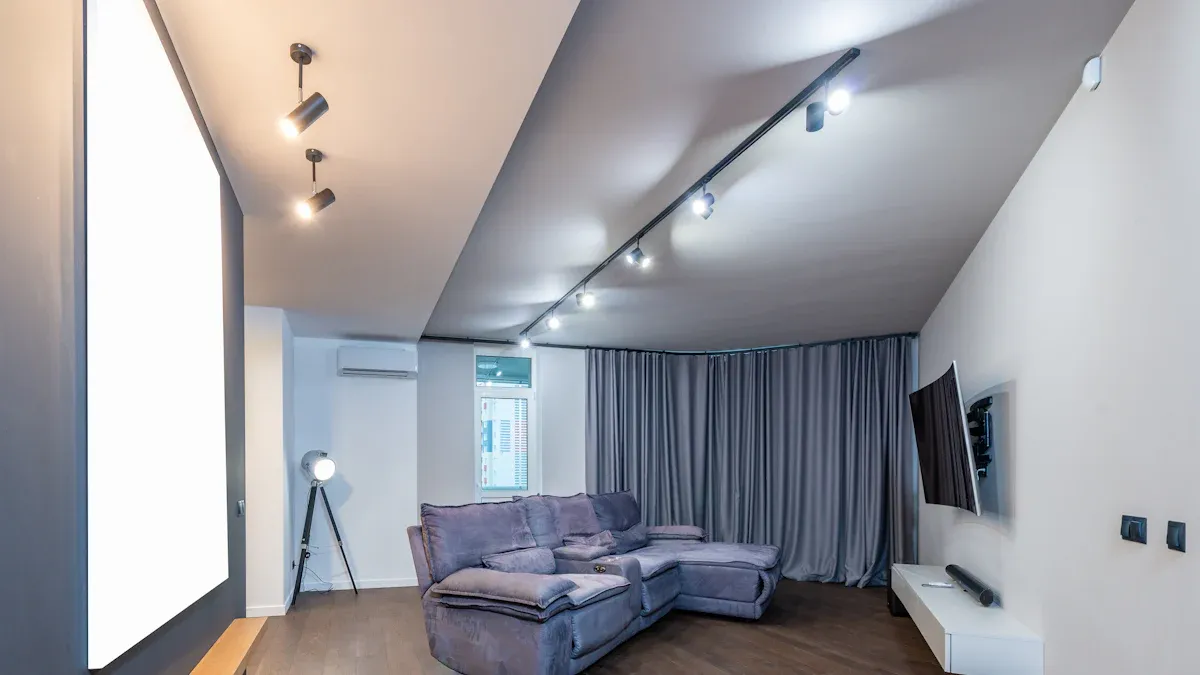
The versatility of led track lighting makes it a premier choice for a wide array of environments. Its adaptability shines in both residential and commercial settings. These common track light applications demonstrate how a well-planned system can elevate a space's function and style.
Residential Track Light Applications
In homes, track lighting provides tailored solutions for every room. It moves beyond basic illumination to become a key design element.
Kitchens: Islands and Countertops
Kitchens demand precise task lighting. Track lights excel in this role, providing focused illumination directly over islands and countertops for food preparation. Using spot-style heads with a cool white color temperature (4000K) ensures optimal visibility and functionality.
Living Rooms: Art Walls and Architectural Features
Living rooms benefit from a layered lighting approach. A track lighting system can serve as the primary source for accent lighting.
Linear tracks with adjustable heads highlight wall art and bookshelves.
Pendant track lights can hang over a coffee table to create a centerpiece.
A wrap-around track layout unifies open-concept spaces, defining zones without physical barriers.
Bedrooms and Hallways
In bedrooms, track lights with warm-toned (2700K) dimmable LED bulbs create a relaxing ambiance. Hallways, often long and narrow, are perfect for a straight run of track lights. The fixtures can wash the walls with light or spotlight a series of family photos.
Home Offices and Workspaces
A home office requires bright, glare-free task lighting. A simple track lighting installation over a desk ensures the work surface is well-lit, reducing eye strain and boosting productivity.
Commercial Track Light Applications
Commercial spaces leverage track lighting for its flexibility and impact. These track light applications are critical for shaping customer experience and highlighting products.
Retail Stores and Showrooms
Retailers use led track lighting as a powerful merchandising tool. It creates focal points and guides customer attention. Accent lighting is crucial, and a 5:1 ratio of accent light to general illumination makes merchandise stand out. The flexibility of track lights allows staff to easily reposition fixtures and change beam angles as displays and promotions change.
Art Galleries and Museums
Color accuracy is paramount in galleries. This setting requires track lights with a very high Color Rendering Index (CRI) of 90 or above to show the true colors of the artwork. A versatile color temperature of 3000K is a common choice for general museum lighting.
Restaurants and Cafes
In hospitality, lighting sets the mood. Restaurants use track lighting to create a warm and inviting atmosphere. The goal is to produce a highly saturated ambiance where skin tones appear healthy and natural, contributing to a pleasant and exciting dining experience.
A Guide to Installing Your Track Lighting System
A proper track lighting installation ensures safety and optimal performance. The installation process is straightforward for those with basic electrical knowledge. This guide outlines the essential steps to install track lighting correctly.
Pre-Installation: Tools and Safety
Preparation is the most critical phase of the installation of track lights. Gathering the right tools and understanding safety protocols prevents complications.
Essential Tools for Installation
A successful installation requires a few common tools. Before starting, one should have the following items ready:
Ladder
Drill with assorted bits
Stud finder
Screwdriver set
Wire strippers
Voltage tester
Safety First: Powering Down the Circuit
Before any work begins, one must de-energize the circuit. Go to the electrical panel and switch off the corresponding breaker. Always use a voltage tester on the existing wires to confirm the power is completely off.
When to Hire a Professional Electrician
Some projects require professional expertise. Many jurisdictions require permits for new electrical circuits, and only licensed electricians can obtain them. Most areas follow a version of the National Electrical Code (NEC), which sets clear standards for the installation of track lights.
Key NEC Requirements for Track Lighting:
Grounding: The track lighting system must be properly grounded.
Fastening: The track must be securely mounted to support the maximum weight of all fixtures. A track section of 4 feet or less needs at least two supports.
Prohibited Locations: Do not install track lighting where it could be physically damaged, in damp locations, or less than 5 feet above the floor unless it is a low-voltage system.
Hiring a professional for your led track lighting project is the safest option if you are unfamiliar with these codes or uncomfortable with wiring.
The Installation Process: A Step-by-Step Overview
This step-by-step guide covers the basic installation process for a hardwired led track lighting system. The installation of track lights follows four main stages.
Step 1: Mount the Power Feed and Track
First, map out the track's location on the ceiling. Use a stud finder to locate ceiling joists for secure mounting. Attach the power feed canopy to the junction box, connecting the house wiring to the feed. Then, mount the first piece of track to the ceiling, ensuring it is level.
Step 2: Connect Additional Track Sections
If the layout requires more than one piece of track, use connectors (I, L, T, or X) to join the sections. These connectors slide into the ends of the track pieces and lock them together, maintaining electrical continuity for the lighting.
Step 3: Attach and Position the Heads
With the track fully mounted, it is time to install the track lights. Insert the base of each fixture into the track's channel and twist it 90 degrees to lock it in place and engage the electrical contacts. Slide the track lights along the rail to their desired positions.
Step 4: Restore Power and Test the System
After attaching all fixtures, return to the electrical panel and restore power to the circuit. Turn on the light switch to test the system. Check that all track lights illuminate correctly and adjust their aim as needed.
Selecting the right led track lighting systems involves a simple process. One must match the system type, choose track lights with the right specifications, and plan a functional layout. This investment in led track lighting rewards users with a flexible solution offering superior energy efficiency.
By following this guide, users can confidently design a professional lighting scheme. The right track lights and track lighting can transform any room. These track lights and led track lighting systems provide unmatched versatility. The led track lights are a smart choice for modern track lighting.
FAQ
Can I use a J-type head on an H-type track?
No. Track lighting components are system-specific. Users must match the fixture type (H, J, or L) to the corresponding track. Cross-compatibility is not possible, as the electrical contact points and dimensions differ between systems.
Is it possible to cut a track rail to a custom length?
Yes, most standard track rails can be cut for a custom installation. A fine-toothed hacksaw provides a clean cut. Users should always cut the end opposite the power feed to avoid damaging the electrical connection points.
Why should I choose LED over halogen track lights?
LEDs offer superior performance. They consume up to 80% less energy and last over ten times longer than halogen bulbs. LEDs also produce significantly less heat, making them a safer and more efficient choice.
Can I add more lights to my track later?
Yes, adding more fixtures is a key benefit. Users can easily attach new heads. They must calculate the total wattage to ensure it does not exceed 80% of the circuit's maximum load for safe operation.
Are all LED track lights dimmable?
Many LED track heads are dimmable, but not all. It is crucial to check the product specifications. For best results, users should pair dimmable fixtures with a compatible dimmer switch, such as an ELV type.
What is the difference between line and low voltage systems?
Line voltage (120V) systems connect directly to a home's standard wiring. Low voltage (12V or 24V) systems require a transformer to reduce the voltage. This often allows for smaller, more compact fixture designs.
How do I clean my track lighting system?
Safety First! 🛡️ Users must turn off power at the circuit breaker before cleaning. A soft, dry cloth can then be used to wipe down the track and fixtures, removing any dust or debris.