Why Glare Control Matters in Commercial Lighting: Understanding UGR Rating
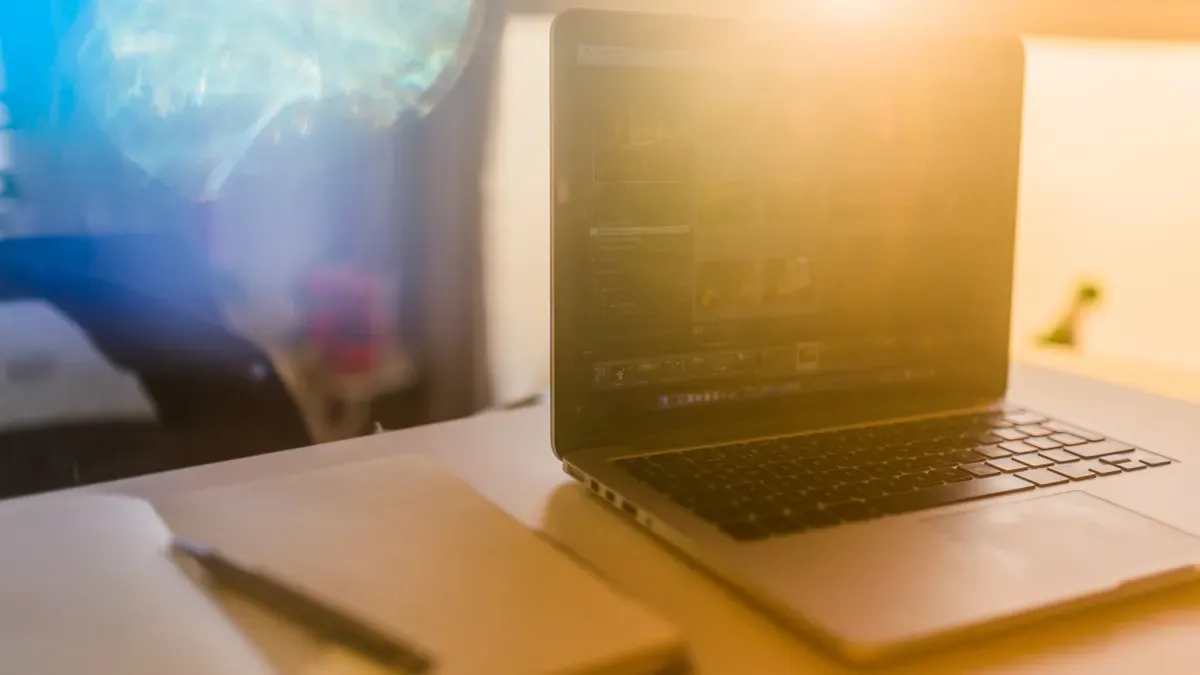
An employee squints at a computer screen, rubbing tired eyes. A customer pauses in a brightly lit store, feeling uneasy without knowing why. Both experiences share a common culprit: glare from poor lighting design. The Unified Glare Rating (UGR) is the international standard that measures this discomfort. It shows how much a light source causes visual annoyance. This post explains what UGR means, why it matters for commercial lighting, and how Liyinled's LED flood lights offer effective solutions. Knowing UGR helps businesses create comfortable, productive spaces. Lower ratings mean happier workers and more satisfied customers. The value is clear: glare control turns ordinary lighting into a strategic advantage.
Key Takeaways
UGR measures how much glare bothers your eyes; lower numbers mean less eye strain. In offices, try to keep UGR at 19 or below.
Glare hurts productivity and causes headaches. Controlling glare boosts worker comfort and business results.
Place lights correctly, add shields, and use dull surfaces to cut down on glare that hurts your eyes or makes it hard to see.
Liyinled's LED flood lights use a double deep anti-glare design. This helps them reach low UGR ratings, making spaces more comfortable.
What Is UGR and Why Does It Matter in Commercial Lighting?
Unified Glare Rating, or UGR, is a way to measure how much a light source bothers your eyes. It helps lighting designers and building managers see how a light affects people. The rating looks at how bright the light is, where it sits compared to the viewer, and how bright the background is. A lower UGR means less eye discomfort, while a higher UGR means more annoyance.
The UGR Scale: From 10 to 30
The UGR scale usually goes from 10 to 30, with higher numbers meaning more discomfort. Values below 10 show glare that is barely noticeable, while readings above 25 become harsh and hard to tolerate. The scale helps experts rate lighting quality step by step. A UGR of 19 is the highest level of discomfort that most people find acceptable, based on Hopkinson's ratings scale. This limit matters because it marks the point where glare changes from okay to uncomfortable for most people.
UGR Value | Subjective Perception |
|---|---|
≤ 16 | Excellent / Imperceptible |
≤ 19 | Good / Slightly Perceptible |
≤ 22 | Acceptable / Perceptible |
≤ 25 | Moderate / Mildly Uncomfortable |
> 25 | Poor / Intolerable |
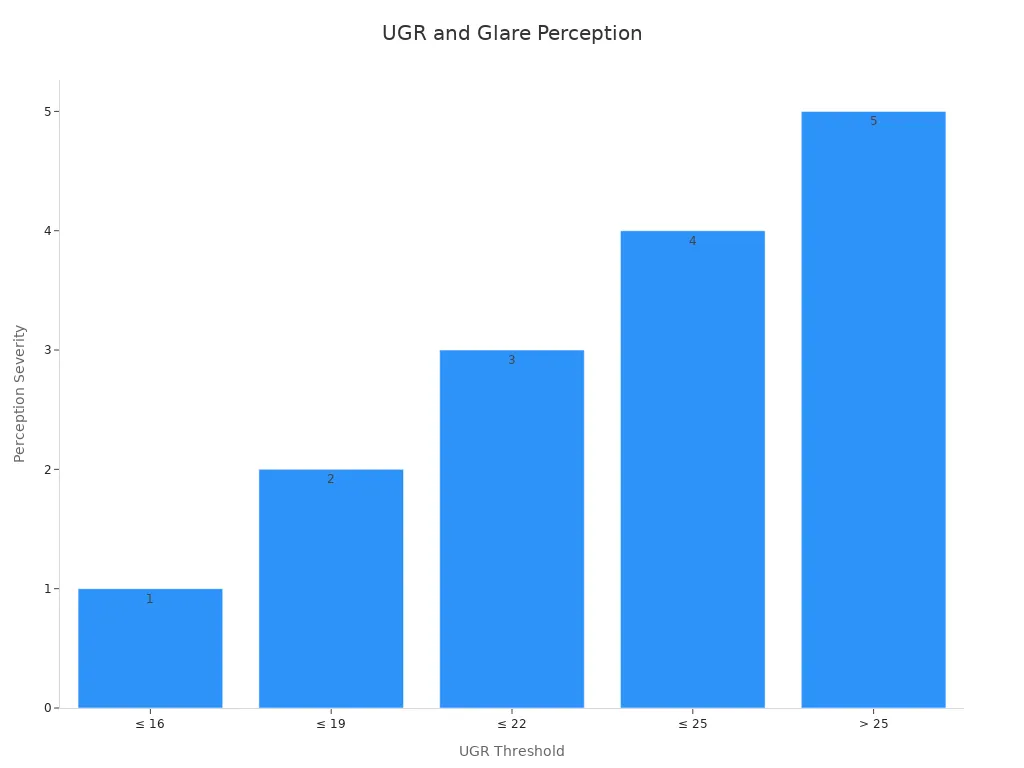
The chart above shows how UGR levels match what people feel. Designers use this chart to explain lighting quality to clients and others involved. The range from "imperceptible" to "intolerable" shows why picking the right UGR rating is key for keeping people comfortable.
Recommended UGR Values for Different Spaces
Different places need different UGR levels based on the work done and how long people stay. Precision work areas need the strictest standards. Labs, drawing offices, and electronic assembly stations usually need UGR values between 10 and 13. These low ratings help workers stay focused on detailed tasks without straining their eyes.
General office spaces fall in the middle range with UGR values from 16 to 19. These places involve computer work, reading, and meetings where visual demands are moderate. A UGR below 19 works for most office tasks according to standard lighting guidelines. This range balances energy use with comfort, making it the most common choice for commercial lighting projects.
Industrial areas and spaces with less demanding visual tasks can handle higher UGR values from 22 to 28. Warehouses, manufacturing floors, and storage facilities fit this category. Workers here do larger tasks that don't need fine visual detail. The higher acceptable glare level allows for more flexible light placement and possibly cheaper lighting options.
Public spaces like lobbies, corridors, and waiting areas usually aim for UGR values around 22. These areas host people for short visits, so glare exposure doesn't build up as much. Retail stores often target UGR values between 19 and 22, balancing product visibility with customer comfort. A shopper who feels uneasy in a bright store may not come back, so glare control becomes a business issue, not just a technical one.
Lower UGR ratings directly link to better visual comfort and productivity. Studies show that cutting glare boosts focus, reduces tiredness, and raises overall output. Employees working under low-glare lighting report fewer headaches and less eye strain. These benefits turn into real business gains, including fewer missed workdays and better work quality. Knowing the UGR scale helps facility managers choose wisely about their lighting investments.
The Human and Business Cost of Glare
Glare does more than bother people. It causes real physical pain and makes it harder to see. Knowing the difference between two kinds of glare helps facility managers fix the right issues.
Discomfort vs. Disability Glare
Discomfort glare makes eyes feel tired and strained without fully blocking vision. A bright light in a person's side view causes this feeling. The eyes work harder to adjust, and the brain feels annoyed. People often rub their eyes or move to get away from the light.
Disability glare actually lowers visibility. This happens when bright light spreads inside the eye and fades contrast. A worker trying to read a label near a bright window deals with this effect. The text gets harder to read even though the eyes are fine. Disability glare creates safety risks in factories where workers must spot dangers quickly.
Both kinds of glare affect commercial lighting quality. Designers must think about both when picking fixtures and planning layouts.
How Glare Impacts Productivity and Well-being
Poor lighting creates real business costs. Workers under glare report more headaches and eye strain. They lose focus faster and take more breaks. Studies show that cutting glare boosts focus, lowers tiredness, and raises overall output. Workers in low-glare spaces finish tasks quicker and make fewer mistakes.
Some claims say too much screen time and blue light can cause blindness. But science has not found clear proof that blue light from screens damages eyes.
The link between screens and eye health needs careful thought. Blue light from computers will not cause eye disease. Too much blue light and UV rays from the sun can raise the risk of eye disease, but the tiny amount of blue light from screens has never been shown to hurt your eyes. Using devices will not damage your eyes forever, but staring at them for long periods can cause short-term discomfort, like dry eyes, blurry vision, tearing, and headaches. Screen discomfort is common because we blink less when using devices; the blink rate can drop by half. To reduce symptoms, lower glare and brightness, use a matte screen filter, and adjust screen brightness and contrast.
Studies suggest that long exposure to some blue light waves may harm the light-sensitive cells in the retina. When these cells get damaged, vision loss can happen. Research shows that extreme blue light exposure could lead to macular degeneration or other serious eye diseases. But the long-term effects of blue light from digital devices are still unknown, since this is the first generation using devices so much.
Employee satisfaction drops when lighting causes physical pain. Workers who feel daily eye strain think their employers care less about them. They may look for jobs in buildings with better lighting. High turnover and more sick days directly hurt business results. Investing in good commercial lighting with controlled UGR values protects both people and profits.
Practical Strategies for Glare Reduction
Optimizing Luminaire Placement and Beam Angles
Putting lights in the right spot stops most glare problems before they start. Designers place lights so they are not directly in workers' line of sight. A light behind a worker's shoulder bothers the eyes less than one in front. Adjustable beam angles let installers point light exactly where it is needed. Narrow beams work well for accent lighting, while wider beams cover open areas evenly.
Smart placement also looks at where the viewer sits compared to the light. Task lights belong on the side of the desk, not in front of the monitor. This avoids direct glare and stops unwanted reflections on screens. Smart shading systems, like motorized blinds and special glass, control sunlight during the day. These systems change as the sun moves and reduce harsh contrasts automatically.
The Role of Shielding and Surface Reflectivity
Shielding devices block direct sight of the lamp but let light pass through. Louvers, diffusers, and lenses each do this job in different ways. Frosted glass and translucent panels make light softer and spread it more evenly. Indirect lighting fixtures bounce light off ceilings and walls, removing the bright spot that causes discomfort. Low-glare LED panels with low UGR ratings combine shielding with advanced optics for the best comfort.
Surface reflectivity also helps control reflected glare. Matte finishes soak up light instead of bouncing it back toward the eyes. The table below shows recommended Light Reflectance Values (LRV) for different surfaces in general commercial spaces:
Surface | Recommended LRV |
|---|---|
Ceiling | 0.8 or higher (80%) for at least 80% of the area |
Walls (vertical surfaces) | 0.7 or higher (70%) for at least 50% of the visible area |
Furniture systems | 0.5 or higher (50%) for at least 50% of the visible area |
These values make sure light spreads evenly without creating bright spots that strain the eyes. Designers should also mix ambient light with task lighting to balance overall brightness. Ambient fixtures give general light that removes harsh shadows, while task lights focus on specific work areas. Choosing task lights that work with ambient light without overpowering it creates a nice blend.
Cut Down Shadows and Glare in Task Lighting: Make sure light spreads evenly to avoid eye strain from uneven light. Place lights so they do not create shadows, like those from your head over the work area, which can block your view. Also, avoid putting lights where they reflect off shiny surfaces, reducing glare and making a more comfortable, efficient workspace.
Regular cleaning keeps these strategies working. Dirty fixtures give less light and force workers to strain their eyes. Cleaning schedules and replacing worn diffusers on time keep the original glare control performance. Together, these practical steps turn any Commercial Lighting setup into a comfortable, productive space.
UGR-Compliant Solutions from Liyinled
Liyinled makes LED flood lights in its own factory. This gives the company full control over how the lights are built and how well they work. The products directly solve the UGR problems talked about earlier. Each light uses a double deep anti-glare design that blocks harsh direct light while still giving off high brightness. This design lowers the discomfort caused by bright lamps in a person's field of view. Facility managers and lighting designers can pick Liyinled lights with confidence. They know the optics meet the UGR standards needed for offices, retail spaces, and architectural projects.
LED Flood Lights with Advanced Anti-Glare Optics
The double deep anti-glare design works by placing the LED chip deep inside the housing. Light must travel through a recessed channel before leaving the fixture. This channel blocks the direct view of the bright light source. The eye sees only the reflected light from nearby surfaces, not the lamp itself. The result is a UGR rating that stays low enough for comfortable commercial use.
This anti-glare design does not reduce light output. The fixture still produces high lumen values because the optics focus the beam where it is needed. Beam angles are controlled precisely, so light lands on the target area rather than spilling into the viewer's eyes. The mix of deep recess and precision optics gives a comfortable experience without dimming the space.
Liyinled builds these fixtures with strong materials. Die-cast aluminum housings manage heat well, keeping the LEDs cool and extending their lifespan. IP65, IP66, and IP68 waterproof ratings protect against rain, dust, and temporary submersion. These ratings make the fixtures suitable for both indoor and outdoor Commercial Lighting applications. A parking lot, a building facade, or a warehouse all benefit from the same anti-glare technology.
Selecting the Right Liyinled Model for Your Project
The APL-TG-BJX model offers adjustable power and a three-color-temperature dial (3CCT). Users can switch between warm white, neutral white, and cool white to match the desired ambiance. The adjustable power setting lets the installer reduce output if the space requires lower light levels. This model works well for retail stores and showrooms where lighting mood changes throughout the day.
The LY-TG-3001 carries an IP68 rating, which means it can withstand heavy rain and temporary submersion. Its double deep anti-glare design makes it ideal for architectural and engineering projects that demand precise light control. Building facades, monuments, and outdoor landmarks benefit from this fixture's ability to illuminate without creating glare for passersby.
The LY-TG-3020 combines an IP65 rating with die-cast aluminum construction. It is a popular choice for landscape and architectural lighting because it balances durability with a sleek appearance. Gardens, pathways, and building entrances receive even illumination without harsh spots.
The LY-TG-3003 features an IP66 rating and a square module design. The deep anti-glare optics fit modern outdoor spaces where aesthetics matter. Plazas, courtyards, and sports facilities can use this model to achieve uniform light distribution while keeping UGR values low.
Choosing the right model depends on the project's location and visual requirements. All Liyinled flood lights share the same anti-glare philosophy. They provide comfortable illumination, reduce eye strain, and meet the UGR recommendations for commercial spaces. Contact Liyinled today to get the latest pricing and find the perfect solution for your lighting needs.
UGR remains a vital metric for occupant comfort and productivity in Commercial Lighting. A low UGR rating reduces eye strain and fatigue directly. Workers perform better under comfortable illumination. Customers feel more at ease in well-lit spaces. Glare control moves beyond technical compliance. It becomes a strategic investment in people and business performance.
Liyinled provides high-quality LED flood lights with double deep anti-glare optics. These fixtures meet and exceed UGR standards. The company designs and produces each light in its own factory. Models like the APL-TG-BJX and LY-TG-3001 deliver comfortable illumination for various applications.
Contact Liyinled today. Explore the product range. Find the perfect lighting solution for your next project.
FAQ
What UGR value should a commercial office target?
Most general office spaces should aim for a UGR of 19 or lower. This level keeps eye strain low during computer work and reading. Spaces for detailed tasks, like drawing offices or labs, need values between 10 and 13 for the best comfort.
How does someone measure the UGR of an existing lighting setup?
Lighting pros use special software and meters to find the UGR. The measurement looks at how bright the fixture is, where the viewer sits, and how bright the background is. Facility managers can also ask makers like Liyinled for UGR data, since they test their lights during production.
Does anti-glare design reduce the brightness of LED flood lights?
No. Anti-glare optics send light where needed instead of blocking it. The double deep anti-glare build in Liyinled lights hides the bright LED chip from direct view while focusing the beam where needed. The space gets full light without the harsh bright spot.
Why does Liyinled manufacture its own LED flood lights?
Making its own lights gives Liyinled full control over optical design and quality. The factory builds the double deep anti-glare housings that keep UGR values low. This control makes sure every fixture meets the comfort standards talked about in this article for Commercial Lighting projects.