High-Efficiency led ceiling light Sourcing Guide
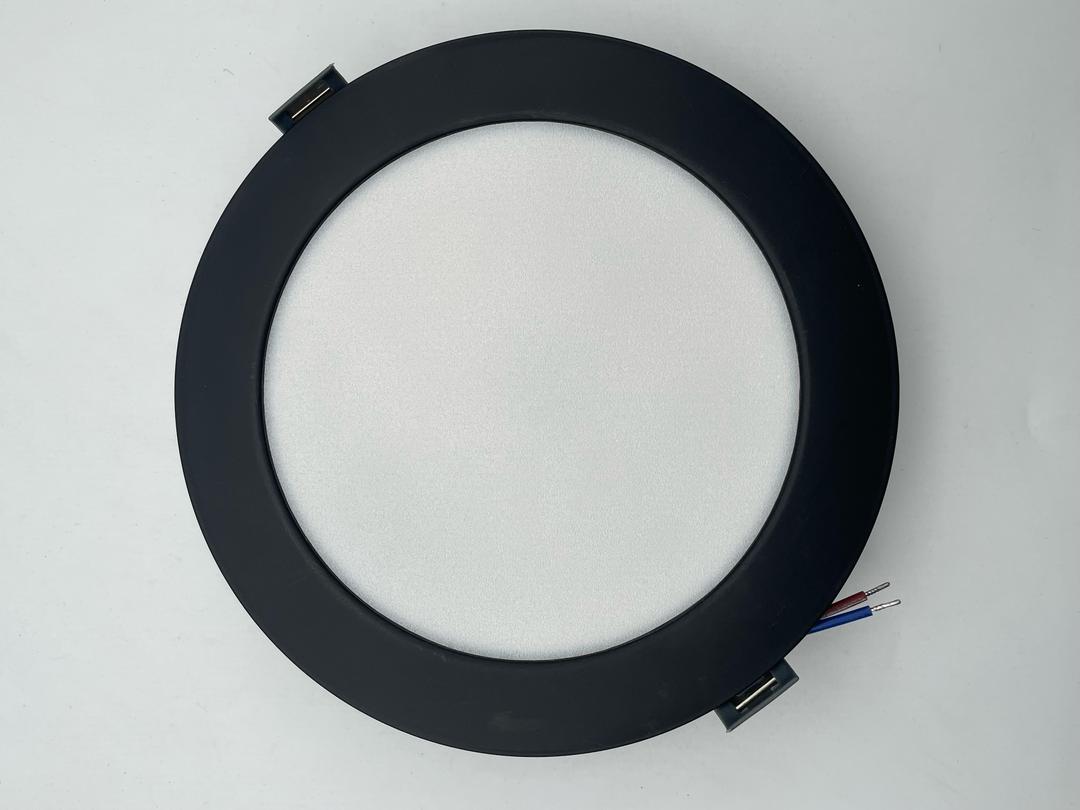
Buyers today face a common sourcing challenge. They want ceiling fixtures that cut power use without dimming brightness, comfort, or style. So what should a buyer check before purchasing a high-efficiency led ceiling light? The answer starts with the numbers on the spec sheet and ends with the room itself.
A careful sourcing path moves through specs, sizing, room fit, style, installation, maintenance, and budget. Each step narrows the field and protects the final decision. Liyin Lighting, a factory with a broad led lighting range, serves as a useful reference brand. Its catalog shows how energy efficiency, dimming control, and modern design come together in practical energy-efficient lighting solutions. Buyers who follow this path gain sustainable lighting that performs for years.
Key Takeaways
Check lumens per watt to compare energy efficiency. Higher numbers mean more brightness for less power.
Match the fixture size to your room. Add room length and width in feet to get the diameter in inches.
Choose the right light color for each room. Warm white suits living rooms; cool white works for kitchens.
Verify safety labels and IP ratings. These ensure the light works safely in bathrooms or outdoors.
Think about lifetime savings. LEDs use less energy and last longer, saving money over time.
Key LED Ceiling Light Specs
Lumens and Efficacy
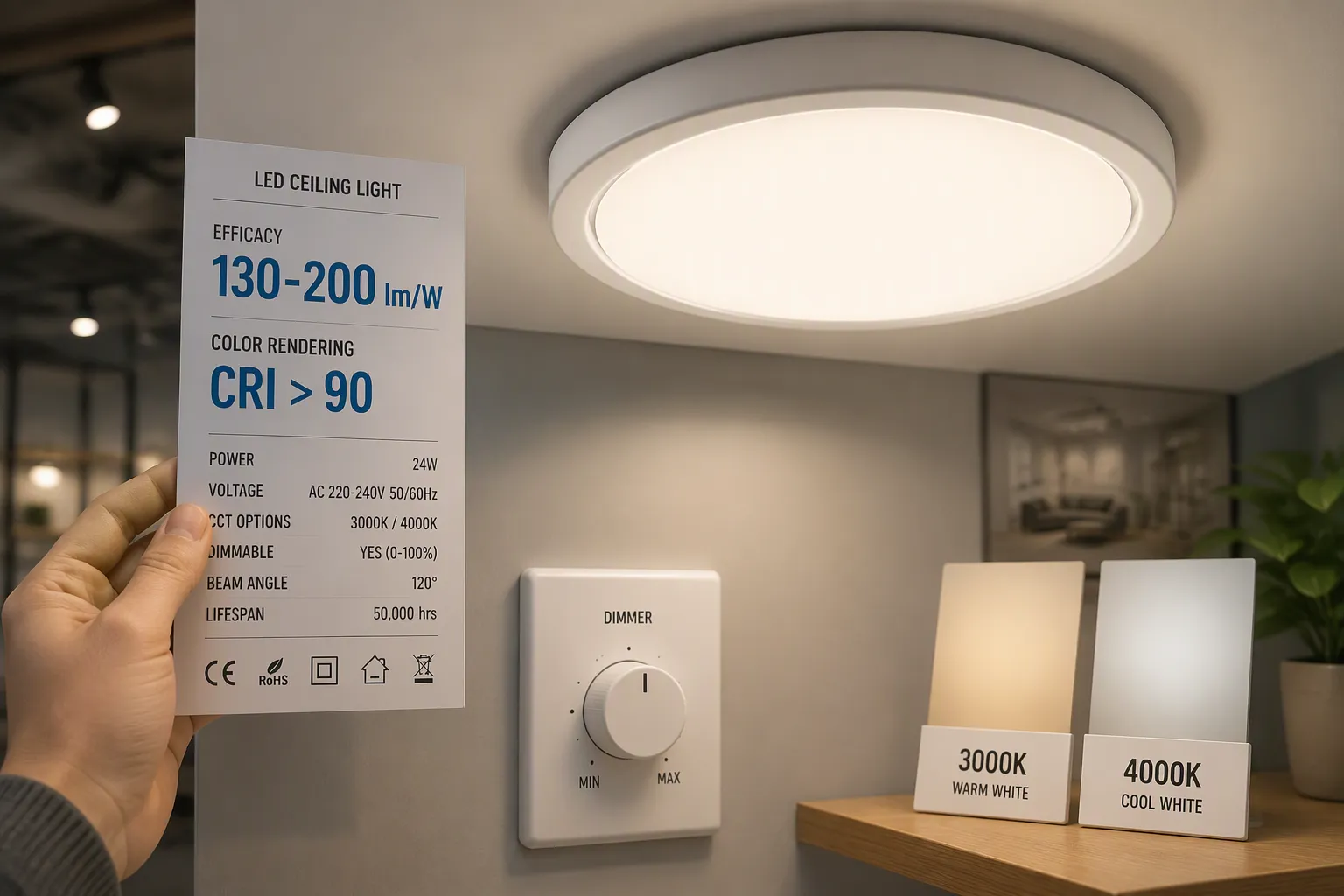
Lumens show how much visible light comes out. Wattage shows how much power the light uses. When you divide lumens by watts, you get lumens per watt. That one number is the key to energy efficiency. A buyer who looks only at wattage misses the real point. Two lights can use the same power and still give very different brightness.
The gap between technologies is big. The table below shows typical efficacy ranges for common light sources.
Lighting Type | Efficacy Range (lm/W) |
|---|---|
LED Lighting | 130–200 |
Halogen | 15–25 |
Fluorescent | 60–100 |
High-efficiency leds at the top of that LED range give far more lumens for each watt than older sources. That is why an led ceiling light rated in the 130–200 lm/W range gives real energy-efficient lighting without losing brightness. Buyers should read the lumen number on the label, not just the wattage, and check the efficacy claim against a test report. Strong efficiency also lowers heat, which helps the driver last longer and supports sustainable lighting goals over the fixture's service life.
CRI, CCT, and Dimming
CRI describes how well colors look. A CRI above 90 keeps reds, wood grains, and skin tones true to life. Standard CRI 80 modules with an R9 value of zero make reds look poor and leave rooms looking flat. Buyers sourcing for showrooms, grocery displays, or artwork should ask for CRI above 90 with R9 above 80.
CCT sets the mood. The table below sums up common options.
CCT | Character |
|---|---|
3000K Warm White | Cozy, welcoming amber tone for bedrooms and lounges |
4000K Cool White | Clean, neutral visibility for offices and kitchens |
6500K Daylight | High-contrast light for clinical and display zones |
Many Liyin Lighting models offer adjustable CCT through a dip switch, so one led lighting fixture covers several rooms. Dimming adds another layer. A dedicated dimmable LED driver is a must. Dimming lowers lumen output rather than changing color. A driver that does not match causes flickering, buzzing, a limited dimming range, or early failure. Buyers should plan the dimmer together with the fitting, not add it afterward.
Spec sheets also list the LED type. SMD2835 LEDs paired with a diffuser give even light distribution across the panel. That phrase signals even coverage without hot spots, and it is worth knowing when you compare quotes.
Sizing and Mounting Basics
Fixture Size by Room
A fixture that is too small leaves corners dark. One that is too large overwhelms the ceiling. A simple rule keeps the choice grounded in the room itself.
Measure the room's length and width in feet.
Add the length and width together.
Use that sum as the fixture diameter in inches. A 10 ft × 14 ft room points to a 24-inch diameter fixture.
For pendant height, multiply the room height in feet by 2.5 to 3 to get the height in inches.
Wattage gives a second reference scale. Liyin Lighting's led ceiling light range runs from 18W to 70W, so buyers can match output to room size without guessing. A buyer sourcing for a small bedroom and one sourcing for a large living room land on different points of that scale. This is where lumens matter more than watts alone, since energy efficiency varies between models.
Flush, Semi-Flush, Recessed
Mounting type shapes both the look and the installation work. Surface-mounted fixtures sit against the ceiling and suit rooms where the wiring already runs through a ceiling box. Recessed models sit inside the ceiling plane and give a cleaner line, yet they demand a cutout and enough void space above.
Ultra-thin designs solve a common constraint. Liyin Lighting's APL-PB-2511, APL-PB-2512, and APL-PB-2513 series use slim ABS bodies that suit low ceilings and tight clearances. Buyers often ask which type fits a room with limited headroom, and the thin profile answers that directly. The factory also offers size and wattage options across its led lighting lines, which helps when a project needs one consistent look across rooms of different sizes. Matching mounting type to ceiling height protects both comfort and the energy-efficient lighting plan, and it keeps the path to sustainable lighting practical from the first measurement.
Room-by-Room LED Lighting Match
Living Rooms and Kitchens
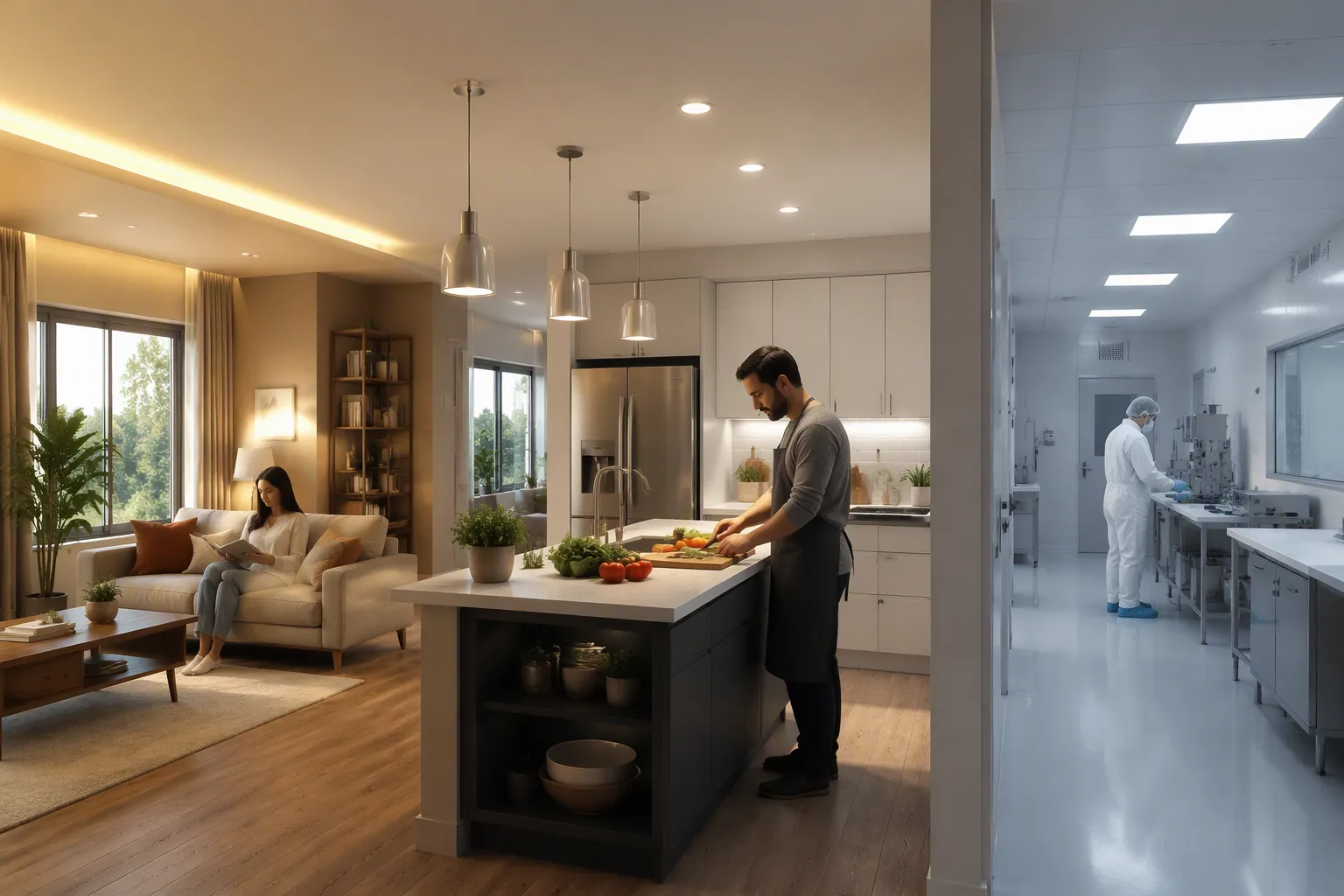
What a room is used for decides how bright the light should be and what color it should give off. The table below matches each space with a suggested CCT.
Room | Recommended CCT | Rationale |
|---|---|---|
Living room | Warm white (2700K–3000K) | Builds a calm, cozy, home-like feel for hanging out and watching TV |
Kitchen | Neutral to slightly cool (4000K–5000K) | Helps colors look true and makes it easier to see for safe food prep and detailed work |
Brightness follows the same idea. A living room usually needs about 1,500–3,000 lumens for a warm, welcoming feel. A kitchen or study needs 3,000–4,000 lumens or more so tasks are easier to see. These numbers are a starting point, not a hard rule. Ceiling height, wall color, and window size all change the final number. A buyer who sets lumen needs for each room avoids too much light, which wastes power and makes the mood feel flat.
Bedrooms, Bathrooms, and Cleanroom Lighting
Bedrooms do best with dimmable warm white light at the lower end of the living room range. Hallways need even, medium light with no dark gaps between fixtures. Bathrooms add moisture to the mix. Fixtures rated IP54 or IP65 keep out splashes and damp air, so buyers should check the IP rating before ordering.
Cleanroom lighting is a different category. It serves commercial and industrial spaces with stricter rules than any home. A cleanroom controls airborne particles to protect products and processes. Each cleanroom class, from ISO Class 1 to ISO Class 9, sets its own limit on particles per volume of air. Lighting requirements follow that scale. Fixtures in cleanrooms must give off very little heat and few particles, seal tightly against the controlled space, and help with contamination control. A higher cleanroom class calls for tighter sealing and smoother surfaces that catch less dust.
Buyers who source for cleanrooms should check lighting standards along with cleanliness requirements. The same led lighting fixture rarely works for both a bedroom and a cleanroom. Cleanroom spaces also reward housings that are easy to clean, because every surface inside the controlled space gathers particles over time. A supplier with cleanroom experience will document sealing, outgassing, and surface finish. That paperwork matters more than the lumen number alone.
Small spaces need compact answers. The APL-FC-01 bulkhead fits tight corners and utility areas. The Sky View Lamp shows how a decorative led ceiling light can carry a room's style. Both are examples of matching fixture form to room function, and both support an energy-efficient lighting plan when the lumen output fits the space.
Styles and Materials
Finishes and Shade Materials
Slim round and square designs are the most popular led ceiling lights today. These low profiles sit close to the ceiling and keep the room looking clean. ABS plastic keeps the body light and strong, which makes it easier to handle during installation. Liyin Lighting's APL-PB-2511, APL-PB-2512, and APL-PB-2513 series show this approach, and they are just one choice among many on the market.
Finish and shade choices shape the mood as much as brightness does. The table below pairs common materials with their effect on light output.
Material / Finish | Effect on Light Output and Ambiance |
|---|---|
Clear crystal encasing LEDs | Bright daylight-white light with a modern, elegant look |
Stainless steel trim (IP65) | Strong weather protection with high-brightness output |
Brass, crystal, Murano glass, brushed nickel | Texture and classic elegance for warm ambient lighting |
Polished chrome, matte black | Matches the room's design colors and adds visual value |
A CRI above 90, per IESNA guidance, keeps colors true in high-end homes. Buyers who care about energy efficiency should know that ENERGY STAR-rated LED technology cuts energy use by up to 80% while keeping the look.
Design Coordination
Style coordination starts with the room's design language. Modern minimalist and Japandi interiors skip heavy chandeliers. Deep-recessed anti-glare spotlights wash walls instead, following a "see the light, not the fixture" principle. Contemporary luxury spaces center on a striking multi-tiered ceiling lamp, paired with brass wall lamps and a lit art-mirror. Mid-century modern rooms prefer pendant lamps with round or saucer-like shapes as the focal point.
Consistency across spaces matters just as much. Matching fixture finishes and color temperatures lets the living room's design flow into kitchen and bedroom lighting. Buyers sourcing for open-concept homes should plan finishes room by room before ordering. This step also helps energy-efficient lighting goals, since one matched fixture family makes dimming and control setup simpler. Liyin Lighting's range, including the Sky View Lamp, offers one path to that consistency, and the factory supports customization requests for buyers who need specific finishes or setups. A coordinated plan also supports sustainable lighting by lowering the chance of early replacement.
Installation and LED Lighting Safety
Electrical Ratings and Certifications
Safety begins with the label. Buyers should make sure the fixture has approved certification marks for their market. They should also check that the rated voltage and frequency match the local power supply. A rating that does not match can cause the driver to fail and voids the warranty. The same label should show the wattage, the lumen output, and the dimming range.
Installation follows a simple order. A qualified person turns off the circuit at the breaker and removes the old fitting. Then they check the ceiling box to make sure it will hold the fixture securely. Next comes the wiring: live to live, neutral to neutral, and ground to ground where the fixture has one. The installer then attaches the bracket, lifts the fixture into place, and turns the power back on for a test. Buyers sourcing for large projects should confirm compliance standards with the supplier before shipment. Paperwork delays cost more than the fixtures do.
IP Ratings by Location
The IP rating tells a buyer where a fixture can safely go. The first digit covers solids and the second covers water. A rating of IP54 works for bathrooms and covered outdoor areas, where splashes and damp air are normal. IP65 adds protection against water jets and suits exposed exterior walls. Dry indoor rooms need no special rating, so buyers should not pay for protection a space does not need.
Smart control adds one more installation step. Models that pair through a 2.4G remote or the Tuya App need a stable network and a moment to pair after power-up. Buyers should test this before the fixture goes up, not after.
Liyin Lighting runs a factory that supports customization on wattage, CCT, and finish. Its team answers questions on suitable scenarios, buyer concerns, and procurement issues. Its smart ceiling lamps show how led lighting, energy efficiency, and easy setup meet in one fixture. Buyers who plan the electrical check, the IP match, and the control pairing together protect both safety and sustainable lighting goals. That care also lifts the real-world efficiency of every energy-efficient lighting project, and it keeps each led lighting fixture compliant from day one.
Maintenance and Performance
Cleaning and Long-Term Care
An led ceiling light needs very little care. Dust builds up on flat surfaces, so wiping the diffuser with a soft microfiber cloth every few months keeps the light steady. A mild soap solution cleans fingerprints off ABS bodies. Buyers should skip rough pads and solvent cleaners, because these dull the finish and can cloud a polycarbonate diffuser over time.
Shade materials each have their own rules. Crystal and glass shades do well with a damp cloth and a dry polish. Brass and brushed nickel trims need only a dry wipe, since wet cloths leave water marks. Buyers should turn off the circuit before cleaning and let the fixture cool down first.
Long-life claims are worth checking. A supplier may advertise tens of thousands of hours, but the warranty tells the real story. Buyers should compare the warranty period with the claimed lifespan and confirm what the warranty covers, such as the driver versus the LEDs. Liyin Lighting backs its led ceiling lights with documented performance data, and its team answers questions on suitable scenarios and long-term care.
Dimmer and Control Checks
Dimming problems usually begin at purchase, not at installation. Buyers should confirm the dimmer type the fixture needs, the minimum load the dimmer requires, and the dimming range the driver supports. A trailing-edge dimmer paired with a driver built for it gives smooth control. A mismatched pair causes flicker, buzz, or a narrow range.
Smart control needs the same check. Models that pair through a 2.4G remote or the Tuya App need a stable network and a compatible phone. Buyers should test pairing and app control before the fixture goes up.
Procurement teams often ask what can be customized. Liyin Lighting runs a factory that supports customization on wattage, CCT, finish, and control options, and it offers product pages for each series. Common procurement issues include voltage mismatches, missing certification paperwork, and dimmer incompatibility. Confirming these details early protects energy efficiency, supports energy-efficient lighting goals, and keeps sustainable lighting plans on schedule.
Budget, Energy Efficiency, and Sustainable Lighting
Upfront Cost vs. Lifetime Savings
A high-efficiency fixture costs more when you buy it. That extra money pays you back over time. LEDs use up to 75% less energy than incandescent bulbs and last up to 25 times longer. So your power bills go down and you rarely need to replace them. Buyers should think of the purchase price as just one part of a longer cost picture.
Lifespan claims need some decoding. The L/B rating tells you how much light is left and how many units still meet that level. A rating of L70/B50 > 80,000 h means at least half the LEDs still give 70% of their original output after that average. This number assumes surrounding temperatures up to +45°C, and more heat makes life shorter.
Metric | Specification |
|---|---|
Lifespan | Up to 50,000 hours |
Equivalent usage | ~45 years (US) to ~50 years (EU and rest) |
Energy use vs. standard LED | At least 50% less |
Driver efficiency | At least 95% |
LED lights may cost more upfront, but their durability and low energy consumption save money in the long run.
Sourcing Checklist
Buyers can score each quote against five checks: specs (lumens per watt, CRI, CCT), sizing (diameter and wattage), room fit (IP rating, mounting type), compliance (certification marks, voltage), and value (warranty, driver quality). Liyin Lighting is a factory with its own assembly and quality control. It helps buyers through each check and posts product pages for its high-efficiency LED ceiling lights. Its team answers four common questions: which settings suit a model, what buyers worry about during buying, which problems keep coming back (voltage mismatches, missing paperwork, dimmer incompatibility), and what can be customized (wattage, CCT, finish, control).
Choosing a manufacturer comes down to three tests: technological evolution, proven quality, and responsive support. A supplier that passes all three turns energy efficiency into a lasting asset and makes sustainable lighting a realistic goal.
Sourcing follows a clear order. Buyers set the specs, size the fixture, match the room, confirm the style, check safety, plan upkeep, and weigh long-term value. Each step builds on the one before it, and the checklist keeps every quote easy to compare.
Liyin Lighting is a factory with its own assembly and quality control, and it supports that work. Its team answers questions about scenarios, buyer concerns, procurement problems, and customization requests for wattage, CCT, and finish. Buyers can review LED ceiling light options and compliance details before they order.
A confident purchase rests on checked numbers and a room that fits. That approach turns efficiency into lasting value and makes energy-efficient lighting, energy efficiency, sustainable lighting, and every led choice pay off for years.
FAQ
What scenarios is this product suitable for?
These fixtures work well in living rooms, bedrooms, kitchens, hallways, and offices. Bathrooms need IP54 or IP65 ratings. Cleanroom lighting is a separate commercial category, and each cleanroom class sets its own particle limits.
What do customers care about most when purchasing?
Buyers look at lumens per watt, CRI, CCT options, and dimmer compatibility. Cleanroom buyers also check sealing and surface finish. Warranty terms and driver quality complete the list, and efficiency stays important.
What problems might arise during procurement?
Common issues include voltage mismatches, missing certification paperwork, and dimmer incompatibility. Cleanroom projects add documents for sealing and outgassing, and cleanroom standards differ by class. Checking early prevents shipment delays.
What customization does the factory offer?
The factory customizes wattage, CCT, finish, and control options, which helps with sustainable lighting planning. Cleanroom orders can specify sealing details. Buyers should confirm lead times and paperwork before ordering.
How does cleanroom lighting differ from home fixtures?
Cleanroom lighting follows class-based particle limits. A cleanroom fixture needs low heat, tight sealing, and smooth surfaces. Cleanroom buyers should ask for sealing and outgassing documents. Standard led ceiling lights rarely work for cleanroom use.