How LED Lighting Manufacturers Test Product Reliability
Everyone worries about LED lights failing too soon. What makes a high-quality fixture different from one that breaks in months? The answer is burn-in testing, also called aging testing. This process is the foundation of reliability assurance. For trusted LED Lighting Manufacturers, this step is not optional—it is essential. Burn-in testing stops early failures and ensures steady light output over the product's life. During this test, every unit runs nonstop in controlled conditions to reveal flaws before shipping. This article covers the exact methods, timeframes, and settings used in this vital quality check.
Key Takeaways
Burn-in testing runs every LED light for at least 12 hours to catch flaws before shipping.
Manufacturers watch brightness and color steadiness to make sure lights last.
Good heat control stops early breakdowns and helps lights last for many years.
Testing cuts down on flaws, which saves money and gives customers dependable products.
Pick makers who show how they test their products and have approvals like CE and ISO9001.
The Role of Aging Tests for LED Lighting Manufacturers
Defining Burn-In Testing and Its Purpose
Burn-in testing pushes every LED fixture to its limits before anyone ever installs it. The process runs each unit continuously for a set period, often at elevated temperatures, to expose hidden weaknesses. Think of it as a stress interview for electronics. The fixture must prove it can handle real-world conditions without failing.
Why does this matter so much? LED Lighting Manufacturers face a unique challenge. Their products promise years of service. But a single faulty capacitor or a poorly soldered connection can ruin that promise in weeks. Burn-in testing catches these problems early. It forces failures to happen in the factory, not in a customer's building.
The test reveals several types of defects. Some components simply arrive from suppliers with flaws. Others fail because of poor assembly during manufacturing. Thermal issues also surface during this phase. When a fixture runs hot, weak solder joints may crack or drivers may overheat. The aging process exposes all these issues while the product is still under the manufacturer's control.
Aging testing, also referred to as burn-in testing, serves as an essential quality control measure in the production of LED lighting fixtures. By subjecting the fixtures to a continuous operational cycle for a predetermined period, manufacturers can identify potential issues and assess the long-term performance and durability of the product. This method is particularly effective in detecting any component weaknesses, thermal management inefficiencies, or deviations from the design requirements, ultimately ensuring that only reliable and high-quality fixtures leave the factory.
Reputable manufacturers treat this step as non-negotiable. A quality testing system includes aging tests. Every product that leaves the facility must pass through this gauntlet. This commitment separates them from manufacturers who skip testing to cut costs.
Industry Standards for Test Duration and Conditions
Most LED Lighting Manufacturers follow a common benchmark for burn-in duration. The industry standard is a predetermined period of continuous operation. During this window, the fixture runs at full power without interruption. Technicians monitor performance closely, watching for any signs of instability.
Some manufacturers extend this period based on product complexity. A simple downlight might pass after a shorter period. But a sophisticated outdoor floodlight with advanced drivers and control systems may need a longer period. The extra time allows subtle issues to surface. Intermittent failures, for instance, often appear only after many hours of operation.
Temperature plays a critical role in these tests. Many facilities run aging tests in heated chambers that mimic extreme conditions. This approach accelerates the stress on components. A fixture that survives elevated temperatures for the test duration will likely handle normal operating temperatures with ease. Some manufacturers also cycle temperatures during the test, switching between hot and cold to simulate day-night patterns.
The testing environment matters just as much as the duration. Controlled conditions ensure test results reflect the product's true performance, not random environmental variables.
Voltage fluctuations also factor into the testing protocol. Fixtures may run at slightly higher or lower voltages than standard to check their tolerance. This simulates the real-world power quality that varies from site to site. A fixture that handles these swings without flickering or dimming demonstrates robust design.
The predetermined period represents a minimum threshold, not a ceiling. Reputable manufacturers view it as a starting point. They invest extra time and resources to push their products harder. This investment pays off through fewer warranty claims and more satisfied customers. For buyers, understanding these standards helps them evaluate supplier quality. A manufacturer who proudly shares their testing protocols signals confidence in their products.
Key Parameters Monitored During Reliability Testing

Aging tests only work if technicians know what to look for. During those long hours of continuous operation, several key measurements show whether a fixture will last for years or break down early. LED Lighting Manufacturers watch these numbers closely to tell high-quality products apart from faulty ones.
Tracking Lumen Output and Color Stability
Light output naturally drops as LEDs get older. This process, called lumen depreciation, tells engineers how long a fixture will keep giving useful light. The lighting industry uses standard tests to measure this decline accurately.
The IES LM-80 standard sets the rules for these measurements. This test runs LED packages, modules, and arrays for thousands of hours while technicians record light output at set times. The table below shows the main parameters this standard tracks:
Parameter | Description |
|---|---|
Lumen Maintenance | Shows how light output drops over time, given as a percentage of the starting output (e.g., L70, L80). Tested at three temperatures (55°C, 85°C, and a manufacturer-chosen temperature) for at least 6,000 hours. |
Chromaticity Shift | Shows how light color changes over time, measured using CIE 1976 color space coordinates. The size of the color change is given as a number (Δ) and averaged across samples. |
LM-80 testing alone does not predict the full lifespan. Instead, it gives raw data that feeds into the TM-21 calculation method. TM-21 uses math to predict when an LED will hit its L70, L80, or L90 point. These values show when light output falls to 70%, 80%, or 90% of the starting level. Engineers trust TM-21 predictions up to six times the LM-80 test length, which gives them confidence in long-term performance estimates.
Color stability matters just as much as brightness. A fixture that changes from warm white to cool white over time looks broken even if it still gives light. The chromaticity shift measurement catches this issue early. When samples show major color drift during aging tests, engineers know the phosphor coating or LED binning needs fixing.
Evaluating Thermal Management and Heat Dissipation
Heat kills LED fixtures faster than almost anything else. Poor thermal management is one of the most common failure points found during reliability testing. When a driver overheats or solder joints crack from heat stress, the whole fixture fails early.
Technicians check thermal performance using several proven methods. Junction temperature estimation through drive current electrical characteristic analysis shows how hot the LED chip itself gets during use. Thermal resistance models help engineers see how well heat moves from the chip to the heatsink and then to the air. Ambient temperature measurement confirms the fixture works within its rated environment.
Standardized measurement methods, including the JEDEC JESD 51-14 standard, give consistent protocols for thermal testing. Thermal transient testing offers detailed views of how heat flows through the fixture's structure. Production lines use die-attach quality testing to check that LED chips are properly bonded to their bases. Pre- and post-stress testing compares thermal performance before and after aging to spot any decline.
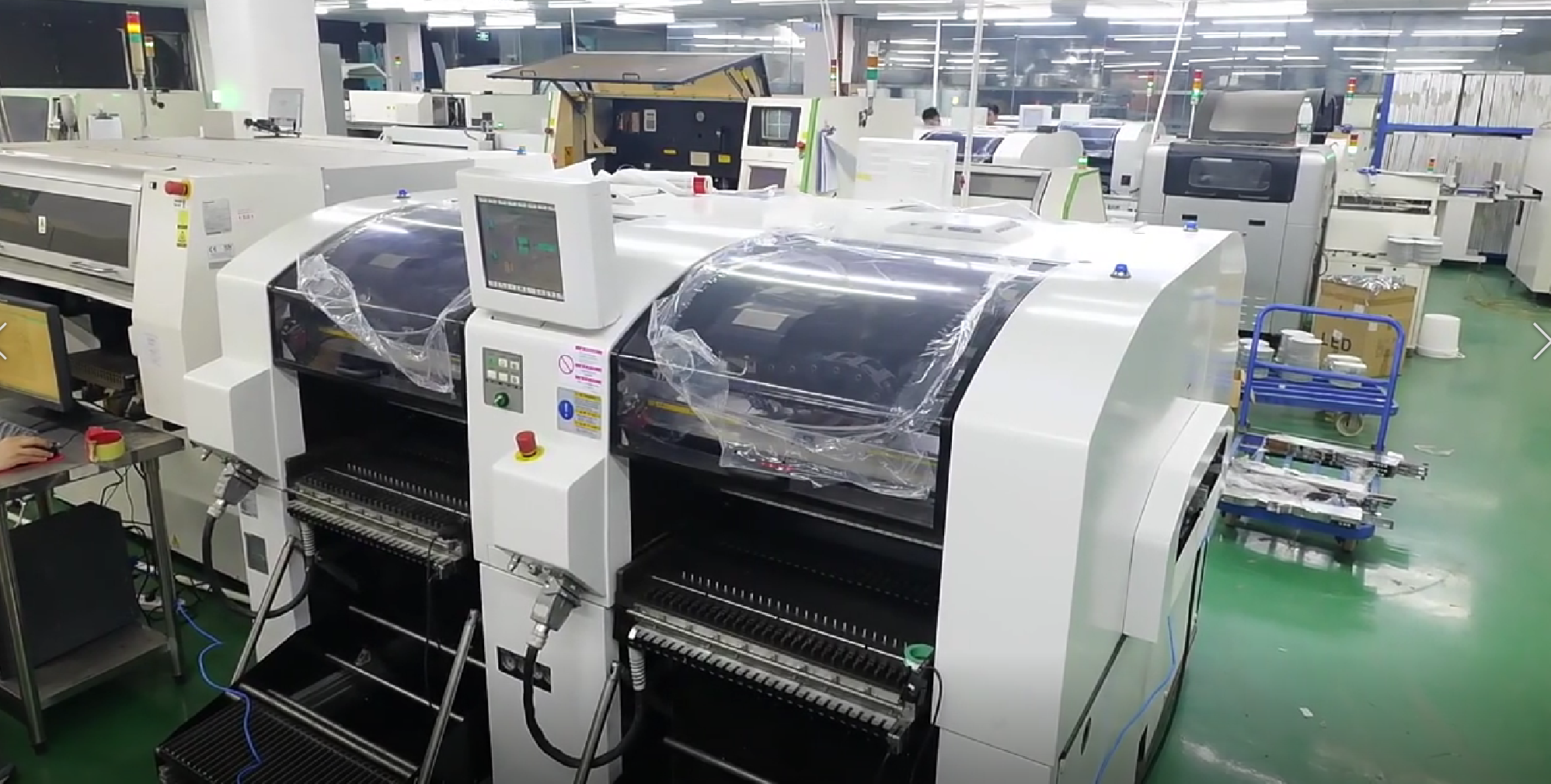
LIYINLED's manufacturing setup supports these strict standards. Their workshop keeps contaminants away from thermal surfaces. The SMT workshop ensures consistent solder quality across every board, removing weak joints that could fail under heat cycling. These controlled conditions mean thermal test results show real product quality, not random manufacturing differences.
A fixture that passes thermal testing shows solid engineering. It will keep steady brightness, avoid early driver failure, and give the long service life customers expect.
How Testing Reduces Defects and Extends Product Lifespan
Early Detection of Component Failures
Before shipping, every unit runs nonstop. This process finds problems before the fixture reaches a customer. Technicians watch for three key things: steady driver performance, even brightness, and dependable heat control.
A driver that flickers or dims during the test points to a bad part. Maybe a capacitor is weak. Maybe a solder joint is cracked. The test spots these issues immediately. Technicians pull the failing unit off the line. They swap out the broken part. Then they test the fixture again. This loop catches problems early, when fixing them is cheap.
This testing saves money for everyone. The maker fixes flaws in-house instead of paying for warranty claims. Customers get lights that work right away. They face fewer returns. They pay less for upkeep. A fixture that passes the burn-in test is far less likely to fail in its first year.
The Link Between Testing and Long-Term Performance
The burn-in test only covers the first few hours of use. But LED Lighting Manufacturers need to predict performance over many years. That is where accelerated life testing comes in. This method uses math models to estimate long-term reliability.
Engineers take data from the burn-in tests. They put that data into prediction models. These models follow the TM-21 method. They figure out when a fixture will reach its L70 or L80 point. The predictions can go far beyond the test time. They estimate performance over long periods.
This data helps makers improve their designs. If a model shows early light drop, engineers adjust the cooling system. They pick better drivers. They refine the assembly process. Each round of testing and fixing makes the next batch more dependable.
For customers, this testing brings real confidence. A fixture from a maker that runs these tests will last as promised. The upfront cost of testing turns into lower long-term expenses and fewer problems. Buyers can trust that the product they install today will still work years later.
LIYINLED's Commitment to Quality Assurance
Certifications and Testing Protocols
Certifications show buyers that a manufacturer is serious. LIYINLED holds BIS certification, which is mandatory for the Indian market. It is not optional like some other marks. The process works through several steps:
Mandatory Compliance: Every lighting product entering India must pass BIS rules under the Compulsory Registration Scheme. No certificate means no market access.
Rigorous Product Testing: Samples go to BIS-accredited labs. Technicians check electrical safety, energy use, and environmental impact against Indian Standards.
Factory Inspection: BIS officials visit manufacturing sites. They verify that production processes match the required quality levels.
Ongoing Monitoring: After certification, BIS conducts periodic audits. Manufacturers submit annual reports to prove continued compliance.
This system catches problems at every stage. A product cannot slip through with a single lucky test sample. The ongoing checks mean quality stays consistent year after year.
Advanced Facilities for Consistent Reliability
Automated SMT production plays a huge role in reliability. Surface-mount technology places components with machine precision rather than human hands. The table below shows how this automation drives consistency:
SMT Production Factor | Mechanism | Contribution to LED Consistency & Reliability |
|---|---|---|
Automated pick-and-place machines | Precise, non-destructive component placement | Eliminates human placement errors that cause inconsistent light output |
Reflow oven with controlled temperature profile | Consistent soldering through precise heating and cooling | Creates uniform solder joints, preventing early failures |
Automated inspection (SPI, AOI, ICT) | Checks solder paste, component placement, and electrical function | Detects defects before shipping, reducing field failures |
"SMT assembly relies more on automated machinery than human intervention, resulting in fewer errors as it is almost entirely automated."
This automation matters for every product manufactured. The services let customers customize design, power, beam angle, LED source, color temperature, control systems, and packaging. Each customized unit still runs through the same aging tests. Customization never means cutting corners on quality. LED Lighting Manufacturers who invest in this level of testing infrastructure deliver products that perform as promised for years.
Burn-in testing is not a box to check. It is a proactive investment that separates reliable products from risky ones. For manufacturers like LIYINLED, those hours of continuous operation catch flaws before customers ever flip a switch.
This rigorous process pays off directly for buyers. Fewer returns, lower maintenance costs, and steady brightness for years come from this upfront effort. When a fixture survives the aging test, it earns its place in a building.
Buyers should look for manufacturers who openly share their testing protocols. Transparency signals confidence. LED Lighting Manufacturers who invest in aging tests today define the industry standard tomorrow. Choose partners who prove reliability before shipping, not after problems appear.
FAQ
How long does the burn-in test actually take?
Most manufacturers run the aging test for a predetermined period. Some go longer for complex fixtures with advanced drivers. LIYINLED runs every unit through this process before shipping. The extra time catches intermittent failures that shorter tests miss.
What customization options does LIYINLED offer?
Buyers can customize design, power, beam angle, LED source, color temperature, control systems, and packaging. Every customized unit still passes the same aging tests. Customization never skips quality steps.
What real results have customers seen with LIYINLED?
The testing process leads to fewer warranty claims and steady brightness. The production processes produce consistent quality across large orders. Repeat business from distributors shows the testing pays off.
Do certifications really matter for LED quality?
Yes. BIS certification, for example, requires factory inspections and ongoing audits, not just one lab test. These credentials prove the manufacturer maintains quality standards over time, not just for a single sample.
Can buyers visit the factory to see testing firsthand?
LIYINLED welcomes visitors to their facility. Buyers can watch the aging test process and see the production lines in action. Seeing the process builds trust. Most manufacturers who skip testing won't offer this level of transparency.