how to choose LED ceiling lights for your space
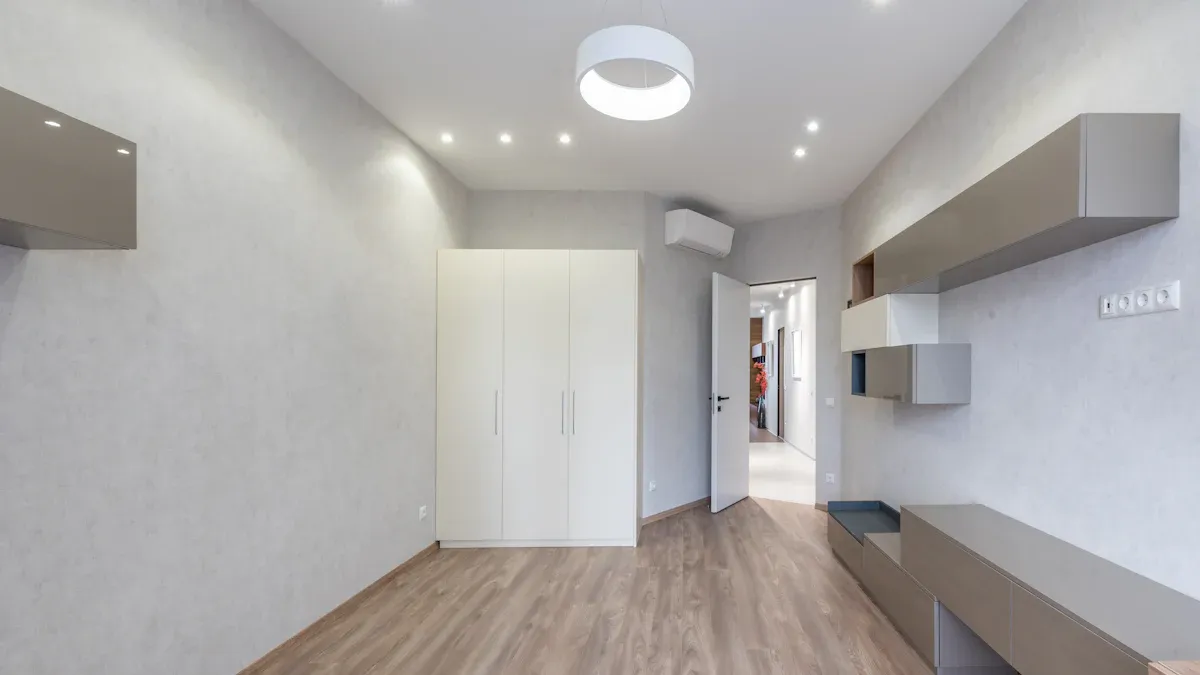
Many individuals feel overwhelmed when they choose led ceiling lights. The market for led lighting is vast, with led light manufacturers offering numerous led light fixtures. The key to success involves matching the technical specifications of an LED Ceiling Light to a room's specific function. This ensures the home lighting feels just right. The rapid adoption of led lighting highlights its importance; led technology is now the standard for modern lighting. An LED Ceiling Light Manufacturer must provide clear specifications for their led products.
Globally, led and OLED luminaires constitute approximately 50% of residential lighting sales.
In 2020, led lighting made up 48% of the residential lighting inventory, a significant rise from just 8% in 2015.
This guide simplifies the selection of led ceiling lights, removing the guesswork from the process.
Step 1: Determine the Right Brightness (Lumens) for Your Room
Selecting the correct brightness is the foundational step in choosing new led ceiling lights. Brightness, measured in lumens, directly impacts a room's functionality and atmosphere. An effective lighting plan matches the light output to the activities performed in the space, ensuring every area of the home is perfectly illuminated.
What Are Lumens and Why Do They Matter More Than Watts?
The transition to led technology changed how people should think about light bulbs. The focus has shifted from the energy an incandescent bulb consumes (watts) to the actual brightness an led source produces (lumens). Understanding this distinction is critical for making an informed lighting decision.
Defining Lumens as a Measure of Brightness
A lumen is the standard, scientific unit of luminous flux, or the total amount of visible light emitted by a source. It provides a universal measure of brightness. For a more technical understanding:
The lumen (lm) is an SI derived unit that quantifies the total visible light a source emits.
It specifically measures light weighted by the average human eye's spectral sensitivity.
Its definition directly links it to the candela (cd), the base unit of luminous intensity. One lumen equals the luminous flux emitted into one steradian (sr) from a source of one candela (
1 lm = 1 cd × sr).
The 2019 redefinition of SI base units further solidified the lumen's precision. It fixed the candela's value by tying it to fundamental physical constants, ensuring the lumen is a stable and universally accurate metric for all modern led lighting.
The Shift from Watts to Lumens in LED Lighting
In the past, consumers associated higher wattage with greater brightness. A 100-watt bulb was always brighter than a 60-watt bulb. However, watts measure energy consumption, not light output. Modern led bulbs are incredibly efficient; an led can produce the same number of lumens as an incandescent bulb while using a fraction of the energy. For example, an led might use only 15 watts to generate the brightness of a 100-watt traditional bulb. Therefore, comparing watts is no longer a reliable way to gauge brightness. Always look for the lumen rating to understand how bright an led fixture will be.
💡 A Note on Perception: The human eye perceives brightness on a logarithmic scale, not a linear one. This means a light dimmed to 50% of its maximum lumens will appear to be about 70% as bright, not half as bright. A 30-40% difference in lumen output is often the minimum required for a change to be clearly noticeable.
How to Calculate Lumens for Your Space
A systematic approach ensures a space receives the correct amount of illumination. Calculating the total lumens required for a room is a straightforward process involving two simple steps.
Measure Your Room's Square Footage
First, determine the total area of the space. Use a tape measure to find the length and width of the room in feet. Then, multiply these two numbers together to get the square footage.
Room Length (ft) × Room Width (ft) = Square Footage (sq ft)
Apply the Lumens-per-Square-Foot Formula
Next, use the industry-standard "lumen method" to determine your total lighting needs. This method uses a unit called a foot-candle, which is a measure of how much light reaches a one-square-foot surface. The formula is:
Total Lumens = Square Footage × Recommended Foot-Candles
Lighting design experts provide foot-candle recommendations based on the tasks performed in a room. A space for detailed work requires more foot-candles than a space for relaxation.
Recommended Brightness Levels by Room Type
The function of a room dictates its ideal brightness level. Task-oriented spaces demand bright, clear lighting, while relaxation areas benefit from softer, ambient illumination. The following table, based on Illuminating Engineering Society (IES) guidelines, provides a strong starting point.
Room/Area | Foot-candles Needed |
|---|---|
Living Room | 10–20 |
Kitchen: General | 30–40 |
Kitchen: Stove & Sink | 70–80 |
Bathroom | 70–80 |
Bedroom | 10–20 |
Home Office | 40–50 |
Hallway | 5–10 |
Kitchens and Bathrooms (Task-Heavy Areas)
These rooms require the highest levels of lighting. For tasks like chopping vegetables or applying makeup, bright, focused light is essential for safety and accuracy. Aim for 70–80 foot-candles in primary work zones. This translates to around 400 lux (lumens per square meter) over countertops and vanities, often achieved with dedicated under-cabinet or vanity led lighting. General floor lighting can be lower, around 30-40 foot-candles.
Living Rooms and Bedrooms (Relaxation Zones)
These spaces are designed for comfort and unwinding. A lower ambient lighting level of 10–20 foot-candles creates a cozy and inviting atmosphere. This general illumination from a central led fixture should be supplemented with task lighting, such as table or floor lamps for reading. Using dimmable led fixtures provides the flexibility to adjust brightness for different activities.
Hallways and Entryways (General Navigation)
The primary purpose of lighting in these transitional spaces is safe navigation. A lower level of 5–10 foot-candles is typically sufficient. The goal is to provide enough light to move around comfortably without creating harsh glare.
Home Offices and Workspaces (Focus Areas)
Productivity and visual comfort are key in a home office. This space requires brighter lighting than a living room but less intensity than a kitchen task area. A range of 40–50 foot-candles helps reduce eye strain and promote focus during the workday. A central led fixture should provide strong ambient light, with a dedicated desk lamp for focused tasks.
Step 2: Select the Perfect Color Temperature (Kelvin)
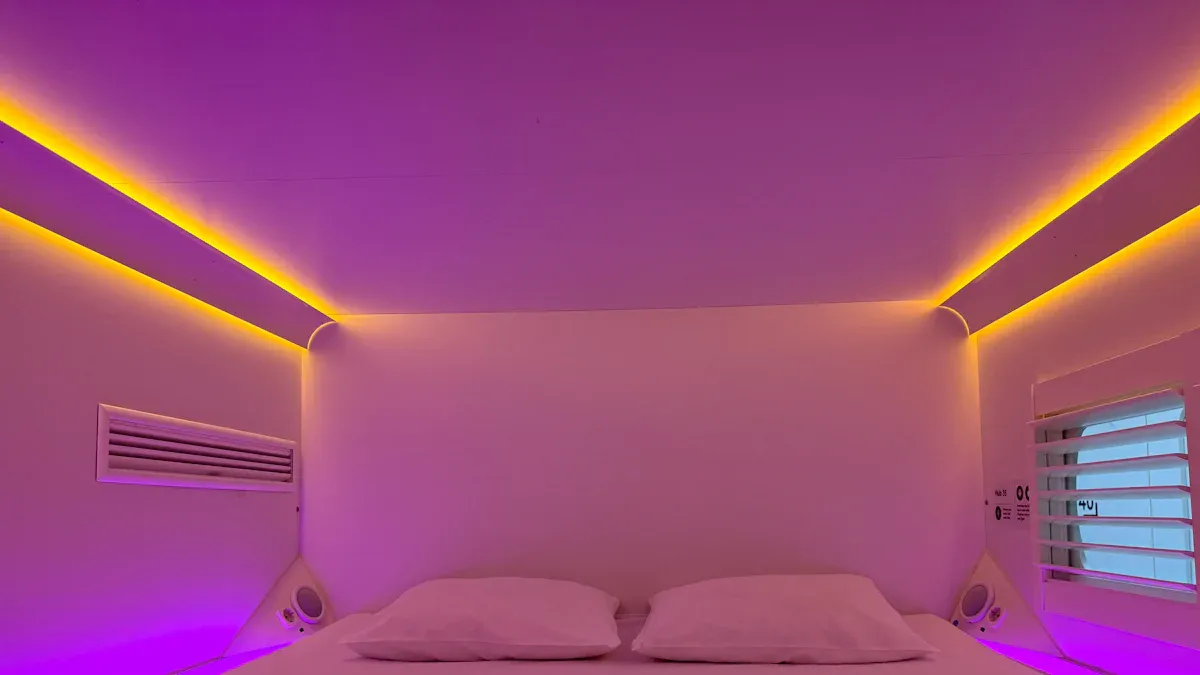
After determining brightness, the next critical decision is selecting the right color temperature. This choice dramatically influences a room's atmosphere and mood. Color temperature describes the appearance of light, from a warm, yellowish hue to a cool, bluish-white light. The right selection ensures the lighting enhances both the function and the feeling of a space.
Understanding the Kelvin (K) Scale for LED Lights
The Kelvin temperature scale provides a precise way to measure the color of light sources. In lighting, the letter 'K' stands for Kelvin, the scientific unit for the color of light. This measurement is based on the color a theoretical black body radiator emits as its temperature increases. The scientific community has used the Kelvin Scale since the 1950s because it is based on a calculated 'absolute zero,' making it a stable and universal metric for all modern led lighting.
A common misconception is that higher temperatures mean "hotter" or warmer colors. The opposite is true for lighting.
Lower Kelvin numbers (e.g., 3000K) produce a warmer, yellowish light.
Higher Kelvin numbers (e.g., 5000K) produce a cooler, whiter, or bluer light.
Understanding this inverse relationship is key to choosing the correct led fixture.
Warm White (2700K – 3000K) for a Cozy Feel
This range emits a soft, inviting glow similar to traditional incandescent bulbs. The warm, yellow-orange tones create a relaxing and intimate atmosphere. This type of led lighting is ideal for spaces where comfort and unwinding are the primary goals. It promotes a sense of calm and well-being.
Neutral or Cool White (3500K – 4100K) for Clarity
This mid-range color temperature offers a clean, balanced, and efficient light. It appears whiter and more neutral than warm white, without the stark blue tones of daylight bulbs. This lighting is excellent for areas that require good visibility and a welcoming yet functional feel. Many commercial and retail spaces use this range to create a bright and inviting environment.
Daylight (5000K – 6500K) for High-Energy Tasks
This range mimics natural daylight, producing a crisp, blue-white light. This high-Kelvin led lighting is highly stimulating and enhances contrast, making it perfect for task-oriented environments. It promotes alertness and is ideal for reading fine print, performing detailed work, or any activity where maximum visual acuity is necessary.
How to Match Color Temperature to Room Function
The ideal color temperature directly corresponds to the activities performed in a space. A cohesive lighting plan considers how each room is used, ensuring the light supports its intended function and creates a harmonious flow throughout the home.
Space | Primary Goal | |
|---|---|---|
Bedrooms | 2700K – 3000K | Relaxation & Comfort |
Home Offices | 4000K – 5000K | Focus & Productivity |
Kitchens | 3000K – 4000K | Clarity & Energy |
Bathrooms | 3000K – 4000K | Cleanliness & Task Accuracy |
Creating a Relaxing Atmosphere in Bedrooms
For bedrooms, designers recommend a warm-white color temperature between 2700K and 3000K. This range fosters rest and relaxation.
2700K offers a classic, cozy glow that creates a traditional and comfortable atmosphere.
3000K provides a slightly crisper warm light, which is suitable for bedrooms with modern finishes or cooler paint colors.
This warm lighting helps signal to the body that it is time to wind down, promoting better comfort and sleep.
Promoting Focus and Energy in Kitchens and Offices
For a vibrant and energetic workspace like a home office, a color temperature between 4000K and 5000K is ideal. This cooler light boosts focus and energy. Lighting below 4000K can sometimes make a person feel sleepy.
4000K is excellent for reducing eye strain during long hours of screen time.
5000K is beneficial for heavy reading or precision tasks that demand high visual detail.
Similarly, kitchens benefit from a neutral to cool white led light (3000K–4000K) that renders food colors accurately and provides clear visibility for safe food preparation.
The Impact of Color Temperature on Mood and Ambiance
Light has a profound, non-visual biological effect on the human body. The color temperature of your led lighting can influence your circadian rhythm, mood, and alertness levels.
💡 Pro Tip: The color temperature of your lighting affects how paint colors and furniture finishes appear. Warm light enhances reds, oranges, and yellows, making a space feel cozier. Cool light brings out blues and greens, which can make a room feel more spacious and open.
Using Warm Light to Unwind
Warm light (2700K–3000K) is associated with evening and rest. Exposure to this type of lighting helps the body prepare for sleep. Studies show that lower color temperature lighting is associated with increased drowsiness, making it perfect for living rooms and bedrooms. This creates a serene atmosphere that encourages relaxation and comfort.
Using Cool Light to Stay Alert
Cooler, blue-enriched light (4000K–6500K) is more activating for mental activity. Research shows that higher color temperatures can improve productivity and well-being.
A 2016 study found that participants working under 5000K lighting showed improved concentration compared to those under warmer lighting.
Workers exposed to morning blue-enriched led light often exhibit better cognitive performance and less afternoon fatigue.
Research from the University of Toronto indicates that tunable led systems shifting from cool morning light to warmer afternoon tones help workers maintain higher productivity.
This makes cool-toned led lighting an excellent choice for home offices, garages, and other task-heavy areas where focus is paramount.
Step 3: Why High Color Rendering Index (CRI) is Crucial
Beyond brightness and color temperature, the quality of light itself plays a vital role. The Color Rendering Index (CRI) is a crucial factor that determines how accurately an led light source reveals the true colors of objects. High-quality led lighting ensures that a space looks vibrant and natural, not dull or discolored. Choosing the right CRI is essential for achieving a polished and functional lighting design.
What is CRI and How Does It Affect Your Space?
CRI is a quantitative metric that measures an artificial light source's ability to accurately render object colors. It directly impacts how paint, furniture, food, and even skin tones appear under the lighting.
Explaining the 0-100 CRI Scale
The Color Rendering Index operates on a scale from 0 to 100. This scale indicates how faithfully an led light source reveals the true colors of objects in comparison to a natural light source. Sunlight serves as the perfect reference, possessing a CRI of 100. An led with a higher CRI number will show colors more accurately and naturally. A low-CRI led can make colors appear washed out or shifted in hue.
Why High CRI Makes Colors Look True and Vibrant
High-CRI led lighting makes everything in a room look better. It brings out the rich tones in wood furniture, shows the true shade of wall paint, and makes food look more appetizing. This type of lighting creates a more visually appealing and comfortable environment. For any application where color perception matters, a high-CRI led is a necessity.
💡 A Deeper Look at Color Science: While CRI is the industry standard, lighting professionals sometimes use a more advanced metric called IES TM-30. It provides a more complete picture of color rendition.
Feature
CRI (Color Rendering Index)
TM-30
Purpose
Measures color accuracy.
Measures color accuracy and saturation.
Metrics
Single score (Ra) from 8 color samples.
Two scores (Rf & Rg) from 99 color samples.
Application
Good for general purpose lighting.
Better for color-critical applications.
For most home projects, choosing a high-CRI led is sufficient.
Recommended CRI Ratings for Different Rooms
Different spaces have different requirements for color accuracy. The general rule is to never go below a CRI of 80 for any residential led lighting.
CRI 80+ for General Purpose Lighting
A CRI of 80 is the accepted minimum for most general lighting applications. An led with this rating is suitable for hallways, storage areas, and some living spaces where precise color rendering is not the top priority. However, for a noticeably better visual experience throughout the home, selecting an led with a CRI of 90 or higher is the superior choice.
CRI 90+ for Kitchens, Bathrooms, and Art Displays
For certain areas, a higher CRI is non-negotiable.
Kitchens: A CRI of 90+ ensures that foods look fresh and appealing. It helps a person distinguish the ripeness of fruits and vegetables.
Bathrooms: High-CRI led lighting renders skin tones accurately, which is essential for applying makeup or grooming.
Art Displays/Closets: This lighting makes clothing colors and artwork appear as the designer or artist intended.
This level of quality led lighting enhances the atmosphere and functionality of any room.
The Visual Impact of Poor vs. Excellent CRI
The difference between low and high-CRI lighting is immediately noticeable. It can be the deciding factor between a space that feels lively and one that feels drab.
How Low CRI Can Make a Space Look Dull
A low-CRI led light can make a beautifully designed room appear lifeless. Reds may look brownish, blues can seem muted, and skin tones might take on an unhealthy, pale cast. This poor-quality lighting detracts from the overall aesthetic and can even make a space feel unwelcoming.
Identifying High-CRI LED Products When Shopping
Reputable led manufacturers list the CRI value on the product's packaging or online specification sheet. Look for a "CRI 90+" or "High CRI" designation. When choosing your next led fixture, make CRI a key part of your decision alongside lumens and Kelvin to ensure the best possible lighting for your home.
Step 4: Consider Essential Features When You Choose LED Ceiling Lights
Modern led lighting offers more than just illumination. Advanced features provide unprecedented control over a room's atmosphere and functionality. When people choose led ceiling lights, considering these capabilities is essential for creating a truly dynamic and responsive environment.
Dimming Capabilities for Total Control
Dimming is one of the most valuable features of contemporary led lighting. It allows users to adjust brightness levels to suit any activity or time of day, transforming a single fixture into a multi-purpose lighting tool.
The Benefits of Adjustable Brightness
Dimmable led lights offer significant advantages beyond simple brightness control. They are highly energy-efficient, with some led models using up to 90% less energy than traditional bulbs. Dimming an led further reduces power consumption. This adaptability also enhances mood and well-being. Softer lighting in the evening promotes relaxation and comfort, while brighter lighting can improve focus. This versatility makes a dimmable led fixture ideal for kitchens, offices, and living rooms.
Understanding Dimmer Types for LED Fixtures
Not all dimmer switches work with every led fixture. Older dimmers designed for incandescent bulbs often cause flickering or buzzing with a low-wattage led. Modern dimmers, such as CL (CFL/LED) dimmers, are specifically engineered to handle the electronic drivers in led lighting.
How to Ensure Dimmer and LED Compatibility
To guarantee smooth, flicker-free performance, a person must ensure the led fixture and the dimmer switch are compatible. Reputable led manufacturers provide a list of compatible dimmers on their product packaging or specification sheets. Checking this information before purchase prevents performance issues and ensures optimal control over the lighting.
Smart LED Lighting Features
Smart led lighting integrates connectivity and automation, offering a new level of convenience. These systems allow for remote management and customization, making them a popular choice for modern homes.
Voice and Smartphone App Control
Many smart led fixtures can be controlled via a smartphone app or voice commands through assistants like Amazon Alexa or Google Assistant. This feature allows for instant adjustments to the lighting without needing to access a physical switch.
Scheduling, Automation, and Timers
Homeowners increasingly seek smart lighting for its automation capabilities. Popular features include:
Custom Scenes: Creating preset lighting schemes for activities like "Movie Night" or "Focus Time."
Schedules: Automating the lighting to turn on or off at specific times.
Security Modes: Using a 'mockupancy' mode that mimics presence when away from home.
Integrating with Smart Home Ecosystems
A key benefit of smart led lighting is its ability to integrate with other smart home devices. An led system can sync with motorized shades, security cameras, and smart thermostats to create a cohesive, automated home environment that enhances both security and comfort.
Advanced Color and Temperature Features
Some of the most exciting innovations in led technology involve color control. These advanced features give users the power to change not just the brightness but the very character of their lighting.
Tunable White for Adjustable Color Temperature
Tunable white led fixtures allow a user to adjust the color temperature of the light, typically from a warm 2700K to a cool 5000K or higher. This feature provides ultimate flexibility, enabling a person to shift from an energizing, cool light for daytime tasks to a warm, relaxing glow in the evening. This is a critical feature to consider when you choose led ceiling lights.
RGB for Full-Spectrum Color Changing
RGB (Red, Green, Blue) led systems offer full-spectrum color-changing capabilities. These fixtures can produce millions of different hues, making them perfect for creating dynamic accent lighting, setting a festive mood, or adding a splash of personality to a space.
Step 5: Choose the Right Type and Style of Fixture
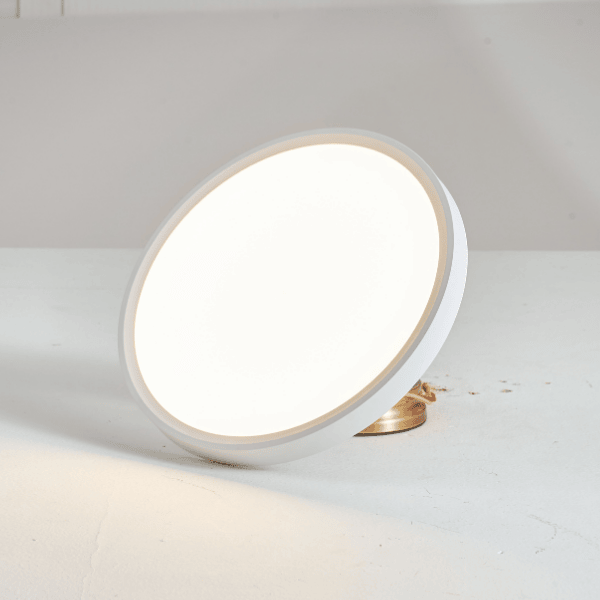
After defining the technical specifications, a person must select a physical fixture that complements the space. The right led fixture enhances the home decor while delivering the perfect lighting. This step involves choosing a type, style, and size that aligns with the room's architecture and aesthetic.
Common Types of LED Ceiling Fixtures
Different fixture types serve distinct functional and decorative purposes. The ceiling height is a primary factor in determining the appropriate type of led lighting.
Flush Mount Lights for Low Ceilings
Flush mount led fixtures sit directly against the ceiling. This design maximizes headroom, making it an ideal lighting solution for spaces with ceilings under eight feet tall, such as hallways, closets, and basements. This type of led lighting provides excellent general illumination.
Semi-Flush Mount Lights for Mid-Height Ceilings
Semi-flush mount led fixtures hang just below the ceiling, creating a small gap. This space allows light to reflect upwards, creating a more ambient and airy feel. They are a versatile lighting choice for standard eight to ten-foot ceilings in bedrooms and kitchens.
Recessed Lighting (Downlights) for a Modern Look
Recessed led lighting, also known as downlights, is installed directly inside the ceiling. This creates a clean, minimalist look that is popular in modern design. This lighting is excellent for providing focused task lighting or for washing walls with light.
Pendant Lights and Chandeliers for a Focal Point
For rooms with higher ceilings, pendant led lights and chandeliers serve as dramatic focal points. These fixtures provide both ambient lighting and a strong decorative statement, making them perfect for dining rooms and grand entryways.
How to Match the Fixture to Your Home Decor
The fixture's style should harmonize with the existing decor. A well-chosen led fixture acts as a key design element that ties the room together.
Modern and Minimalist Styles
Modern designs favor clean lines and geometric shapes. Simple drum shades or sleek, integrated led fixtures complement this aesthetic.
Traditional and Classic Designs
Traditional home decor calls for fixtures with more ornate details. Look for led lighting with classic materials like brass or bronze and elegant glass shades.
Farmhouse and Rustic Aesthetics
Farmhouse style pairs well with fixtures made from natural or distressed materials. Caged lights, barn-style pendants, and fixtures with wood accents enhance this cozy look.
Industrial and Urban Looks
Industrial design often features raw materials. Exposed led bulbs, metal finishes, and utilitarian shapes define this lighting style.
Selecting the Right Size and Scale
A fixture must be proportional to the space it illuminates. An undersized light looks lost, while an oversized one can overwhelm a room.
A Simple Formula for Fixture Diameter
Designers use a simple rule to find the right fixture diameter. This ensures the lighting scale is appropriate for the space.
To find the ideal diameter for a ceiling light fixture, add the room's length and width in feet. The sum, converted to inches, is the recommended fixture diameter. For example, a 10-foot by 12-foot room (10 + 12 = 22) needs a fixture about 22 inches in diameter.
Balancing Multiple Light Fixtures in One Room
For a very large space, using multiple smaller led fixtures can provide better light distribution than a single large one. This approach creates balanced, layered lighting throughout the area.
Step 6: Energy Efficiency and Lifespan of Your LED
A crucial advantage of modern led technology is its superior energy efficiency and long lifespan. Understanding these two factors helps a person appreciate the long-term value of their lighting investment. High-quality led lighting not only reduces electricity bills but also minimizes the need for frequent replacements.
Understanding LED Energy Savings
The primary financial benefit of switching to led lighting comes from its dramatic reduction in energy consumption. This makes it the leading choice for energy-efficient lighting solutions.
Comparing LED Wattage to Incandescent
An led bulb uses approximately 75% less energy than a traditional incandescent bulb to produce the same amount of light. This remarkable energy efficiency translates directly into cost savings. For example, replacing a single 60-watt incandescent bulb with a 10-watt led equivalent can save a homeowner a significant amount each year. The difference in operating cost for this type of lighting is substantial.
Feature | Incandescent Bulb (60W) | LED Bulb (10W) |
|---|---|---|
Annual Energy Cost | $39.42 | $6.57 |
Energy Cost Savings | 83.3% |
How Energy Star Certification Helps
The ENERGY STAR label is a trusted symbol for energy efficiency. To earn this certification, an led product must meet strict performance criteria set by the U.S. Environmental Protection Agency. These standards ensure the lighting delivers on its promises of quality and savings. Certified led lighting undergoes rigorous testing for:
Color Quality (CRI)
Light Output and Distribution
Lifespan and Durability
Dimming Performance
Choosing an ENERGY STAR certified led fixture guarantees a high-performing, long-lasting, and energy-efficient lighting product.
What to Expect for LED Lifespan
One of the most compelling features of an led is its exceptionally long operational life. Unlike traditional bulbs that burn out, an led slowly dims over many years.
How Long Do Integrated LEDs Really Last?
The lifespan of an led is measured by its L70 rating. This metric indicates the number of operating hours until the led light source's output has faded to 70% of its initial brightness. Many integrated led fixtures carry an L70 rating of 25,000 to 50,000 hours.
💡 What does 25,000 hours mean? If a person uses their led lighting for 3 hours per day, a fixture rated for 25,000 hours could last for more than 22 years. This longevity makes an integrated led a "set it and forget it" lighting solution.
Factors That Affect Longevity
Several environmental and usage factors can influence the lifespan of an led. Proper installation and use are key to maximizing the life of your led lighting.
Ambient Temperature: Extreme heat is the primary enemy of an led. High operating temperatures can degrade the led chips and internal electronics, shortening the fixture's life. Ensure proper ventilation around the lighting.
Power Source: Using an led with an incompatible dimmer switch or an incorrect voltage supply can cause flickering and premature failure. Always match the led fixture to a compatible power source.
Usage Patterns: While an led is durable, frequently switching it on and off can cause more wear than leaving it on for extended periods. The initial power surge is the most stressful moment for the lighting components.
A person can confidently choose led ceiling lights. The process involves balancing the technical aspects of led lighting. The right led lighting transforms any room. This led lighting knowledge empowers a person to choose led ceiling lights that are beautiful and functional. The right led lighting makes a huge difference.
A family room becomes cozy with warm, dimmable led lighting. A kitchen gains functionality with multiple led ceiling lights. An office improves productivity with natural led lighting. An led fixture is a powerful led tool for home lighting. This led technology provides superior lighting.
Go forward and brighten your home with the perfect led lighting and led lighting. This lighting is key.
FAQ
Can a person install an integrated led fixture themselves?
Yes, many homeowners can install a basic integrated led fixture. The process is similar to installing any standard ceiling lighting. A person must turn off the power at the circuit breaker. Following the led manufacturer's instructions for the specific led lighting is crucial for safe and correct installation of the led lighting.
Do smart led lights use energy when turned off?
Smart led lighting consumes a tiny amount of standby power. This power keeps the led connected to the Wi-Fi network for remote control. The energy usage of the led is minimal. This feature is a key part of modern led lighting. The led lighting system requires this for smart home integration.
What causes an led light to flicker?
Flickering in an led light often points to an incompatibility issue. A common cause is using a non-dimmable led bulb with a dimmer switch. An outdated dimmer switch can also cause this problem with modern led lighting. The led requires a compatible power source for stable lighting.
Is an integrated led fixture better than an led bulb?
An integrated led fixture has the led diodes built directly into the lighting. This design often allows for a sleeker profile and better heat management, extending the led lifespan. An led bulb offers more flexibility for replacement. The choice depends on the desired aesthetic and long-term lighting plan.
How does a person dispose of an old led light?
An led light does not contain hazardous materials like mercury. A person can typically dispose of an led in regular household trash. However, recycling is the best option. Many local waste management services and retailers offer led recycling programs for this type of led lighting.
Why is my new led lighting not as bright as expected?
The perceived brightness of led lighting depends on lumens, not watts. A person should check the lumen rating on the led packaging. The color temperature of the led also affects brightness perception. A cooler white led often appears brighter than a warm white led of the same lumen output.
💡 A Final Tip: Always check the led specifications before purchase. The right led lighting transforms a space. A good led provides years of quality lighting. This led is an investment in your home. The led offers superior lighting. The led is a great led. The led is a good led. The led is a bright led. The led is a new led. The led is a modern led. The led is a smart led. The led is a dimmable led. The led is a tunable led. The led is an RGB led. The led is a flush mount led. The led is a semi-flush led. The led is a recessed led. The led is a pendant led. The led is a chandelier led. The led is an efficient led. The led is a long-lasting led. The led is a high-CRI led. The led is a quality led. The led is a reliable led. The led is a safe led. The led is a cool led. The led is a warm led. The led is a neutral led. The led is a daylight led. The led is a white led. The led is a color led. The led is a single led. The led is a multiple led. The led is a primary led. The led is a secondary led. The led is an accent led. The led is a task led. The led is an ambient led. The led is a general led. The led is a specific led. The led is a functional led. The led is a decorative led. The led is a stylish led. The led is a simple led. The led is a complex led. The led is a small led. The led is a large led. The led is a round led. The led is a square led. The led is a linear led. The led is a flexible led. The led is a rigid led. The led is a new led. The led is a better led. The led is the best led. The led is a chosen led. The led is a selected led. The led is a perfect led. The led is a suitable led. The led is a recommended led. The led is a certified led. The led is a tested led. The led is a proven led. The led is a trusted led. The led is a popular led. The led is a common led. The led is a standard led. The led is a special led. The led is a unique led. The led is a custom led. The led is a powerful led. The led is a bright led. The led is a focused led. The led is a diffused led. The led is a direct led. The led is an indirect led. The led is an indoor led. The led is an outdoor led. The led is a ceiling led. The led is a wall led. The led is a floor led. The led is a table led. The led is a desk led. The led is an under-cabinet led. The led is a track led. The led is a rope led. The led is a strip led. The led is a panel led. The led is a tube led. The led is a corn led. The led is a filament led. The led is a COB led. The led is an SMD led. The led is a high-power led. The led is a low-power led. The led is a DC led. The led is an AC led. The led is a smart led. The led is a connected led. The led is a wireless led. The led is a Bluetooth led. The led is a Wi-Fi led. The led is a Zigbee led. The led is a Z-Wave led. The led is a Thread led. The led is a Matter led. The led is a future led. The led is the future of lighting. This lighting is great lighting. This lighting is good lighting. This lighting is bright lighting. This lighting is new lighting. This lighting is modern lighting. This lighting is smart lighting. This lighting is dimmable lighting. This lighting is tunable lighting. This lighting is RGB lighting. This lighting is flush mount lighting. This lighting is semi-flush lighting. This lighting is recessed lighting. This lighting is pendant lighting. This lighting is chandelier lighting. This lighting is efficient lighting. This lighting is long-lasting lighting. This lighting is high-CRI lighting. This lighting is quality lighting. This lighting is reliable lighting. This lighting is safe lighting. This lighting is cool lighting. This lighting is warm lighting. This lighting is neutral lighting. This lighting is daylight lighting. This lighting is white lighting. This lighting is color lighting. This lighting is single lighting. This lighting is multiple lighting. This lighting is primary lighting. This lighting is secondary lighting. This lighting is accent lighting. This lighting is task lighting. This lighting is ambient lighting. This lighting is general lighting. This lighting is specific lighting. This lighting is functional lighting. This lighting is decorative lighting. This lighting is stylish lighting. This lighting is simple lighting. This lighting is complex lighting. This lighting is small lighting. This lighting is large lighting. This lighting is round lighting. This lighting is square lighting. This lighting is linear lighting. This lighting is flexible lighting. This lighting is rigid lighting. This lighting is new lighting. This lighting is better lighting. This lighting is the best lighting. This lighting is a chosen lighting. This lighting is a selected lighting. This lighting is a perfect lighting. This lighting is a suitable lighting. This lighting is a recommended lighting. This lighting is a certified lighting. This lighting is a tested lighting. This lighting is a proven lighting. This lighting is a trusted lighting. This lighting is a popular lighting. This lighting is a common lighting. This lighting is a standard lighting. This lighting is a special lighting. This lighting is a unique lighting. This lighting is a custom lighting. This lighting is a powerful lighting. This lighting is a bright lighting. This lighting is a focused lighting. This lighting is a diffused lighting. This lighting is a direct lighting. This lighting is an indirect lighting. This lighting is an indoor lighting. This lighting is an outdoor lighting. This lighting is a ceiling lighting. This lighting is a wall lighting. This lighting is a floor lighting. This lighting is a table lighting. This lighting is a desk lighting. This lighting is an under-cabinet lighting. This lighting is a track lighting. This lighting is a rope lighting. This lighting is a strip lighting. This lighting is a panel lighting. This lighting is a tube lighting. This lighting is a corn lighting. This lighting is a filament lighting. This lighting is a COB lighting. This lighting is an SMD lighting. This lighting is a high-power lighting. This lighting is a low-power lighting. This lighting is a DC lighting. This lighting is an AC lighting. This lighting is a smart lighting. This lighting is a connected lighting. This lighting is a wireless lighting. This lighting is a Bluetooth lighting. This lighting is a Wi-Fi lighting. This lighting is a Zigbee lighting. This lighting is a Z-Wave lighting. This lighting is a Thread lighting. This lighting is a Matter lighting. This lighting is a future lighting. This lighting is the future of lighting.