Latest recessed downlight technology and design trends in 2026
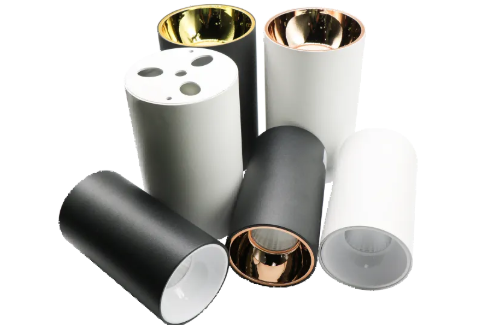
In 2026, recessed lighting is no longer just about illumination. The latest trends show a market defined by three pillars: bio-adaptive technology, seamless architectural integration, and universal smart connectivity. This evolution in lighting design prioritizes human well-being and minimalist aesthetics. Both the top LED DownLight Manufacturer and smaller led light manufacturers are driving this change. The recessed lighting market reflects these advancements with strong growth projections.
Metric | Value |
|---|---|
Market Size (2025) | $87.5 Billion |
Market Size (2035) | $265.09 Billion |
CAGR (2025 - 2035) | 11.72% |
Advanced recessed downlight technology is transforming the simple LED DownLight. Modern led light fixtures now offer an experience that enhances daily life.
The Evolution of Recessed Downlight Technology
The innovation in recessed downlight technology has pivoted dramatically. The focus has shifted from simple energy savings to a more holistic approach centered on human experience and architectural harmony. This evolution is built on two core advancements: bio-adaptive lighting that supports well-being and technical breakthroughs that deliver unprecedented light quality and efficiency.
Human-Centric and Bio-Adaptive Lighting
In 2026, lighting is no longer a static utility. It is a dynamic system designed to support human biology. This user-centric illumination actively enhances mood, focus, and overall health by synchronizing with the body's natural rhythms.
Dynamic Tunable White for Circadian Rhythms
The most significant trend is the widespread adoption of dynamic tunable white lighting. These systems automatically adjust their color temperature and intensity throughout the day to mimic the natural progression of sunlight. This process directly supports our circadian rhythm, the body's internal 24-hour clock.
Our bodies are biologically programmed to respond to light. Specialized cells in our eyes contain melanopsin, a photopigment sensitive to blue light. These cells signal the brain to suppress melatonin (the sleep hormone) during the day and allow its release in the evening. Modern lighting systems leverage this science to improve our daily lives.
Morning light is rich in blue wavelengths, promoting alertness and cognitive function. In contrast, evening light shifts to warmer, amber tones. This change minimizes blue light exposure, allowing for natural melatonin production and preparing the body for restful sleep.
Bio-Adaptive Controls and Sensor Integration
Making this technology seamless requires sophisticated controls. Bio-adaptive systems integrate advanced sensors to create a truly responsive environment.
Occupancy Sensors: Detect presence to activate or deactivate lights, saving energy.
Daylight Sensors: Measure the amount of natural light in a room and dim the artificial lighting accordingly.
Smart Schedules: Align the tunable white transitions with the time of day or a user's specific schedule.
These components work together, ensuring the lighting is always optimized for both the occupants and the environment without requiring manual intervention.
The Rise of Wellness-Focused Lighting
The move toward wellness-focused lighting is backed by extensive scientific research. Studies consistently show that aligning indoor lighting with circadian rhythms delivers measurable improvements in health and productivity. The data demonstrates significant gains in mood, focus, and performance.
Institutions and corporations are adopting human-centric lighting to create healthier and more effective spaces. The quantifiable benefits make it a strategic investment rather than just a design choice.
Metric | Improvement | Context |
|---|---|---|
Cognitive Task Performance | 18% | Deloitte HQ, Amsterdam |
Student Focus | 36% | University of California Classrooms |
Task Performance | 12% | Philips + ABN AMRO |
Error Rate Reduction | From 11.6% to 7.8% | General HCL Application |
Breakthroughs in Light Quality and Efficiency
Alongside wellness features, the technical performance of the LED itself has reached new heights. In 2026, premium recessed downlight technology delivers superior visual comfort and performance, setting new benchmarks for the entire industry.
Ultra-High CRI (95+) as the New Standard
Color Rendering Index (CRI) measures how accurately a light source reveals the true colors of objects. While a CRI of 90 was once considered excellent, the new standard for high-end applications is 95 or higher. This level of color fidelity ensures that environments look vibrant and natural. Breakthroughs in LED chip and phosphor technology make this possible.
Nichia's Optisolis™ LEDs use a special blue chip and revolutionary phosphor to produce a spectrum that nearly matches natural sunlight, achieving a CRI over 98.
Seoul Semiconductor's SunLike™ Series employs a purple emitter with an RGB phosphor mix, creating a full-spectrum light that renders colors with stunning accuracy.
This advancement is critical in retail, hospitality, and residential spaces where color appearance is paramount.
Advanced Optics for Superior Glare Control (UGR < 16)
Visual comfort is a top priority. Glare causes eye strain and discomfort, reducing the quality of an environment. The Unified Glare Rating (UGR) is a standardized metric for quantifying glare. While green building standards like LEED often require a UGR of less than 19, the 2026 trend for high-comfort spaces pushes this benchmark even lower to a UGR of less than 16. Manufacturers achieve this through deep-regress designs, high-performance lenses, and specialized baffles that shield the light source from direct view.
Pushing the Limits of LED Efficacy (220+ lm/W)
Efficacy, measured in lumens per watt (lm/W), defines how much visible light an LED produces for each watt of electricity it consumes. The relentless pace of innovation has pushed commercial LED efficacy beyond 220 lm/W in 2026. This remarkable efficiency reduces operating costs and environmental impact. Industry standards, such as the new DLC SSL V6.0, continue to drive improvements in both quality and performance, ensuring that this powerful illumination is also highly sustainable. Leading products like Cree LED's XLamp® XP-G4 exemplify this trend, offering industry-leading efficacy without compromising on light quality.
Smart Recessed Lighting: Connectivity and Control in 2026
Beyond light quality, the intelligence controlling the fixtures defines modern recessed lighting. In 2026, connectivity is no longer a luxury but a core feature, driven by universal standards, artificial intelligence, and groundbreaking data transmission technologies. This smart evolution makes advanced lighting systems more accessible and powerful than ever.
The New Era of Universal Compatibility
The fragmented smart home market of the past has given way to a unified ecosystem. This change simplifies installation and daily use for everyone.
Matter and Thread Protocol Adoption
The widespread adoption of the Matter protocol, running over Thread mesh networks, is the cornerstone of this new era. Matter acts as a universal language for smart devices. It ensures that fixtures from different manufacturers can communicate and work together flawlessly.
Seamless Integration with Smart Home Ecosystems
This universal standard eliminates the need for multiple proprietary apps. Consumers can now integrate smart home products into their existing setups regardless of brand. Major tech companies like Amazon, Google, and Apple all support Matter. This guarantees that devices work across ecosystems such as Alexa, Google Home, and Apple HomeKit. The setup process is incredibly simple, often requiring just a smartphone scan of a QR code to connect a new lighting fixture.
AI-Powered Automation and Voice Control
Artificial intelligence has transformed lighting from a reactive tool to a predictive and personalized system. AI anticipates user needs to create truly automated environments.
Predictive Lighting Scenes and Routines
AI algorithms analyze data from sensors, schedules, and user behavior to create dynamic lighting scenes. This technology moves beyond simple timers to deliver anticipatory control.
In offices, the lighting system supports circadian rhythms by boosting alertness in the morning and reducing blue light in the afternoon.
In restaurants, AI shifts lighting tones to create an ideal ambiance for evening dining.
In retail, the lighting dynamically highlights products based on customer traffic patterns to enhance the shopping experience.
Advanced Voice Command Nuances
Natural Language Processing (NLP) has made voice control remarkably intuitive. Voice assistants now understand context and conversational language, not just rigid commands. Advanced systems like Josh.ai interpret natural speech patterns with high accuracy. can trigger a complex routine, dimming the lights, adjusting the thermostat, and activating security systems.
Li-Fi (Light Fidelity) Integration
One of the most futuristic trends is the integration of Li-Fi technology directly into commercial lighting fixtures, turning them into secure, high-speed data hubs.
Data Transmission Through Commercial Lighting
Li-Fi uses the visible light spectrum from LED fixtures to transmit data. This creates a dual-purpose infrastructure that provides both high-quality illumination and wireless connectivity. It offers theoretical speeds significantly faster than conventional Wi-Fi.
Applications in Secure Environments
The primary benefit of Li-Fi is its unparalleled security. Since light cannot pass through opaque surfaces like walls, the network is physically contained within a room, making it nearly impossible to hack from the outside.
This technology is ideal for environments where data security and connection stability are paramount. Key applications include military facilities, industrial automation settings, and corporate offices handling sensitive information. Li-Fi provides a robust, interference-free connection perfect for mission-critical operations.
2026 Lighting Design Trends: The Aesthetics of Recessed Fixtures
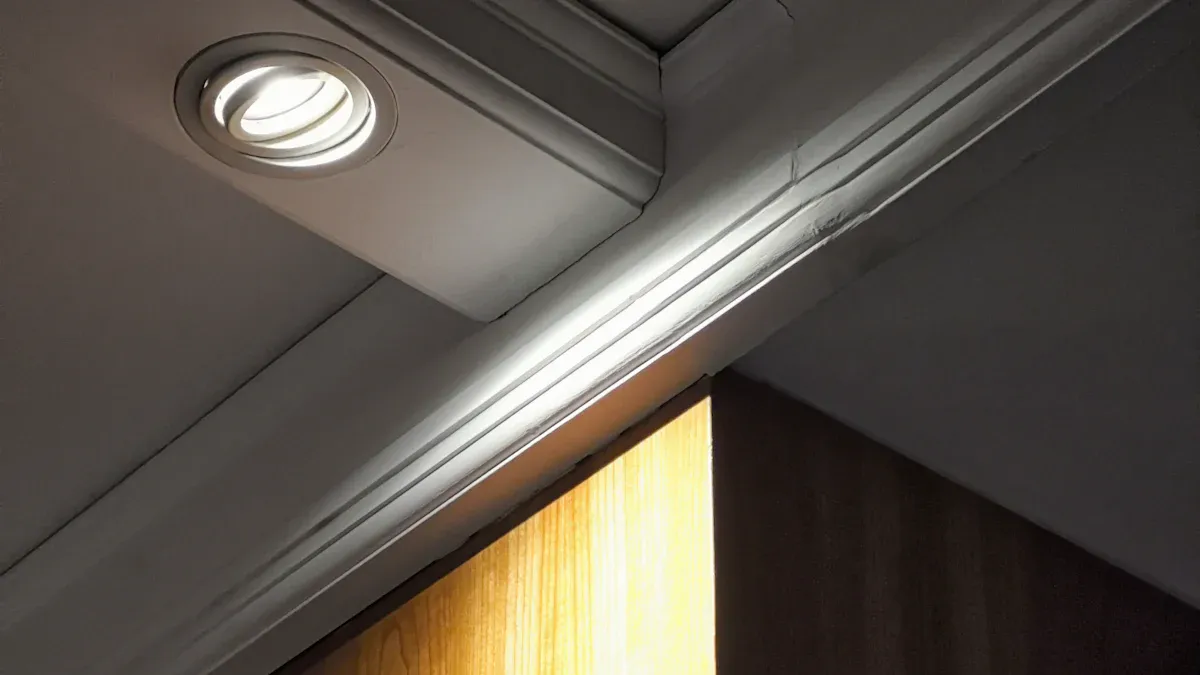
In 2026, the aesthetics of recessed lighting are governed by one principle: minimalism. The focus has shifted from the fixture itself to the effect of the light it produces. This movement toward architectural purity is one of the most influential lighting design trends. The goal is to make the technology disappear, leaving only clean lines and beautiful, functional illumination. This approach elevates the overall architectural design.
The "Invisible" Lighting Trend: Seamless Integration
The most prominent of these trends is the pursuit of "invisible" lighting. Designers and architects want to integrate light sources so seamlessly that they become part of the ceiling plane. This design philosophy removes visual clutter. It allows the architecture, interior finishes, and occupants to be the focus. The lighting becomes a subtle yet powerful element.
The Dominance of Trimless and Plaster-In Models
Trimless and plaster-in fixtures are the champions of this invisible lighting movement. Unlike traditional downlights with a visible flange or trim, these models are installed before the final ceiling finish. The housing is mudded and plastered over, leaving only a sharp, clean aperture for the light to emerge from.
The ultimate goal is to see the light, not the luminaire. This approach creates a quiet ceiling, where light appears to emanate directly from the architecture itself.
This technique requires careful planning and coordination between electricians and drywall contractors. The result, however, is a sophisticated and uninterrupted ceiling plane that defines high-end residential and commercial design.
Micro-Apertures: Powerful Light from Tiny Openings
Technological advancements have enabled another key trend: micro-apertures. Manufacturers now produce incredibly powerful and high-quality lighting from openings as small as one inch or less. These tiny fixtures defy expectations, delivering significant illumination without drawing attention to themselves.
Minimal Visual Impact: Their small size makes them nearly invisible from a distance.
Architectural Precision: They allow for precise "pinspot" lighting effects on artwork or objects.
Design Flexibility: Designers can group them in patterns to create unique visual compositions.
This style of lighting is perfect for modern spaces where clean lines are paramount. It proves that impactful lighting does not require a large or obtrusive fixture.
Deep-Regress Designs for Hidden Light Sources
To further enhance visual comfort and the invisible aesthetic, deep-regress designs are now standard in premium fixtures. This design places the LED light source high up within the fixture's housing. The deep setback shields the source from the normal field of view, dramatically reducing glare. An occupant can stand almost directly underneath the fixture without seeing the bright LED. This hidden source approach ensures the focus remains on the illuminated surfaces, not the lighting hardware.
Materiality, Finishes, and Customization
While the goal is often invisibility, the physical fixture still matters. The latest trends in materials and finishes give designers new tools for expression and specification. Customization is key to achieving a cohesive design vision.
Sustainable and Novel Fixture Materials
Sustainability has become a critical factor in product specification. The industry is moving beyond basic recyclability toward a more holistic approach to sustainable lighting. Manufacturers are using innovative materials to reduce environmental impact.
Recycled Aluminum: A common choice for housings, reducing the carbon footprint.
Bio-Resins and Polymers: Plant-based or biodegradable materials are emerging for internal components and trims.
Powder Coatings with Low VOCs: Finishes are becoming more environmentally friendly, improving indoor air quality.
This focus on sustainability allows projects to achieve green building certifications while promoting a healthier planet.
Customizable Finishes: Matte Black, Brass, and Beyond
The standard white trim is no longer the only option. A diverse palette of finishes allows recessed lighting to either blend in or stand out as a deliberate design element. Customization offers endless possibilities to match a project's unique style.
Finish | Application | Design Impact |
|---|---|---|
Matte Black | Dark ceilings, modern interiors | Creates a dramatic, high-contrast look. |
Brushed Brass | Hospitality, luxury residential | Adds warmth and a touch of classic elegance. |
Bronze/Oil-Rubbed | Transitional, rustic spaces | Provides a rich, textured feel. |
Custom Colors | Branded retail, creative offices | Allows perfect matching with brand or decor palettes. |
These finish options transform a functional item into a key part of the interior design narrative.
The Shift Towards Modular and Field-Configurable Designs
The final major trend is the move toward modularity. Instead of a single, fixed unit, fixtures are now designed as a system of components: a housing, a light engine, and a trim. This modular design offers immense flexibility. An electrician can install the housing early in construction. The designer can select the final trim and light engine later in the process. This approach also simplifies future upgrades. A user can easily swap out the light engine for a newer, more efficient model without replacing the entire fixture. This forward-thinking design ensures the lighting installation remains relevant for years to come.
Functionality Meets Form: The Latest Lighting Trends in Action
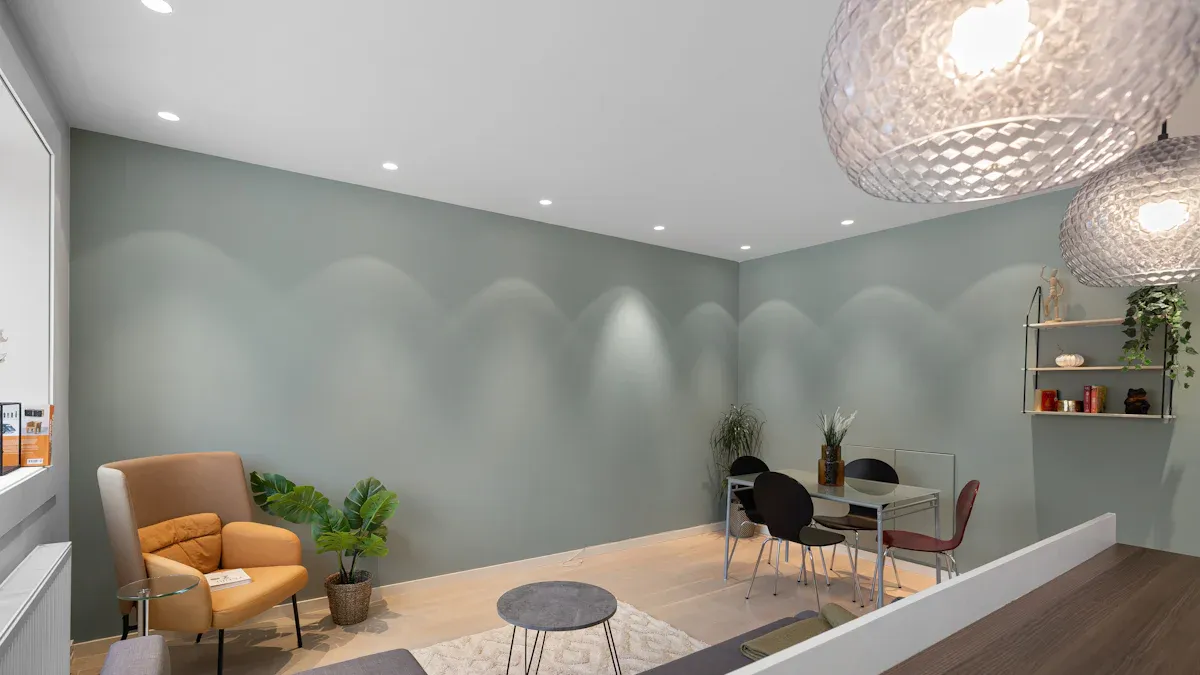
In 2026, the most innovative lighting trends are those that merge advanced functionality with beautiful form. The latest recessed fixtures are no longer single-purpose devices. They are dynamic, multi-functional tools that actively shape an environment's look and feel. This evolution in design is changing how we experience both residential and commercial spaces.
Dynamic and Multi-Functional Downlights
Modern downlights pack incredible versatility into a minimal package. These trends show a move towards fixtures that do more with less.
Integrated Gimbals and Rotational Adjustability
Fixtures with integrated gimbals and rotational mechanisms offer unparalleled flexibility. This design allows users to precisely direct light, transforming a general downlight into an accent light. Homeowners can highlight artwork, and retailers can spotlight merchandise, all from a single, discreet fixture.
Warm-Dim Technology Mimicking Incandescence
Warm-dim technology masterfully replicates the cozy glow of traditional incandescent bulbs. As the fixture dims, the color temperature warms, shifting from a neutral white to a soft, amber hue around 2200K. This feature is essential for creating intimate, relaxing atmospheres in living rooms and restaurants.
The All-in-One Fixture: Light, Speaker, and Sensor
To achieve ultimate ceiling minimalism, manufacturers now combine multiple technologies into one housing. An all-in-one fixture can provide high-quality illumination, stream audio via a built-in Bluetooth speaker, and house an occupancy sensor. This consolidation reduces ceiling clutter and simplifies installation.
Applying New Trends in Residential Spaces
These advanced lighting technologies empower a more thoughtful and responsive home design. Homeowners can now tailor their environments for wellness, aesthetics, and convenience.
Designing for Wellness in the Home
Homeowners are creating wellness-focused zones using tunable white lighting. This design approach supports the body's natural circadian rhythm.
A home office might use cool, bright light (4000K-5000K) for focus during the day. In the evening, living rooms and bedrooms transition to soft, warm tones (2700K-3000K) to promote relaxation and prepare the body for sleep. This deliberate use of light enhances mood and well-being.
Achieving Architectural Minimalism
Recessed lighting is a cornerstone of architectural minimalism. Strategic placement of trimless and micro-aperture fixtures creates a clean, uninterrupted ceiling plane. Projects like the Pittman Dowell Residence use linear recessed lights to maintain pure lines and a clutter-free aesthetic, allowing the architecture itself to shine.
Smart Retrofit Solutions for Existing Homes
Upgrading to smart lighting is easier than ever. Homeowners can replace old bulbs or trims with smart retrofit kits from brands like Philips and NuWatt. These modules install into existing housings, providing instant access to features like color tuning, scheduling, and voice control without a major renovation.
Commercial and Hospitality Lighting Applications
Commercial spaces leverage the latest lighting trends to enhance productivity, craft memorable experiences, and future-proof their investments.
Boosting Productivity in Modern Offices
Companies are adopting human-centric lighting to create healthier work environments. The goal is to boost employee well-being by aligning office light with natural daylight patterns. While some studies show varied results on direct productivity, the long-term benefits for employee comfort and satisfaction are clear.
Crafting Ambiance in Hotels and Restaurants
In hospitality, lighting design is everything. Hotels and restaurants use dynamic systems to create the perfect ambiance for any time of day. A lobby can feel bright and welcoming in the afternoon, while a dining room can shift to an intimate, warm-dim setting for dinner service.
Future-Proofing Retail with Dynamic Lighting
Retailers use dynamic lighting to create engaging and adaptable spaces. Fixtures can change color and intensity to highlight new product displays or support seasonal promotions. This flexibility ensures the retail environment remains fresh and compelling for customers.
The future of recessed lighting in 2026 is intelligent, integrated, and invisible. Advanced recessed downlight technology merges with minimalist design to create responsive environments. The focus has shifted from basic illumination to enhancing human experience. Experts predict a move toward layered lighting designs, using recessed downlight technology as one component within a larger system. This convergence with IoT creates smarter buildings. The industry now prepares for the next wave of innovation, where superior illumination meets even greater efficiency and integration.
FAQ
What is human-centric lighting?
Human-centric lighting systems adjust their color temperature and intensity to mimic natural daylight. This technology supports the body's internal clock, known as the circadian rhythm. It helps improve alertness during the day and promotes relaxation in the evening for better overall well-being.
Why is the Matter protocol important for smart lighting?
The Matter protocol acts as a universal language for smart home devices. It allows recessed lights from different manufacturers to work together seamlessly. This standard simplifies setup and ensures reliable communication across major ecosystems like Google Home, Apple HomeKit, and Amazon Alexa.
What is the main benefit of a trimless downlight?
Trimless downlights deliver a clean, minimalist aesthetic. Installers plaster the fixture housing into the ceiling, leaving only a sharp opening for light. This technique creates a "quiet ceiling" where the light source appears to be an integrated part of the architecture itself.
Is a high CRI rating necessary for home lighting?
A high Color Rendering Index (CRI) of 95+ ensures that light reveals the true colors of objects, fabrics, and finishes. While not always essential, it dramatically improves the visual quality of a space, making interiors look more vibrant and natural.
Can homeowners upgrade existing recessed lights to be smart?
Yes, upgrading is often straightforward. Many brands offer smart LED retrofit kits that install directly into existing recessed housings. These kits provide modern features like color tuning, app control, and scheduling without requiring a major renovation or complex rewiring.
What is warm-dim technology?
Warm-dim technology replicates the cozy feel of an incandescent bulb. As you dim the LED fixture, its color temperature automatically shifts from a neutral white to a warm, amber glow. This feature is perfect for creating an intimate and relaxing atmosphere in residential or hospitality settings.
How does a deep-regress design improve a downlight?
A deep-regress design places the LED light source high up inside the fixture housing. This design shields the bright source from direct view, significantly reducing glare and improving visual comfort. The result is a soft, pleasant illumination focused on the intended surface.