LED Lighting Color Temperature Guide for Commercial Applications

A facility manager walks through a half-empty office at 9 a.m. The LED lighting overhead feels harsh and gray. In the warehouse, the same fixtures cast a dim, yellow haze. Neither space works.
LED color temperature (CCT), measured in Kelvin, decides if LED lighting looks warm (2700K) or cool (6500K). This guide gives a simple way to match CCT to commercial use, avoid common mistakes, and understand CCT versus CRI. By the end, readers will know the exact Kelvin value for an office, warehouse, or retail space.
Key Takeaways
LED color temperature (CCT) is measured in Kelvin and goes from warm (2700K) to cool (6500K).
Pick the right CCT for each room's job: offices work best at 3500K-4100K, warehouses work best at 5000K-6500K, and retail spaces work best at 2700K-3000K.
CRI shows how well light makes colors look real. Use CRI 90+ for store displays and CRI 80+ for regular areas.
Don't use the same CCT in every space. Different tasks and moods need different light colors.
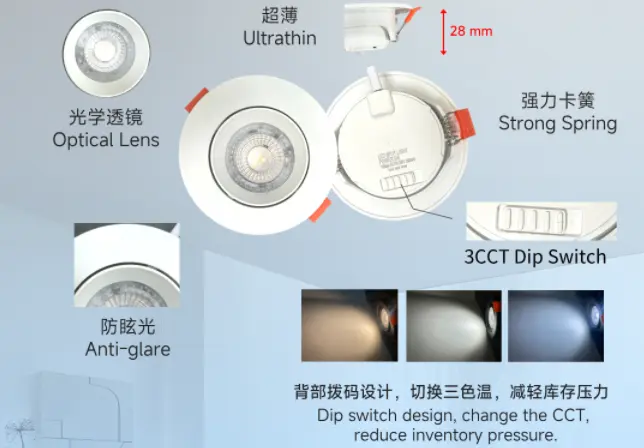
Selectable-white fixtures let you change CCT right on location, saving money and lowering the stock you need to keep.
Understanding LED Lighting Color Temperature
Kelvin Scale Overview
The Kelvin scale comes from a science idea called the black body radiator. When an ideal black body gets hot, the light it gives off changes color. It starts dark red, then moves through warm yellow and pure white. As the temperature goes up, it ends cool blue. The Kelvin (K) measures this exact temperature at the point where light is given off. That is why color temperature uses Kelvin as its unit.
LED technology works in a different way than old incandescent bulbs. It does not use heat radiation from a filament. Instead, LEDs use phosphors to copy these colors. This is why the industry calls the measurement Correlated Color Temperature, or CCT.
The scale runs from about 2000K to 6500K. For commercial and industrial projects, the useful range is 3000K to 5000K. Temperatures below 3000K feel too amber for most work environments. Values above 5000K tend to feel clinical. The three most often listed CCT values on commercial fixture spec sheets are 3500K, 4000K, and 5000K.
Commercial sweet spot: 3500K – 5000K covers 95% of projects.
Quick-Reference Color Temperature Chart
The table below links common names to Kelvin ranges. It also shows where each range fits in a commercial setting.
LED Light Color | Kelvin Range | Typical Commercial Use |
|---|---|---|
Warm White | 2200K – 3000K | Hospitality, break rooms, reception areas |
Neutral White | 3500K – 4100K | General offices, classrooms, retail |
Cool White / Daylight | 5000K – 6500K | Warehouses, manufacturing, security lighting |
Warm white copies sunset and traditional tungsten filaments. It brings out red and wood tones but can muddy blues and greens. Cool white at 4000K is the neutral point in LED technology. It boosts visual contrast without harshness. Daylight at 5000K to 6500K has a big blue spectrum spike. It gives high contrast but may cause glare indoors if not spread out. Bright white at 3500K bridges the gap between cozy and clinical.
The chart below compares suggested CCT ranges across different commercial space types.
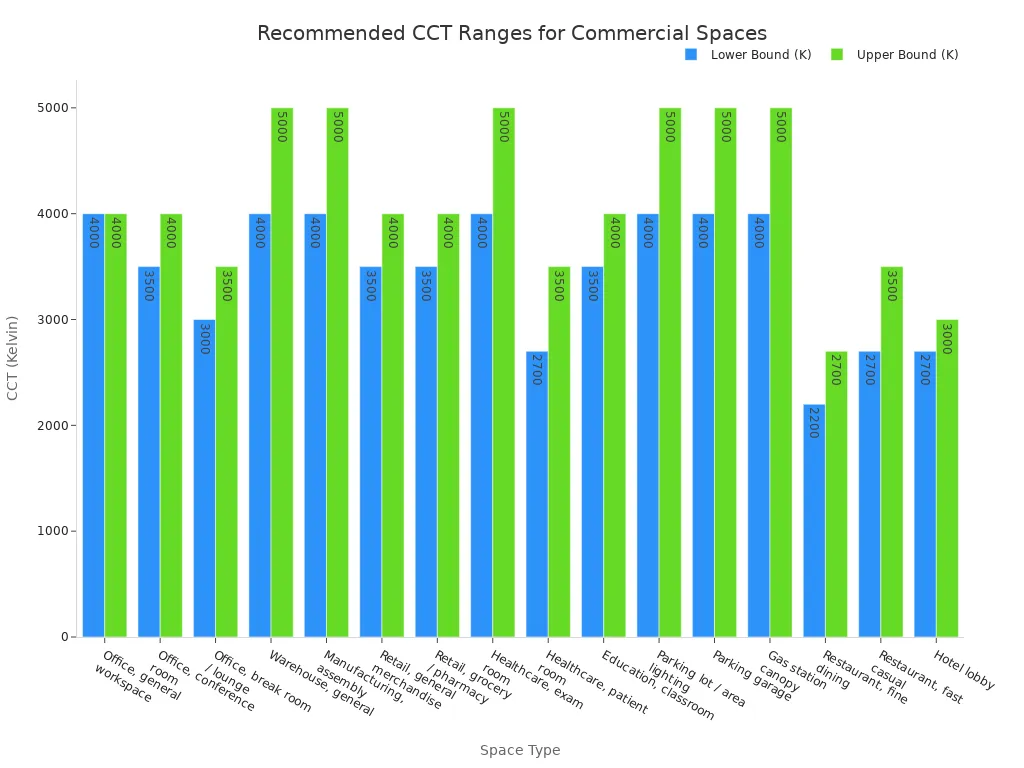
Visual comfort depends on more than just picking a number. The European standard EN 12464-1 states that lighting must support visual tasks and occupant wellbeing. The Illuminating Engineering Society publishes guidance confirming that CCT selection affects alertness, mood, and subjective environmental quality. The WELL Building Standard addresses color temperature's effect on circadian rhythms and cognitive performance. These standards support one principle: warmer light has a physiologically different effect than cooler light.
A common mistake is picking a high Kelvin temperature for every area. A 5000K daylight bulb that works well in a detailed workshop can feel sterile and harsh in an office or lobby. That choice can hurt employee focus and the customer experience. Matching CCT to the space matters more than chasing brightness alone.
Choosing CCT for Commercial Spaces

One building can hold many different jobs. Each job needs its own light color. Matching CCT to the room’s purpose is a key skill in commercial LED lighting design. A warehouse and a boutique might share a wall. They should not share a color temperature.
Office and Work Environments
Office workers spend many hours reading screens and paper. Their eyes need light that cuts down on strain. A range of 3500K to 4100K works best for general offices and classrooms. This neutral white helps focus without the harsh blue of daylight. Conference rooms often use 3500K to keep people awake but at ease during long meetings. Desk lamps at individual desks may use the same range. A desk lamp at 4000K matches well with ceiling lights at 4000K. Mixing a 3000K desk lamp with 5000K ceiling lights creates visual contrast.
Warehouses and factory floors have different needs. Workers there need to read labels, check gauges, and judge distances. A cooler 5000K to 6500K makes things sharper and easier to see. Hospitals need bright, clear light for checkups and surgeries. Liyin LED Panel Lights offer color temperatures up to 6500K. These lights work for offices, hospitals, schools, and stores. Their aluminum and plastic build helps get rid of heat. This design keeps brightness steady for a long time.
Energy use also changes with CCT. Cool white LEDs turn electricity into light more efficiently than warm white LEDs. This difference comes from how phosphors work. The table below shows the difference.
LED Color Temperature | Luminous Efficacy (lm/W) | Power Consumption for 1500 lumens (W) |
|---|---|---|
Warm White | 80 | 18.75 |
Cool White | 95 | 15.78 |
A building that switches from warm to cool white for the same brightness uses less power. That saving adds up in a big warehouse or factory. Over a full year, the power savings can be big for a large building.
Retail and Hospitality Spaces
Retail LED lighting must make products and people look good. Warm light does this well. Archlior says that 3000K is a standard starting point for fashion and boutique stores. This warmth makes products and customers look good without feeling like a hospital. Some modern brands go for 4000K for a cooler look. That temperature is at the edge of clothing store guidelines. Heritage leather goods brands may choose 2700K to show skill and warmth.
KLUŚ Design suggests warm light from 2700 to 3000K for boutiques. This range creates a cozy atmosphere. Cooler light works better for grocery stores. According to TCP Luxury Lighting, 3000K is the usual color temperature for fancy retail lights. The best pick still depends on what products are sold.
Hotel and restaurant spaces follow the same idea. Hotel lobbies, restaurants, and reception areas use 2700K to 3000K. This warm range helps guests relax. Break rooms in office buildings also do well with this warm light.
The table below gives a quick reference for common commercial spaces.
Space Type | Recommended CCT |
|---|---|
Private office | 3500K – 4100K |
Open office | 3500K – 4000K |
Warehouse | 5000K – 6500K |
Retail boutique | 2700K – 3000K |
Grocery store | 3500K – 4100K |
Hotel lobby | 2700K – 3000K |
Classroom | 3500K – 4100K |
This table lists the most common business spaces. A facility manager can use it to begin. The next step is to learn how CCT and CRI work together.
CCT vs. CRI: Key Differences
Understanding Color Rendering Index (CRI)
Color temperature and color rendering are two different measurements. CCT tells a buyer about the color of the light itself. CRI measures how well that light shows the true colors of objects it shines on. A fixture can have the perfect Kelvin value and still make products look wrong.
CCT tells you about the color of the light itself (is it warm or cool?), while CRI measures the light's ability to show the true colors of objects it illuminates.
A CRI below 80 can make fresh produce in a grocery store look old and unappealing. A high CRI light source makes sure what a customer sees is what they get. This quality is important for quality control and customer satisfaction. The table below shows how CRI ranges match up with commercial needs.
CRI Range | Quality Level | Typical Applications |
|---|---|---|
80–89 | Good | General commercial areas where pinpoint color accuracy is not the top priority (warehouses, parking garages, some offices) |
90+ | Excellent | Retail displays, art galleries, printing shops, medical examination rooms — where subtle color differences are critical |
A CRI of 80 or higher works for almost any business use. Retail displays and other color-critical spaces need 90 or higher.
How CCT and CRI Work Together
Both numbers must work as a team. A 4000K fixture with CRI 70 in a grocery store will make produce look dull and unappealing. The CCT might be right, but the color rendering is not. Buyers should always list CRI along with CCT.
Mixing CCTs in the same view creates problems too. A 4000K troffer next to a 5000K troffer in the same open office creates a visible color mismatch. That mismatch looks like an installation error. Choosing 5000K everywhere because "it's the brightest" is another trap. 5000K is not brighter than 4000K. Brightness is lumens, not Kelvin. Good LED lighting selection pairs the right CCT with a suitable CRI for each space.
Avoiding Common CCT Mistakes
"One Temperature Fits All" Trap
A facility manager might put 4000K fixtures in a whole building. This choice looks simple and even. But it makes problems in some areas. A hotel lobby at 4000K feels cold and not welcoming. Guests want warmth when they walk into a hospitality space. The same 4000K light in a warehouse loading dock feels too soft for safety checks. Workers need sharper contrast to spot dangers and read labels fast.
The opposite mistake also happens. A manager picks 3000K for every room because it feels comfortable. That warm light works well in a reception area. It fails at a quality control station where technicians check color-coded wires. Warm light changes how those colors look. A red wire may look orange under 3000K. This mismatch can cause errors. Each space has its own visual needs. One Kelvin value cannot serve them all.
Task vs. Ambient Lighting Needs
Ambient lighting sets the overall mood of a room. Task lighting helps people do specific jobs. These two layers often need different color temperatures. A retail boutique may use 3000K ambient light to create a relaxing feel. The same store needs 4000K task lighting at the cash register. Cashiers must read receipts, count bills, and check identification. Cooler light helps them do these detailed tasks more accurately.
Office spaces follow the same pattern. Overhead panels at 3500K give comfortable general light. A desk lamp at 4000K gives focused light for reading documents. This combination supports both comfort and productivity. The key is to match each layer to its purpose. Ambient light serves the room. Task light serves the work. Good LED Lighting design balances both needs without creating visual conflict.
Simple Framework for CCT Selection
Task vs. Mood Method
A facility manager can simplify CCT selection with two questions. First, what task happens in this space? Second, what mood should the space create? The answers point directly to a Kelvin range.
Task-driven spaces need cooler light. A quality control station, a warehouse aisle, or a hospital exam room demands sharp visual contrast. Workers must spot defects, read small labels, and judge colors accurately. A range of 4000K to 5000K serves these needs well. Mood-driven spaces need warmer light. A hotel lobby, a restaurant, or a boutique wants guests to feel relaxed and welcome. A range of 2700K to 3000K creates that atmosphere. The method works because it ties light color to purpose. A manager stops guessing and starts matching.
Quick Choice Checklist
A short checklist helps a buyer commit to a decision. The steps below guide the process from start to finish.
Identify the primary activity in the room.
Decide if the space needs alertness or relaxation.
Pick a Kelvin range from the recommendation table.
Check the CRI rating for color-critical tasks.
Confirm the choice with a small fixture sample.
This sequence prevents costly mistakes. A buyer who follows these steps avoids the "one temperature fits all" trap. The checklist also speeds up approval from stakeholders. A facility manager can present a clear rationale for each space. Good LED Lighting design starts with a simple framework. The right CCT transforms a room from functional to effective.
Advanced LED Lighting Options: Selectable and Tunable
Benefits of Adjustable Fixtures
Lights that are fixed in color make a buyer choose one Kelvin value before putting them in. Lights that can be chosen or adjusted get rid of that risk. One light can change between different CCTs on site. This choice saves money and cuts down on inventory. One type of light can work in an office, a store, and a break room.
Proof shows how wide this choice goes. A PAR56 light that can be changed in three ways gives three color temps, three brightness levels, and two beam angles. That makes 18 options in one light. The maker says this design works in auditoriums, theaters, churches, and event places with fewer items to store. Other models give five CCTs from 2700K to 5000K. Brightness levels go from 700 to 6000 lumens. Beam spreads include medium and wide. These picks let one light series fit different ceiling heights and moods.
Liyin LED Panel Lights give the same choice to business ceilings. The APL-PB-2508E works with recessed and surface mounting and has CCT-selectable features. Guangdong Liyinled Lighting Co., Ltd. runs its own factory and offers custom design services. Buyers can change size, color, and power from 10W to 32W. This feature fits offices and stores that need the same LED Lighting in different rooms.
Circadian Lighting Design
Tunable white lights do more than just pick a CCT. They change color temperature and brightness as the day goes on. A study from ITMO University describes a system that adapts to users' body clocks. The system helps users focus at the start of the day. It helps best work for two to three hours. After breaks, it brings users back to attention. At the end of the day, it moves toward calm. Expert Natalia Bystryantseva notes a trend in human-centered lighting design. Co-author Tatiana Bragina points out that people are indoors most of the time. So lighting must think about its effects on body rhythms and work quality.
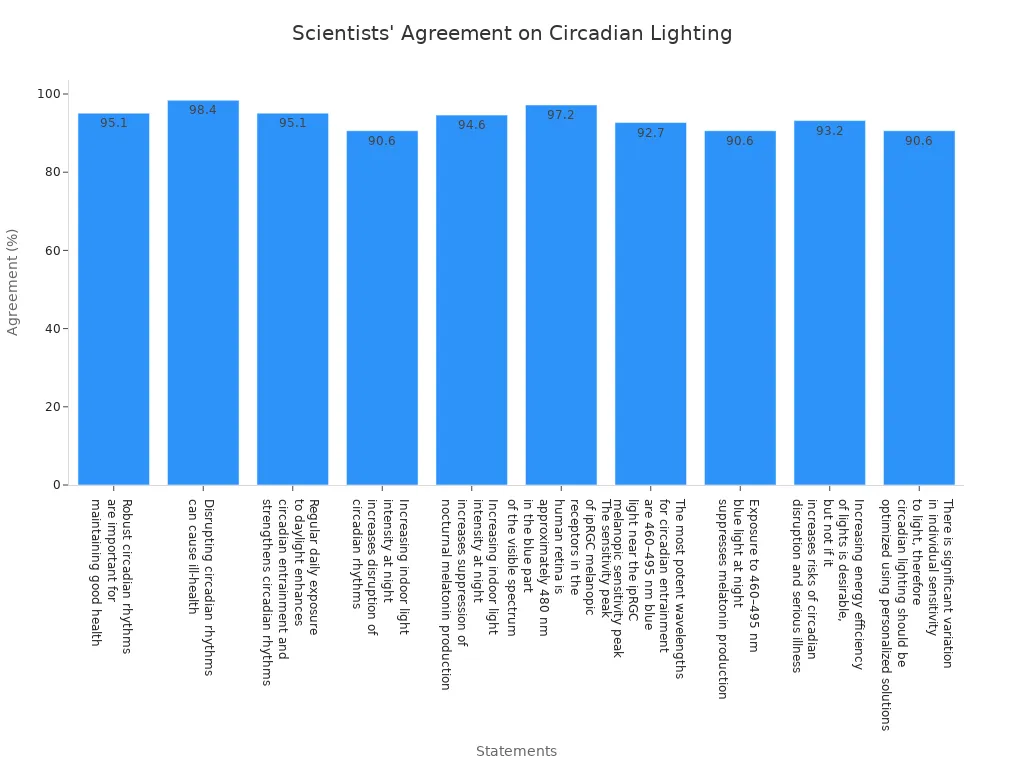
The survey results support this idea. Almost all scientists in the survey agree that strong body clocks matter for health. Most agree that breaking these rhythms can cause health problems. Regular daylight helps strengthen the body clock. Nighttime light stops the sleep hormone melatonin. The strongest wavelengths for body clocks are in the blue range near 480 nm. The researchers warn that steady bright light can cause overwork and trouble sleeping. Healthcare and school settings get the most benefit from tunable white systems. These areas need light that helps healing, learning, and rest at different times.
The right CCT changes how a commercial space looks and feels. A facility manager should match it to the task and mood, not just pick what they always use. This choice helps people work better, feel more comfortable, and see things clearly. The Task vs. Mood method is a simple way to begin. Task spaces need cooler light from 4000K to 5000K so people can focus sharply. Mood spaces need warmer light from 2700K to 3000K so people can relax. Use the recommendation table for quick help. Pick fixtures like Liyin LED Panel Lights for your next project. These LED Lighting solutions come with CCT-selectable options up to 6500K. They work well in offices, hospitals, and stores. A lighting specialist can help with complex setups and custom designs. This approach makes every room work its best.
FAQ
What color temperature works best for a general office?
A neutral white between 3500K and 4100K fits most offices. This range helps people focus on screens and paper. It does not have the harsh blue of daylight. Conference rooms often use 3500K to keep people alert but comfortable during long meetings.
Can a facility manager mix color temperatures in one building?
Yes, but each room should stay the same. A 4000K fixture next to a 5000K fixture in the same open office looks like a mistake. Match CCT to the room's purpose instead of using one value everywhere.
Does a higher Kelvin value mean brighter light?
No. Brightness comes from lumens, not Kelvin. A 5000K fixture is not brighter than a 4000K fixture with the same lumen output. Buyers should check both the CCT and the lumen rating on the spec sheet.
What CRI should a retail space use?
Retail displays and other color-critical spaces need a CRI of 90 or higher. A lower CRI can make products look dull or wrong. General commercial areas such as warehouses and parking garages work fine with a CRI of 80 or above.
Are selectable-white fixtures worth the cost?
Selectable-white fixtures let one model serve several rooms. Liyin LED Panel Lights, for example, offer CCT-selectable options up to 6500K. They come from a factory that provides OEM/ODM services, custom sizes, and wattages from 10W to 32W. This flexibility cuts inventory and installation risk.