LED Solar Light for Parking Lot and Outdoor Area: A Comprehensive Guide
Traditional grid-powered lighting gives property owners high electricity bills and costly digging for installation. An LED Solar light offers a clean alternative, delivering energy independence and sustainable operation. This solution gets rid of ongoing utility costs and needs no underground wiring. It provides reliable off-grid light that makes it safer for drivers and people walking. The guide covers functional parking lot lighting and nice-looking outdoor area lighting, like building fronts. It helps readers choose the right system for their project needs.
Key Takeaways
All-in-one solar lights go up in minutes and cost less than split systems. They don't need digging or wiring work.
Pick the right brightness and light color for safety. Use 4000K to 5000K in parking lots to help people see better and tell things apart.
Correct pole spacing and beam patterns remove dark spots and glare. Type IV fixtures work best for parking lot edges.
Solar lighting pays for itself in 3 to 5 years. It uses no electricity and needs little upkeep, saving money.
Types of LED Solar Light Systems
Picking the right system starts with knowing the two main choices you can buy. Each one fits different project needs, and your choice affects how long installation takes, how much upkeep is needed, and total costs over time.
All-in-One vs. Split-Type Configurations
All-in-one lights put the solar panel, battery, LED light, and controller into one small case. Makers build these for quick setup on existing poles or walls. A worker can put one up in 5 to 15 minutes because the system comes already wired and put together. No digging, no pulling cables, and no burying batteries are needed. This simple setup cuts labor costs a lot, especially when you have many lights.
Split-type systems place the solar panel, battery, and light as separate parts. Installers must mount the panel away from the light, connect wires between the parts, and often dig a hole to put the battery underground. This work needs skilled electricians and can take hours per light. The extra steps raise the cost to install. But split systems let you place each part where it gets the most sun, which helps in shady spots.
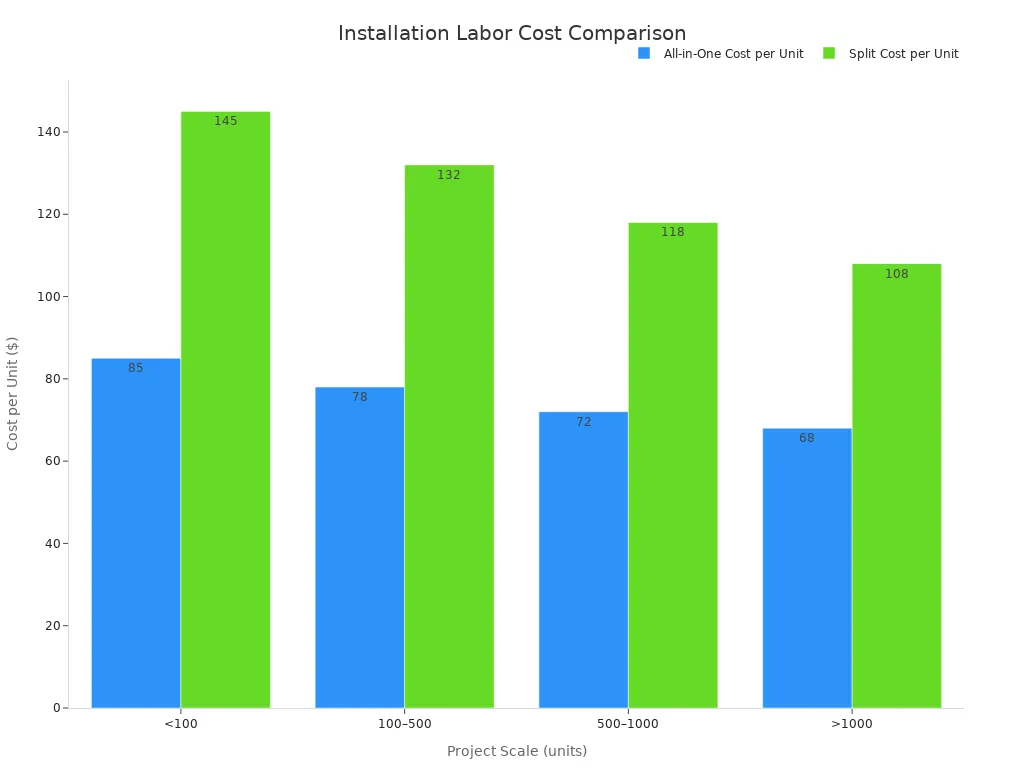
The cost difference between the two types is big. For projects with fewer than 100 lights, all-in-one installation costs about $85 per light, while split-type installation costs about $145 per light. That gap gets smaller for larger projects but stays large. Over 10 years, the labor savings from all-in-one lights can pay for more lights or upgrades.
Battery care also differs between the two types. All-in-one lights usually have a sealed battery pack that owners can swap out as one piece. Split systems may need you to access a buried battery box, which adds time and work to routine service. For property managers who want low upkeep, the all-in-one design is a clear winner.
Specialized Fixtures: Solar Wall Washers and Floodlights
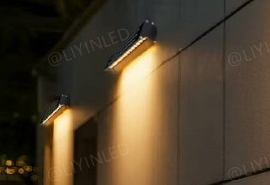
Beyond standard pole lights, special fixtures serve different purposes. Solar floodlights give bright light for large open areas like parking lots and sports fields. They mount on walls or high corners and spread light evenly over a wide area. Solar wall washers, on the other hand, focus light on vertical surfaces. They light up building fronts, perimeter walls, and architectural features, making them look good while also improving safety.
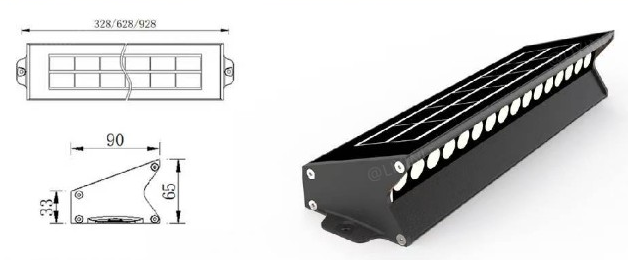
The L.I.O.N LED Solar Wall Washer Light LY-TYN-XQ01 is a good example of this special type. This light combines green energy with good looks, making it great for making cities prettier and for commercial use. Its high-efficiency solar panel charges a built-in battery during the day. A smart light control turns the LEDs on at dusk and off at dawn, needing no human help. This automation uses no electricity and cuts down on maintenance.
The LY-TYN-XQ01 has a professional optical design with high-quality LED parts. Its optical lenses let through over 98% of light, resist fog and UV rays, and offer beam angles from 10 to 60 degrees. DMX control lets you create dynamic effects like gradual changes, jumps, and color flashing for artistic style. The pure aluminum housing includes a built-in heat sink that increases cooling area by over 80%. With an IP65 rating, this LED solar light can handle harsh weather. Infrared sensors detect people moving and automatically turn the light on and off to save energy and make the battery last longer. This double use—making things look nicer and providing security light—makes the wall washer a versatile addition to any outdoor lighting plan.
Key Selection Factors for LED Solar Lights
Choosing the right LED Solar light means looking at a few key technical details. Buyers need to check brightness, color temperature, battery size, and how tough the light is. Each one affects how well it works, how safe it is, and its value over time. The L.I.O.N LY-TYN-XQ01 is a good example of high-quality performance.
Brightness (Lumens) and Color Temperature (CCT)
Lumens tell you how much visible light a fixture gives off. More lumens mean a brighter light. Parking lots need more lumens than accent walls. A commercial parking lot usually needs 5,000 or more lumens to see well. The SUNLIKE model gives 1,600 to 6,000 lumens, so it works for many commercial parking lot uses. Smaller spots, like walkways or building fronts, need fewer lumens. Accent lighting for building features may only need 1,000 to 2,000 lumens.
Different models offer different lumen outputs:
Brighta 30W: 3,929 lm, 40W: 5,288 lm
Supera 30W: 3,929 lm, 40W: 5,288 lm, 60W: 7,051 lm, 80W: 9,488 lm
Lumina 30W: 4,032 lm, 40W: 5,108 lm, 60W: 8,064 lm, 80W: 10,214 lm
Color temperature, measured in Kelvin (CCT), changes how the light looks. Lower numbers give warm yellow light. Higher numbers give cool white or blue light. For outdoor public parking lots with many cars and people walking, higher color temperatures around 4000K to 5000K help people see better and feel safer. This range gives neutral to cool white light that makes objects stand out and helps spot dangers quickly.
In outdoor public parking lots, which usually have many vehicles and lots of foot traffic, higher color temperatures around 4000K to 5000K can greatly improve visibility and safety. This range provides neutral to cool white light that boosts contrast and helps people quickly spot hazards or intruders.
CCT
Safety & Visibility Impact
Visual Comfort & Glare Impact
Best Use Case
4000K
Gives balanced contrast and depth perception; helps people see lane markings and pedestrians clearly without too much contrast.
Neutral white lowers eye strain and glare, especially on wet pavement; helps eyes adjust smoothly between lit and dark areas.
Retail centers, office parks, medical campuses, mixed-use developments where comfort and community acceptance matter most.
5000K
Raises contrast between objects and background, improving edge detection and visibility at distance; makes people feel more secure.
Higher contrast can cause glare on shiny surfaces (wet pavement, car bodies), which may bother the eyes.
Industrial sites, logistics facilities, high-security areas where maximum visibility and alertness matter more than comfort.
Battery Capacity, Solar Panel Efficiency, and Durability (IP Ratings)
Battery size decides how long the light stays on after sunset. Bigger batteries store more power for cloudy days. Solar panel efficiency affects how fast the battery charges. High-efficiency panels make more power from the same sunlight. Buyers should match battery size to local weather. Areas with lots of rain need bigger batteries.
Durability matters for outdoor setups. The IP rating shows how well the light resists dust and water. An IP65 rating gives full dust protection and handles low-pressure water jets, making it great for outdoor use. IP65-rated fixtures work well for outdoor wall lights, streetlights, and security lighting since they stand up to heavy rain and water sprays.
IP Rating | Protection Level | Real-World Application |
|---|---|---|
IP65 | Protected against low-pressure water jets (6.3mm nozzle) from any direction; completely dust-tight | Good for sheltered spots (under overhangs, tree canopies) or mild climates; handles normal rain and light sprinklers |
IP66 | Protected against powerful water jets (12.5mm nozzle) from any direction; completely dust-tight | Best for fully exposed spots (highways, open parking lots); handles driving rain, heavy storms, and high-pressure washing |
IP67 | Protected against temporary immersion in water up to 1 meter for 30 minutes; completely dust-tight | Best for low-mounted fixtures, floodplains, or coastal areas prone to flooding and storm surges; handles full submersion |
The L.I.O.N LED Solar Wall Washer Light LY-TYN-XQ01 shows top-level durability. Its pure aluminum housing has a built-in heat sink that boosts cooling area by over 80%. The IP65 rating ensures excellent waterproof and dustproof performance. With a lifespan over 50,000 hours, this LED Solar light offers long-term reliability. The factory's skill in optical design and heat control ensures steady performance in many climates. Buyers should focus on these durability features when comparing products.
Designing Your Solar Lighting Layout
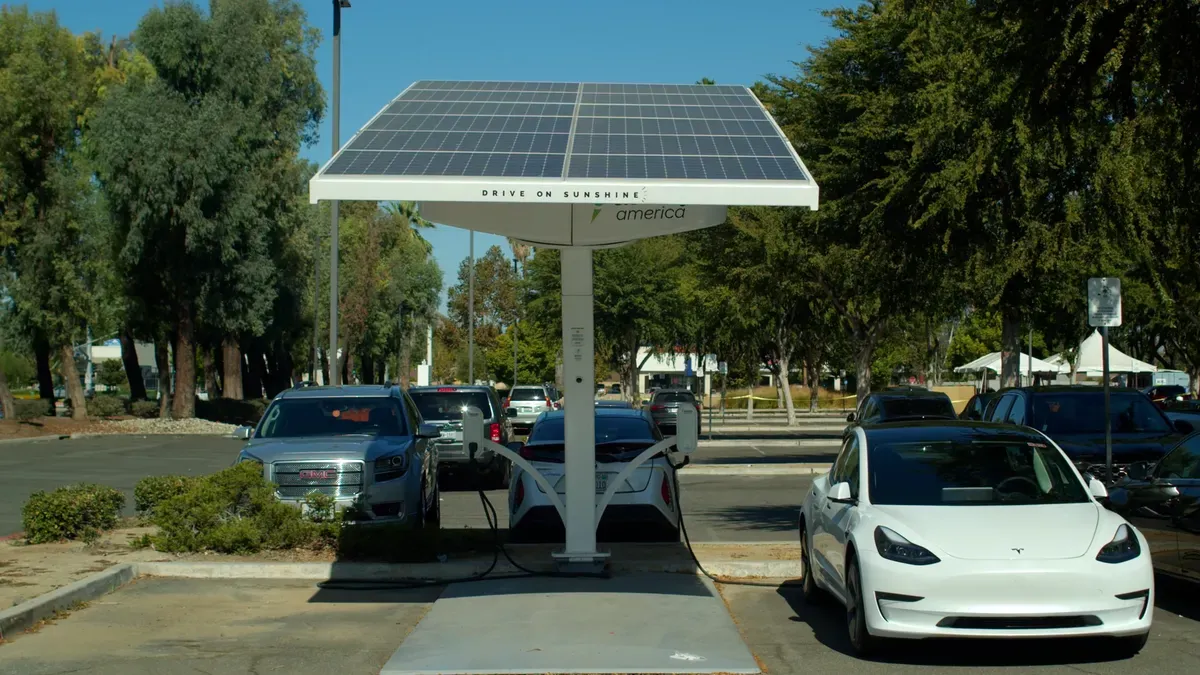
A good layout depends on pole height, spacing, and light spread. These three things decide if light falls evenly or leaves dark spots. The spacing-to-height ratio is a key design number. A common rule spaces poles at 2.5 to 3.5 times the mounting height. For example, a 20 ft pole allows spacing of 50 to 70 ft, while a 30 ft pole allows 75 to 105 ft. Bad spacing creates bright circles under poles and dark areas between them.
Pole Height, Spacing, and Light Distribution (Type III, IV, V)
The right pole height depends on the parking lot size. Medium lots at shopping centers or schools work well with 20 to 25 ft poles. Large lots at industrial sites or malls need 25 to 35 ft or taller poles. Taller poles cut shadows from tall vehicles. They also allow wider pole spacing without dropping below target light levels.
Parking Lot Size | Recommended Pole Height | Recommended Spacing (2.5–3.5x height) |
|---|---|---|
Medium (shopping centers, schools) | 20–25 ft | 50–70 ft (for 20 ft) / 62–87 ft (for 25 ft) |
Large (industrial, malls, stadiums) | 25–35 ft or taller | 75–105 ft (for 30 ft) |
Light distribution type matters just as much. Type III fixtures make a forward and wide arc pattern. They work for parking lots, roadways, and drive lanes. Type IV fixtures create a rounded forward throw. This type works best for perimeters and building exteriors. It sends light forward while cutting backlight, reducing light pollution. Type V fixtures spread light evenly in all directions. They fit large central areas like plazas and intersections. For perimeter lighting, Type IV is the best pick. It keeps light inside the property line.
Distribution Type | Pattern Shape | Primary Application | Suitability for Parking Lot Perimeter |
|---|---|---|---|
Type III | Forward & Wide Arc | Parking lots, roadways, drive lanes | Moderate – may cause light spill beyond the boundary |
Type IV | Rounded Forward Throw | Perimeters, building exteriors, wall-mounts | Best – directs light forward, minimizes backlight |
Type V | Symmetrical | Large central areas, plazas, intersections | Poor – spreads light in all directions |
Solar wall washers like the L.I.O.N LY-TYN-XQ01 give another choice for perimeter lighting. These fixtures mount on existing walls or building faces. They need no extra poles. The wall washer sends light downward along the wall surface, removing dark spots at the property edge. This method saves the cost of extra poles and wiring.
Managing Glare and Illuminance for Pedestrian and Driver Safety
Illuminance levels change by location. The IESNA guidelines give clear targets. Commercial walkways need 1.0 to 2.0 foot-candles with a 4:1 uniformity ratio. Residential walkways need 0.5 to 1.0 foot-candles. Parking areas have different needs. Open urban parking lots need 1.5 foot-candles. Open suburban lots need 1.0 foot-candles. Open rural lots need 0.5 foot-candles.
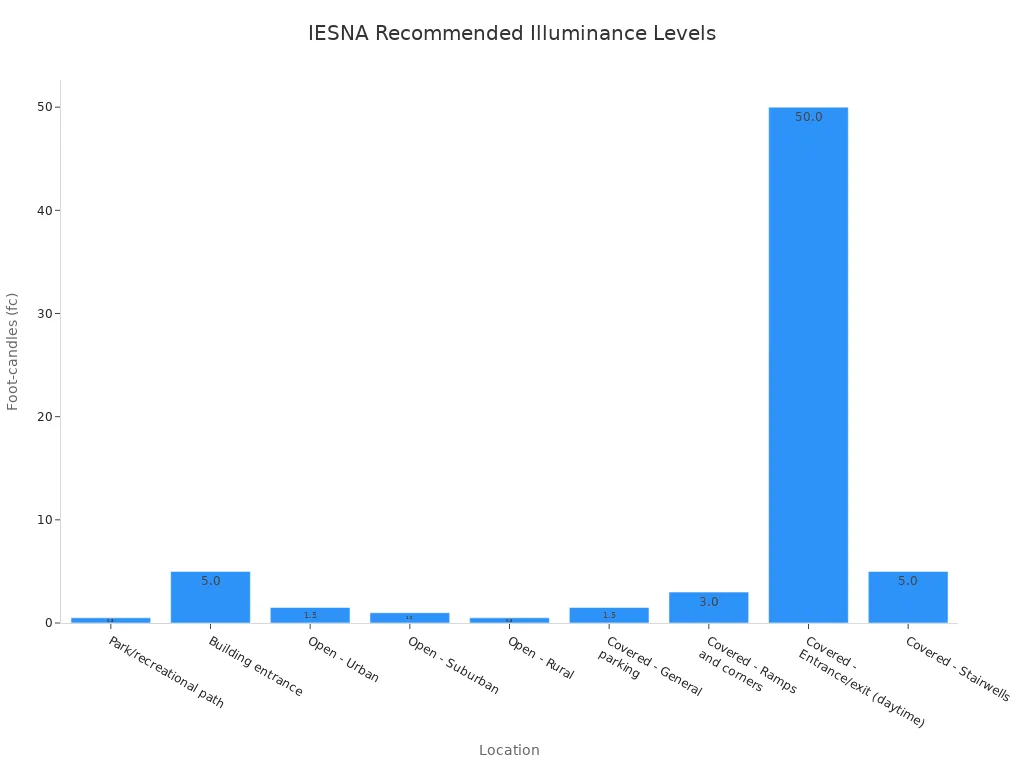
For places with higher security needs, like hospitals and transit stations, the IES suggests stricter rules. Minimum horizontal illuminance should hit 0.5 foot-candles. Minimum vertical illuminance for facial recognition should hit 0.25 foot-candles. The uniformity ratio should be tighter at 15:1 maximum-to-minimum.
Glare control matters for driver safety. Bright spots in the driver's view can hide pedestrians or obstacles. Designers should use fixtures with proper shielding and aim them away from traffic lanes. Walkway lighting needs focused beams that light the path without spilling into parking spaces. Parking space lighting needs wider beams that cover the full width of the parking bay. The L.I.O.N wall washer fixture helps here too. Its adjustable beam angles from 10 to 60 degrees let designers match the light pattern to the specific use. This LED Solar light gives precise control over where the light falls.
Installation Best Practices and Maintenance
Proper installation decides how well a solar lighting system works for years. Two things matter most: getting enough sun and following safe wiring rules. Low-voltage DC systems, like the L.I.O.N LY-TYN-XQ01, are safer than AC grid-tied systems because they carry less power. But DC arcs act differently than AC arcs. Direct current never passes through zero, so an arc can keep going and create extreme heat. A damaged cable or loose connection can start a fire. Installers must use double-insulated, UV-resistant cables made for DC voltage. Regular household cable is a serious fire risk. Professional work that follows national wiring standards is vital. Homeowners should never try DIY work on the DC side of a solar system.
Site Assessment for Optimal Sun Exposure
Before mounting any fixture, check how much sunlight the location gets all year. The Sunlight-Daylight Signature (SDS) method combines obstruction analysis with sunlight access metrics. This method uses two key measurements: Annual Probable Sunlight Hours (PASH) and Winter Probable Sunlight Hours (PWSH). These numbers show how many hours of direct sun a specific point receives. The Sunlight-Daylight Wedge (SDW) tool joins the vertical sky component with these metrics to map sunlight conditions across a site. Urban planners use this method to sort areas by their sunlight features.
Annual Probable Sunlight Hours (PASH): Measures total yearly sun exposure at a point
Winter Probable Sunlight Hours (PWSH): Measures sun exposure during the low-sun months
Sunlight-Daylight Wedge (SDW): Combines daylight and sunlight data for a complete picture
Panel angling also affects performance. Installers should tilt solar panels to match the site's latitude, usually facing true south in the Northern Hemisphere. Trees, buildings, and other obstructions can block morning or afternoon sun. A site survey should map shadows at different times of day and across seasons. Even a small shadow on one panel cell can cut power output significantly.
Routine Maintenance Checklist for Longevity
The intelligent light control switch on modern fixtures turns lights on at dusk and off at dawn automatically. This feature reduces manual work and keeps operating costs near zero. However, solar panels still need periodic cleaning. Dust, bird droppings, and pollen build up on the glass surface and block sunlight. In dry or dusty regions, panels may need cleaning every few months. In wetter climates, rain often handles the job naturally.
Clean solar panels: Use a soft cloth and water; avoid abrasive cleaners
Inspect cables and connectors: Check for cracks, corrosion, or loose fittings
Verify battery health: Confirm the battery holds a charge through the night
Check mounting hardware: Tighten bolts and brackets after storms or high winds
The L.I.O.N LY-TYN-XQ01 features a pure aluminum housing with an integrated heat dissipation structure. This design increases cooling area by over 80%, protecting internal components from heat damage. Its IP65 rating keeps out dust and low-pressure water jets. With a lifespan exceeding 50,000 hours, this LED Solar light requires minimal upkeep. Coastal installations need extra attention to connector corrosion. Owners should inspect DC connectors regularly and replace any that show signs of wear. A simple maintenance routine keeps the system running reliably for decades.
Cost Analysis and Return on Investment (ROI)
Upfront Costs vs. Long-Term Operational Savings
Buyers often think solar lighting costs more at first. The truth depends on what they include. A grid-tied system needs trenching, conduit, wiring, permits, and utility coordination. These infrastructure costs add up fast. For a typical 200ft x 200ft parking lot, trenching and underground wiring alone cost about $40 per linear foot. That means roughly $3,200 just for the connection work. A 20-fixture grid retrofit can reach $80,000 to $150,000 in trenching and electrical work before anyone mounts a single fixture.
Solar systems cost more per unit because each fixture includes a panel, battery, and controls. But they remove the entire trenching category. A 20-fixture solar installation takes a few crew days and costs 40–60% of the total installed price of a grid-tied equivalent. The all-in cost for both options often lands closer than buyers expect once infrastructure enters the equation.
Cost Factor | Solar LED | Traditional Grid-Powered |
|---|---|---|
Fixture price | Higher (integrated panel, battery, controls) | Lower (fixture only) |
Installation infrastructure | Avoids trenching, conduit, electrical materials, utility connection | Requires trenching, conduit, wiring, labor, permits, utility coordination |
Total installed cost | Competitive when avoiding major electrical work | Can be higher when infrastructure costs are included |
Best scenario | High trenching costs, hard-to-access power, phased expansion | Existing electrical infrastructure, manageable utility costs |
Specialized fixtures like the L.I.O.N LED Solar Wall Washer Light LY-TYN-XQ01 follow the same logic. The upfront price exceeds a basic floodlight. Yet the fixture needs no trenching, no wiring, and no electrician. It mounts on an existing wall and connects to nothing but sunlight. That installation savings speeds up the payback period a lot.
Incentives, Rebates, and Environmental Impact
Many property owners miss financial incentives for solar lighting. Federal and local programs offer tax credits, rebates, and grants for renewable energy installations. These programs lower the net purchase price and shorten the ROI timeline. Buyers should check with their utility provider and state energy office before budgeting.
The operational savings build over time. A solar fixture uses zero electricity for its whole lifespan. The L.I.O.N LY-TYN-XQ01 lasts over 50,000 hours with minimal maintenance. Over a 10-year period, the total cost of ownership favors solar clearly. No monthly utility bills, no cable replacements, no transformer upkeep. The environmental benefit matters too. Each solar fixture removes demand from the grid and cuts carbon emissions linked to conventional power generation. For organizations with sustainability goals, this impact supports reporting and public relations efforts.
Choosing the right system starts with matching the fixture to the application. Parking lots demand high-lumen output and wide beam patterns. Architectural features benefit from wall washers that combine aesthetics with security. Buyers should prioritize high IP ratings and sufficient battery capacity for dependable performance. A well-planned layout ensures even coverage without dark spots.
Solar lighting delivers clear financial and environmental advantages. Zero electricity consumption and minimal maintenance offset the initial investment over a decade. The total cost of ownership favors solar systems.
Property owners should conduct a site survey to assess sun exposure. Consulting with a specialist helps tailor solutions to specific needs. Specialized fixtures like the L.I.O.N wall washer provide comprehensive outdoor illumination.
Transition to sustainable lighting today. The benefits are clear, and the technology is proven.
FAQ
Where do LED solar lights work best?
LED solar lights are great for parking lots, walkways, building edges, and courtyards. They work best in places that get direct sunlight for most of the day. If the area is shady or has long cloudy seasons, you may need a bigger battery to keep the lights on all night.
How long do solar light batteries last?
Most good solar light batteries last 3 to 5 years before you need to replace them. The L.I.O.N LY-TYN-XQ01 has a sealed battery pack that you can swap out as one piece. How long the battery lasts depends on how deeply it is drained, extreme temperatures, and how often it charges.
Can solar lights handle harsh weather?
Quality lights have IP ratings that tell you how well they resist weather. An IP65 rating protects against dust and low-pressure water jets. The L.I.O.N wall washer has a pure aluminum body with better heat control, so it can handle rain, snow, and high heat.
How quickly does a solar lighting system pay for itself?
Solar systems remove the need for trenching, wiring, and monthly electric bills. A 20-fixture setup can cost 40 to 60 percent less than a grid-powered one when you include infrastructure costs. Most buyers get their money back within 3 to 5 years through savings on operations.
What maintenance do solar lights require?
Solar panels need cleaning now and then to remove dust and dirt. Owners should check cables, connectors, and mounting parts on a regular basis. The smart light control switch on modern lights turns them on at dusk and off at dawn by itself, so you do not have to manage them manually.