Sports Hall and Gym LED Lighting Solutions
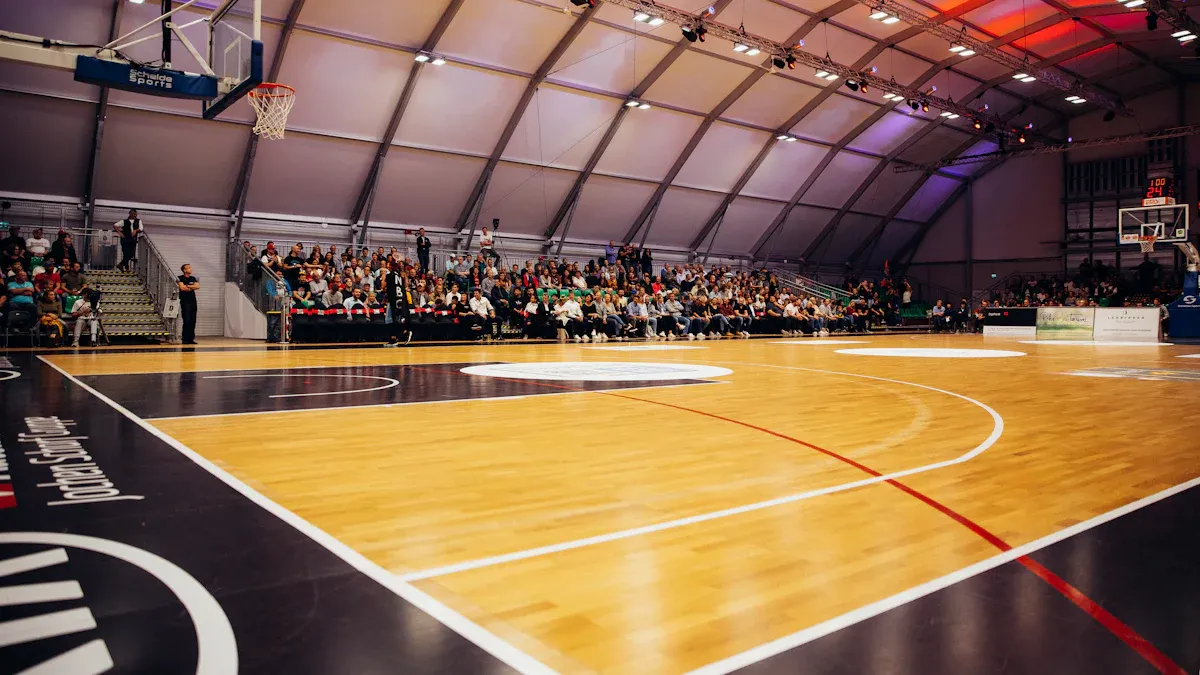
What is the best LED lighting for your sports hall or gym? The right system helps athletes play better, stops injuries, lowers energy bills, and makes the game fun for players and fans. Bad lighting does the opposite. It causes glare, shadows, and tiredness. This guide covers lighting types, gym zones, smart controls, how to choose, and common mistakes. Liyinled stands out as a trusted brand. The company offers LED Ceiling Lights and smart solutions made for sports facilities. Facility managers trust Liyinled for reliable Sports Hall and Gym LED Lighting that meets tough performance standards.
Key Takeaways
LED lighting helps athletes play better and stay safer by giving off steady, flicker-free light with high color accuracy.
LED lights use 40% to 70% less power and last a lot longer than old metal halide lights.
Different parts of a gym need different amounts of light: workout areas need 300-500 lux with cool white light, while chill-out areas need warmer tones.
Smart controls like dimmers, occupancy sensors, and app integration save energy and let managers adjust lighting for each activity.
Picking lights with the right lux levels, color temperature, and moisture ratings stops common mistakes like glare and poor uniformity.
Why LED Lighting Matters
Performance and Safety
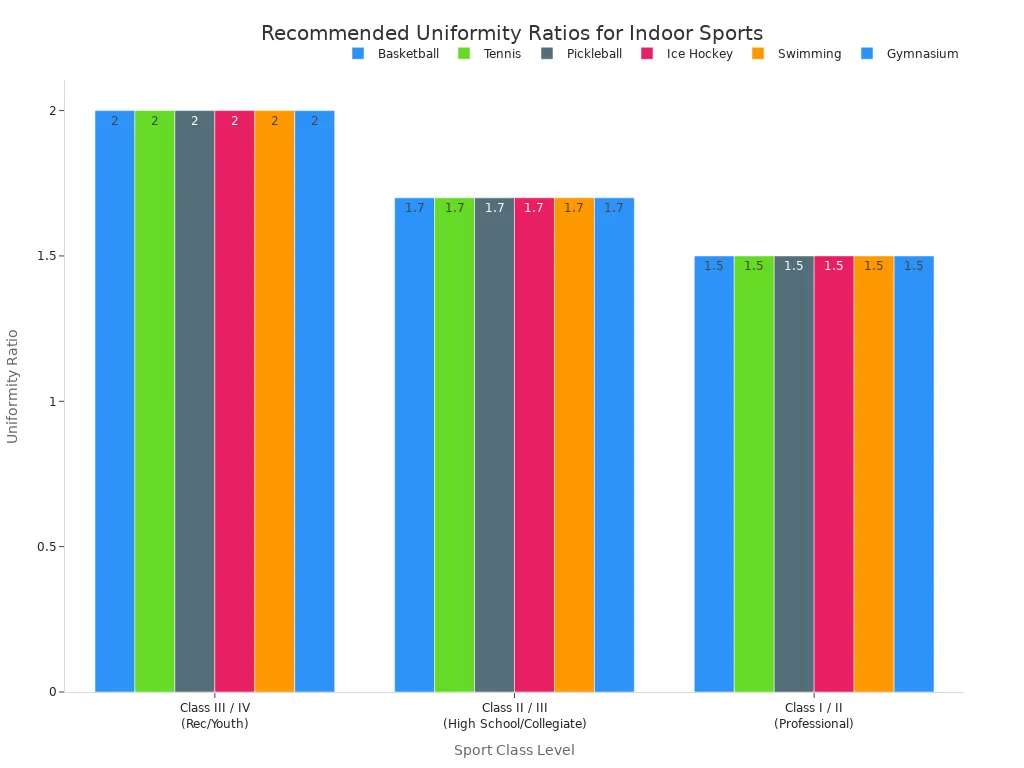
Steady, flicker-free light changes how well athletes play. Players need even light to follow fast balls and judge distances well. The Illuminating Engineering Society (IES) suggests a uniformity ratio no higher than 2:1 for most sports at recreational and youth levels. This rule keeps dark spots and bright zones from breaking up the game. Higher competition levels need even tighter ratios of 1.7:1 for high school or collegiate play and 1.5:1 for professional events.
Color rendering also matters a lot. High Color Rendering Index (CRI) lighting, with scores above 80 and many LED systems reaching near 100, lets athletes see team uniforms and the ball in natural colors. This accuracy lowers eye strain and helps players react faster. Clean light also cuts injury risk by removing shadows on the playing surface where athletes might misstep.
Energy Savings and Experience
LED technology greatly lowers electricity costs. Traditional metal halide fixtures use 250W to 1000W, while equal LED high bay fixtures draw only 100W to 240W. This gap means 40% to 70% less power usage. The US Department of Energy reports that LED lighting can cut energy consumption by up to 75% compared to common counterparts. LEDs also last 25,000 to 50,000 hours, far past metal halide lifespans of 6,000 to 15,000 hours.
Directional light emission cuts wasted light. LEDs send light right where it is needed through lenses and reflectors. Dimming capabilities let facilities adjust brightness for different activities. For spectators, high-quality Sports Hall and Gym LED Lighting improves the event experience. Even, glare-controlled light makes every play visible from all seating areas. High CRI renders colors naturally, creating a professional atmosphere that draws audiences and encourages repeat attendance.
Types of Sports Lighting
Ambient, Task, Accent, and Natural
Ambient lighting gives general light across the whole gym space. This base layer keeps people safe and helps everyone see clearly. Task lighting focuses on certain areas like weightlifting platforms, cardio machine rows, or basketball free-throw lines. Strength areas need brighter light so people can spot weights and check their form. Accent lighting highlights building features, signs, or sponsor logos. It adds visual interest without taking over the main activity.
Natural light plays a big part in modern gym design. Skylights and large windows cut the need for artificial lighting during the day. This approach saves energy and makes a nicer space. Smart lighting systems change LED output based on the daylight available. Daylight sensors dim electric lights when sunlight fills the space. These systems can cut energy use by 40–60% compared to regular lighting. General workout areas need 300–500 lux for clear visibility without glare. Sports courts need 500–750 lux for competitive play. A CRI of 80 or higher keeps colors looking natural, which matters for mirrors and equipment visibility. Dimmable LEDs and smart controls let you adjust brightness based on the activity. This flexibility improves both user experience and energy savings.
High Bay vs. Ceiling Lights
Ceiling height decides the right fixture type for a sports facility. High bay LED lights work best for ceilings 20 feet or higher. These fixtures put out 15,000–100,000 lumens with a narrow, focused beam that covers large floor areas evenly. Gymnasiums and indoor stadiums depend on high bay lights for bright, even light without glare. Liyinled, a trusted manufacturer from Guangdong, China, runs a modern factory with strict quality control systems. The company makes reliable LED solutions that meet the demands of sports environments.
For ceilings under 20 feet, standard LED ceiling lights are a practical choice. Liyinled LED Ceiling Lights (18W–70W, round or square ultra-thin designs) fit lower-ceiling gym areas, locker rooms, and reception spaces. Surface-mounted or recessed options work for different installation needs. These fixtures give a wider beam angle for even light in smaller spaces. The table below compares the two fixture types.
Attribute | High Bay LED Lights | Standard LED Ceiling Lights |
|---|---|---|
Recommended height | 20 feet or higher | Under 20 feet |
Beam distribution | Narrow, focused | Wide, even |
Lumen output | 15,000–100,000 lumens | Lower output |
Typical applications | Gymnasiums, arenas | Locker rooms, reception |
Mounting | Chains, hooks, pendants | Standard ceiling mounting |
Facility managers must match each fixture to the zone height. Picking the right type ensures proper light coverage and avoids wasted energy. This choice is a core part of any Sports Hall and Gym LED Lighting plan.
Lighting by Gym Zone
Training and Strength Areas
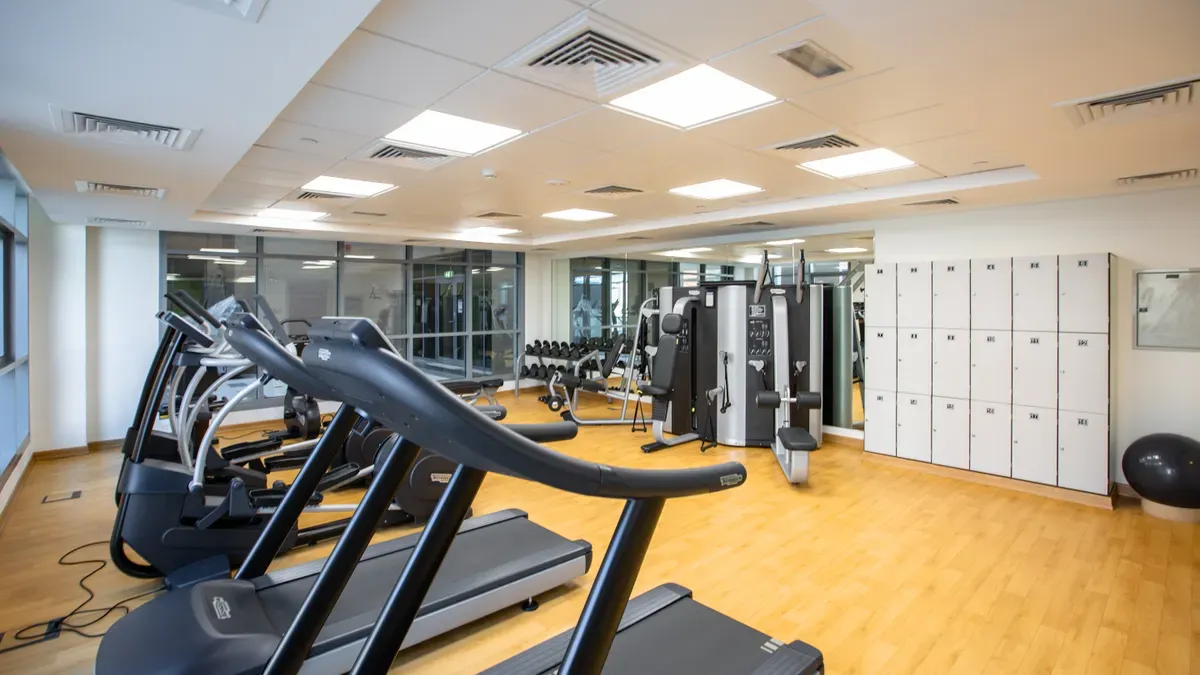
Training zones need bright, focused light. Athletes lift heavy weights, run on treadmills, and move quickly. They need clear sight to stay safe. A light level of 300–500 lux works well for most training areas. This range gives enough brightness for spotting weights and checking form without causing glare. Color temperature also plays a big role. A cool white light between 4000K and 5000K keeps athletes alert and focused. This range copies natural daylight and helps with sharp vision.
Liyinled LED Ceiling Lights have a CCT dip switch. Users can switch between warm, neutral, and cool white light. For training floors, the cool white setting gives the crisp light athletes need. Dimmable models let facility managers raise light levels at busy times and lower them when it is quiet. This flexibility saves energy and makes fixtures last longer.
Relaxation and Reception
Relaxation areas need a different plan. Stretching zones, yoga studios, and recovery rooms do better with softer, warmer light. A warm white setting around 2700K–3000K creates a calm feel. This light helps members relax after a hard workout. Reception areas also use warmer tones. A welcoming glow at the front desk makes a good first impression. It feels inviting and professional at the same time.
Liyinled dimmable models support zone control through a 2.4G remote or the Tuya Smart App. Staff can dim reception lights in the evening or brighten them during busy check-in hours. The CCT dip switch allows quick changes without new fixtures. One setting for the training floor, another for the lounge. This zone-based control is a smart part of any Sports Hall and Gym LED Lighting plan. It balances performance needs with comfort and energy savings.
Smart Lighting Solutions
Dimmers, Sensors, and Music Sync
Today's sports buildings need lighting that can change with each activity. Dimmers let staff make the light brighter or softer. A basketball game needs full brightness. A yoga class needs soft, dimmed light. This saves energy and sets the right mood for every event. Staff can pick the perfect level for each session without swapping out any fixtures.
Occupancy sensors add another smart layer. These devices notice when people come in or go out. Lights switch on by themselves when someone walks in. They switch off or dim when the room is empty. This cuts wasted power in storage rooms, hallways, and locker rooms. Liyinled sells LED ceiling lights with built-in radar sensing technology. Radar sensors pick up motion through walls and around corners better than normal infrared sensors. They react fast and cover a wide area. This tech works great for restrooms, corridors, and equipment rooms in any building. No more lights left on in empty rooms.
Music sync lighting adds a fun element to fitness classes and events. Lights flash and shift color along with the beat. This turns a normal workout into a cool experience. Spin classes, dance studios, and group fitness rooms gain a lot from this lively lighting. Facility managers can set up different scenes for different activities. A warm, slow pulse for cool-down stretches creates a calm mood. A fast, bright pattern for high-energy cardio sessions lifts motivation. These choices make the gym more appealing to members and guests.
Smart Controls for Sports Hall and Gym LED Lighting
Smart controls tie all these features together into one system. Liyinled LED ceiling lights work with the Tuya Smart App and 2.4G remote controls. These tools let managers watch over every light from one screen.
Group device control: Multi-dimensional device control including building, floor, group, area or single device. Devices respond instantly providing the ultimate control experience.
This means a facility manager can change lights across the whole sports hall without walking to each room. The system supports one-button group control for both brightness and color temperature. Any lighting nodes can be grouped together. One tap changes everything.
The table below shows how Tuya integration supports centralized control across multiple sports hall zones.
Feature | How it supports centralized control |
|---|---|
Group Control | Mobile App or PC SaaS enables on-demand control of the entire lighting scene across different zones |
Scenario Mode | Different lighting operation modes for different activities based on user needs |
Wide Control Range | Bluetooth SIG mesh networking relays signals up to eight hops with an indoor control radius of up to 240 meters |
Multiple Control Methods | Mobile app, PC SaaS, and voice control available for different scenarios |
Remote Monitoring | Wireless IoT scheme allows remote monitoring of on/off status, running status, and failure conditions of all fixtures |
The wide control range of up to 240 meters covers most sports buildings with room to spare. Managers can use the app to check fixture status from anywhere. When the basketball court is in use, lights stay bright. When the court sits empty, lights dim to save power. This smart control lowers electricity costs without hurting performance. The scenario mode lets managers save different lighting setups. One button recall for game night. Another for morning practice. Another for the cleaning crew.
Voice control adds even more convenience. Staff can speak commands to adjust lights during events. No need to find a switch or open an app when hands are full. The system works with popular voice assistants for easy setup.
These smart solutions form a complete package for modern Sports Hall and Gym LED Lighting. Dimmers, sensors, music sync, and app controls work together smoothly. This mix boosts energy efficiency, improves user experience, and makes facility management simpler. Liyinled offers all these options in its LED ceiling light lineup. Smart lighting becomes within reach for any sports facility size or budget.
Key Criteria for Sports Hall and Gym LED Lighting
Lux Levels and Color Temperature
Getting the light level right is the first step in any Sports Hall and Gym LED Lighting project. Different sports need different amounts of brightness. The table below shows standard lux ranges for common indoor activities.
Sport | Level | Horizontal Illuminance |
|---|---|---|
Basketball | Broadcast | 500–1000+ lux |
Badminton | Broadcast | 750–1000+ lux |
Basketball | Training/Recreational | 20–30 fc (about 215–323 lux) |
Basketball | High School | 30–50 fc (about 323–538 lux) |
Swimming | Training/Recreational | 20–30 fc (about 215–323 lux) |
Swimming | Collegiate | 50–75 fc (about 538–807 lux) |
Color temperature also changes how the playing area looks and feels. Most indoor sports do well with a range of 4000K–5700K. For HDTV or broadcast events, 5000K–5700K gives the best result. Indoor pools and natatoriums often use 5000K–6000K to copy daylight and ease eye strain. These values keep colors looking natural and help athletes follow fast motion.
Energy Efficiency and Budget
Energy efficiency brings savings over time. LED fixtures use much less power than older metal halide systems. Facility managers should compare wattage, lumen output, and rated life before they buy. A higher upfront price often pays back through lower electricity bills and fewer replacements.
Liyinled builds its LED Ceiling Lights with tough ABS materials and advanced SMD2835 chips. These parts give even, flicker-free light across the gym floor. The design also lasts a long time, which lowers maintenance costs over the years.
Budget planning must cover more than just the fixture price. Installation, controls, and ongoing energy use all affect the total cost of ownership. A smart plan balances upfront spending with expected ROI. Facilities that pick efficient fixtures often see payback within a few years.
Humid areas need special care. Indoor pools, locker rooms, and bathrooms put fixtures in contact with moisture. Certain square models from Liyinled carry IP54 or IP65 ratings. An IP65 rating means the fixture is dust-tight and protected against water jets from any direction. This makes it suitable for wet environments. Buyers should always check the IP rating before installing lights in humid zones.
Common Mistakes to Avoid
Making lighting errors in a sports building wastes time and money. Two common mistakes cause the most issues. Facility managers must avoid them. A good Sports Hall and Gym LED Lighting plan stops these problems.
Overlooking Glare and Uniformity
Glare makes it hard to see and bothers athletes. Shiny gym floors bounce overhead light like a mirror. Players see bright patches on the floor, not the ball or lines. This eye strain makes players react slower and cause more errors. Fans also have a bad view when glare ruins the action. Controlling glare depends on the light design. Choose fixtures with correct lenses and shields that direct light downward, not sideways.
Uneven light creates safety hazards. Dark spots on the floor hide things or changes in level. Athletes guess wrong about distance in those shadowed areas. The ball seems to vanish when it goes into a dark spot. Lighting designers try for a uniformity ratio of 2:1 or better on the playing surface. That means the brightest spot is at most two times brighter than the darkest spot. Get this by spacing lights well and picking the correct beam angle for each area. Check the system after install to make sure light is even.
Ignoring Smart Control Compatibility
A gym that buys smart controls but picks lights that don't work together wastes money. Sensors, dimmers, and app systems only work if the lights match. Some lights lack the needed drivers or communication methods. That forces a later change or swap, raising total project cost. Always check that the light system supports the control features you want for the building.
Check three main connection points before you buy. First, the lights must work with the Tuya Smart App for remote watching and group control. Second, they must be compatible with 2.4G wireless remotes for local dimming and scene changes. Third, radar sensing lets lights turn on and off automatically in hallways and storage rooms. Liyinled LED Ceiling Lights include all three integration options, which makes choosing easier. A quick compatibility check at the start stops costly surprises later.
A good Sports Hall and Gym LED Lighting plan begins with three steps. First, look at each zone and what happens there. Second, pick the right lux level and color temperature for that space. Third, add smart controls for dimming, sensing, and scheduling. These steps keep athletes safe, cut wasted energy, and make the member experience better.
Facility managers should care about safety, performance, and long-term savings more than the lowest upfront price. A specialist like Liyinled can build a plan made just for you and replies within 12 hours. Upgrade your sports hall or gym lighting today and see the difference.
FAQ
What brightness does a basketball court need?
Training and recreational basketball courts need 20-30 foot-candles, about 215-323 lux. High school games need 30-50 foot-candles, about 323-538 lux. Higher competition levels require even more brightness for clear play.
Which color temperature works best for a sports hall?
Most indoor sports perform best with 4000K to 5700K color temperature. Broadcast events need 5000K to 5700K for clear HDTV picture. Indoor pools often use 5000K to 6000K to copy daylight.
Can LED ceiling lights work with smart controls?
Yes. Liyinled LED ceiling lights work with Tuya Smart App and 2.4G remote controls. Facility managers adjust brightness and group fixtures from one screen. Radar sensors add motion-activated automation for empty rooms.
Does LED lighting work in humid gym areas?
Certain square models carry IP54 or IP65 ratings for moisture protection. IP65 fixtures suit indoor pool areas. IP54 models work for locker rooms and bathrooms. Check the IP rating before installing in wet zones.