What Height Is Suitable for Different LED High Bay Lights?
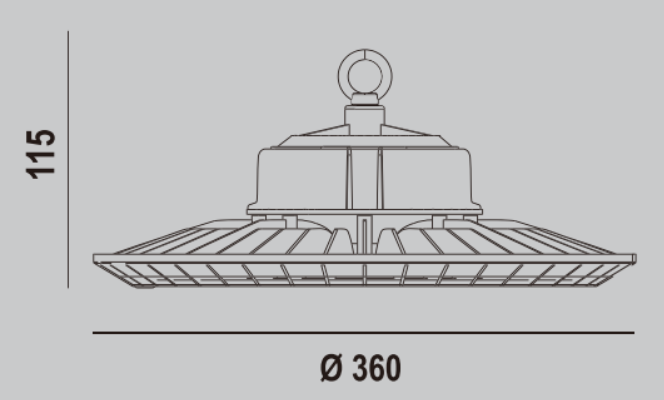
Most LED high bay lights need a minimum mounting height of 20 feet, but the best height changes with wattage and the job. Wrong installation leads to uneven light, wasted energy, and safety risks. This guide gives height tips for warehouses, gyms, and factories. Switching from metal halide to LED high bay lights cuts energy use by 50% to 70%, making the right height even more important. Liyinled offers the LED UFO High Bay Light as a reliable choice for these places. Its strong design gives even light and stays efficient at many mounting heights.
Key Takeaways
Mount LED high bay lights at least 20 feet high to avoid glare and uneven light.
Match the light's wattage to your ceiling height for proper brightness and energy savings.
Mounting too low creates hot spots; mounting too high wastes light on the ceiling.
Use the 1.5x rule: space fixtures 1.5 times the mounting height apart.
For a 15-20 foot ceiling, choose 16,000-20,000 lumens; for 25-35 feet, choose about 33,000 lumens.
Why Mounting Height Matters for LED High Bay Lights
Impact on Light Coverage and Uniformity
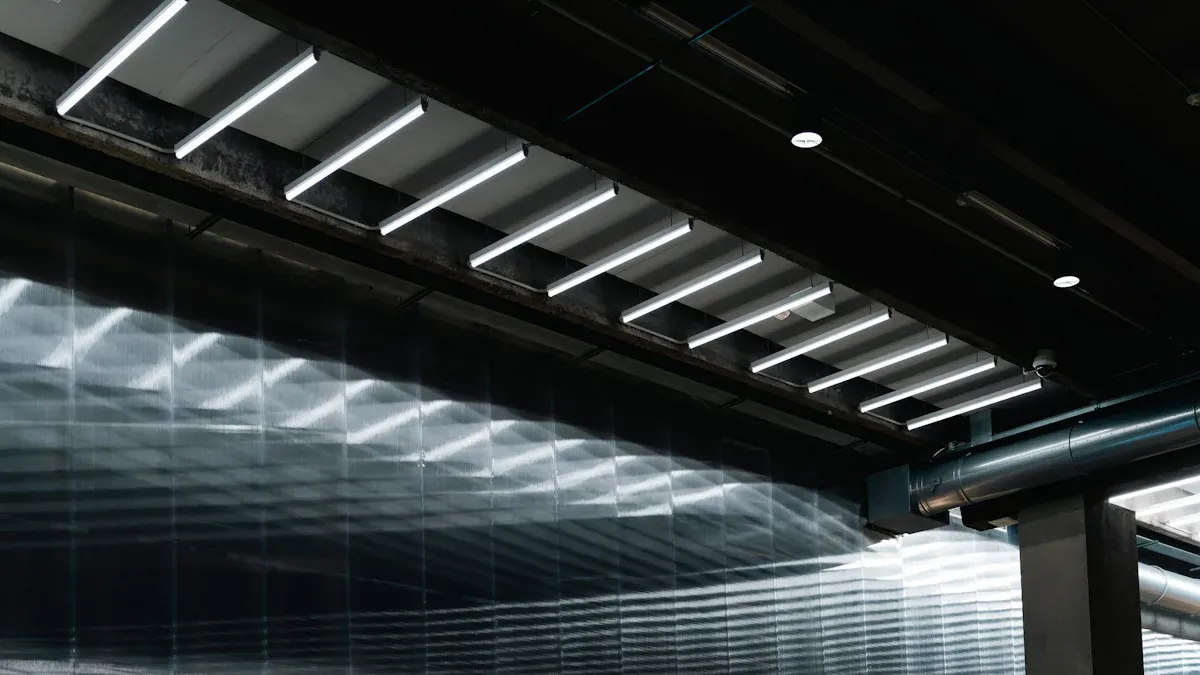
Mounting height decides how far light spreads across the floor. A fixture hung higher makes its beam wider, so the light covers more square feet. The same fixture hung lower squeezes the beam into a smaller pool of bright light. This spread sets the foot-candle level at the work surface, which is the amount of light that reaches the floor.
Uniformity also depends on this spread. Lights mounted too low make bright pools right under each fixture and dim gaps between them. Workers then walk through zones of glare and shadow that switch back and forth. Lights mounted at the right height overlap their beams, so the floor gets even light from wall to wall. Liyinled builds its LED High Bay Lights to keep steady output across a wide range of mounting heights, which helps hold uniformity in large open spaces.
The Relationship Between Height and Energy Efficiency
Height and energy use link through wasted lumens. A fixture mounted too high throws light past the work area, where it lights the ceiling or the air instead of the floor. The owner pays for those lumens but never uses them. A fixture mounted too low over-lights a small area and leaves the rest of the space dark, so the owner adds more fixtures to make up for it.
Both mistakes raise electricity costs. The right height puts the beam where the work happens, so every lumen counts. This is why a switch from metal halide to LED high bay lights cuts energy use by 50% to 70% only when the installation height fits the space. The right height turns an efficient fixture into an efficient system.
Minimum Height for LED High Bay Lights
The Standard 20-Foot Rule
Industry groups set 20 feet as the lowest height for high bay lights. The Illuminating Engineering Society (IES) provides this number. Inspectors and lighting designers follow this rule. A fixture mounted below 20 feet no longer works as a high bay. It throws light too strongly and causes glare. The beam spreads too wide at lower heights. This makes workers see bright spots and dark shadows between fixtures.
"The lowest height for high bay lights is 20 feet (about 6 meters). Below that, the fixture is not a true high bay anymore. It throws light too strongly and creates glare. This limit comes from IES (Illuminating Engineering Society) guidance. Inspectors and lighting designers follow it."
Ceilings between 12 and 20 feet need low bay lights instead. These fixtures have different optics and lower wattages. They aim light downward in a tighter pattern. A high bay fixture in a low bay space wastes energy and hurts eyes. A low bay fixture in a high bay space leaves the floor too dark. Picking the right fixture for the ceiling height is the first step in any lighting plan.
Safety and Code Compliance Considerations
Building codes and safety rules support the 20-foot limit. Electrical codes cover space around fixtures. Fire codes limit heat near sprinkler heads and ceiling materials. A fixture mounted too close to things that can burn raises fire risk. Inspectors check mounting heights during building reviews. They make sure fixtures meet the code for the space.
Worker safety also depends on correct height. Glare from a low-mounted fixture causes eye strain and errors. Poor light uniformity leads to trips and falls. OSHA (Occupational Safety and Health Administration) requires enough light in work areas. Correct mounting height helps employers meet that rule. Liyinled designs its LED High Bay Lights to follow these standards for common ceiling heights.
Matching Height to Wattage and Application
Low Bay vs. High Bay: Understanding the Difference
The ceiling height decides which fixture class fits a space. Low bay lights serve ceilings from 12 to 20 feet. High bay lights serve ceilings above 20 feet. Each class uses different optics and wattages to match its mounting range.
A low bay fixture aims light in a tighter pattern. It uses lower wattage and spreads light across a smaller area. A high bay fixture pushes light farther down with a narrower beam. This design keeps foot-candle levels strong at the floor. A buyer who picks the wrong class wastes money on either too much light or too little.
LED UFO high bay lights commonly mount between 13 and 40 feet. This wide range covers most industrial and commercial spaces. The right wattage and lumen output change with the height. A fixture that works at 15 feet will underperform at 35 feet without more power.
Height Recommendations for Warehouses and Gyms
Warehouses and gyms need different light levels for different tasks. A storage aisle needs enough light to read labels. A gym floor needs even light for players and spectators. The table below shows the lumen targets for common ceiling heights.
Ceiling Height | Recommended Lumens | Liyinled Model |
|---|---|---|
15-20 ft | 16,000-20,000 lumens | APL-UFO-02 |
25-35 ft | Approximately 33,000 lumens | APL-UFO-05, APL-UFO-06 |
A warehouse with a 15-foot ceiling needs 16,000 to 20,000 lumens per fixture. The APL-UFO-02 fits this range well. It delivers bright, even light without over-lighting the space. A gym with a 25-foot ceiling needs about 33,000 lumens per fixture. The APL-UFO-05 and APL-UFO-06 serve this range. They push light down to the floor and keep uniformity across a large area.
Warehouse aisles often have tall racks that block light. Workers need clear sight lines to pick and move goods. A fixture mounted too high leaves the rack faces dark. A fixture mounted too low creates glare on shiny surfaces. The right height balances both problems.
Gyms have similar needs but different priorities. Players track a ball against a bright background. Spectators read scoreboards and follow the action. Shadows on the court cause misplays and eye strain. Even light from wall to wall matters more than raw brightness. The right mounting height for LED High Bay Lights keeps the beam wide enough to overlap with nearby fixtures.
A 30-foot ceiling in a large warehouse may need fewer fixtures at higher output. A 20-foot ceiling in a small gym may need more fixtures at lower output. The goal stays the same: even light at the work surface with no dark gaps. Liyinled builds its LED UFO High Bay Light to hold steady output across the 13-to-40-foot range. This flexibility lets one product line serve many spaces.
Buyers should measure their ceiling height before choosing a model. They should also note the task below the fixture. A loading dock needs different light than a packing table. A basketball court needs different light than a weight room. Matching height to wattage and application gives the best result.
Consequences of Improper LED High Bay Lights Installation
Issues with Mounting Too Low: Glare and Hot Spots
A fixture hung too low causes real problems for workers. The beam packs into a small circle of harsh light. Anyone who glances up sees the bare LED source. This direct view leads to discomfort and eye strain. Over time, workers get headaches and feel tired. Output falls as people avoid looking at their work.
Hot spots appear under each fixture. The spot right below the light turns very bright. The space between fixtures stays much darker. Workers pass through bright zones and dark zones as they walk. Their eyes keep adjusting. This back-and-forth slows work and leads to mistakes. Reading a label gets hard in a warehouse. Following a ball gets hard in a gym. The uneven light also casts shadows on rack faces and work surfaces.
The Illuminating Engineering Society warns about glare at low mounts. OSHA calls for even light levels across work areas. A fixture placed below 20 feet breaks both rules. The fix means raising the light higher. Raising it spreads the beam wider across the floor. Overlap between nearby fixtures builds uniformity. Hot spots go away. Glare no longer hits eye level. Workers see clearly in all directions.
Issues with Mounting Too High: Insufficient Foot-Candles
A fixture hung too high sends light past the work surface. The beam spreads across the ceiling and upper walls. Foot-candle levels on the floor fall below what is needed. Tasks that need clear sight become impossible. Reading labels, picking parts, or checking goods all suffer from poor visibility.
Workers bring in portable lights or slow down. Both results cost the business money. The owner pays for light that misses the target. Those wasted lumens never help production. Safety takes a hit too. Dark zones hide trip hazards. Workers cannot see pallet edges or forklift positions. Accidents happen more often when the floor is poorly lit.
The fix means lowering the fixture or picking a higher wattage model. A lower mount brings the beam back to the work surface. A higher wattage pushes more light downward. Liyinled offers LED High Bay Lights in multiple wattages to match different ceiling heights. Matching the right model to the right height stops this problem.
Facility managers should check foot-candle levels after installation. A light meter shows whether the height works correctly. Adjustments after installation cost time and money. Planning the right height from the start avoids these problems completely.
Choosing the Right Height for Liyinled Lights
Using the 1.5x Rule for Spacing and Height
The 1.5x rule gives a simple method for placing fixtures. Multiply mounting height by 1.5. The result shows the distance between fixture centers. A 30-foot ceiling needs 45 feet between lights. A 20-foot ceiling needs 30 feet. This spacing stops dark gaps on the floor. It also prevents too much light overlap that wastes energy.
This rule works for fixtures that aim straight down on flat ceilings. Open warehouses and gyms match this setup well. Liyinled builds its LED High Bay Lights for this spacing guide. The beam angle from each model supports the needed overlap between fixtures. Uniform light comes from this overlap. Workers see clearly from aisle to aisle. Players track the ball without shadows.
The rule gives a fast answer for most spaces. Actual conditions may need small changes. Tall racks block light in warehouse aisles. Bright gym floors bounce light upward. A site check or a professional layout gives a better answer. The 1.5x rule works best as a starting point for planning.
Consulting Liyinled Lighting Layouts for Precision
A lighting layout places each fixture for the best result. Liyinled offers this service to buyers who want exact placement. The layout includes ceiling height, beam angle, and the work below each light. It removes all guesswork from the mounting decision. The result is even light and lower energy use.
The LED UFO High Bay Light from Liyinled supports this precision. The UFO shape lets heat leave through the aluminum housing. This keeps LEDs cool and stable at any mounting height. The fixture also works with dimming/motion sensors for extra savings. The sensors adjust light when people enter or leave the space. These controls cut waste even further.
Liyinled sits in Guangdong, China. The factory runs modern assembly lines that produce reliable lighting. Each fixture passes quality checks before shipping. The team answers questions about mounting height and spacing. Buyers can call or email for help with their space. This support makes installation easier and safer.
The 1.5x rule gives a fast starting point for spacing. A lighting layout gives the right answer for each space. Both methods lead to even light, lower costs, and a safer workplace.
A 20-foot minimum applies to most spaces, and 25 to 40 feet suits the majority of high bay applications. The ideal height still depends on wattage and the task below. A packing table needs different light than a storage aisle. Readers should measure their ceiling and speak with lighting professionals or Liyinled experts before buying. Correct installation lets LED High Bay Lights run cooler and last longer. It also keeps energy use low year after year. The right height turns a good fixture into a great lighting system.
FAQ
What is the minimum height for a high bay light?
Industry guidance sets 20 feet as the minimum for high bay fixtures. Ceilings between 12 and 20 feet need low bay lights instead. A high bay mounted lower than 20 feet creates glare and uneven light.
Can a high bay light work above 40 feet?
Most LED UFO High Bay Light models mount between 13 and 40 feet. A ceiling above 40 feet needs a higher wattage fixture or a different optic. A lighting layout gives the right answer for very tall spaces.
How does ceiling height affect wattage choice?
A 15-20 foot ceiling needs 16,000-20,000 lumens, such as the APL-UFO-02. A 25-35 foot ceiling needs about 33,000 lumens, such as the APL-UFO-05 or APL-UFO-06. Matching wattage to height keeps foot-candle levels steady at the floor.
What is the 1.5x rule for high bay spacing?
Multiply the mounting height by 1.5 to find the distance between fixture centers. A 30-foot ceiling needs 45 feet between lights. This spacing prevents dark gaps and wasted overlap.
Where does Liyinled manufacture its high bay lights?
Liyinled runs its factory in Guangdong, China. The plant uses modern assembly lines and checks each unit before shipping. Buyers can contact the team for help with mounting height, spacing, and product selection.