UFO High Bay Lights vs Linear LED High Bays for Warehouse Lighting
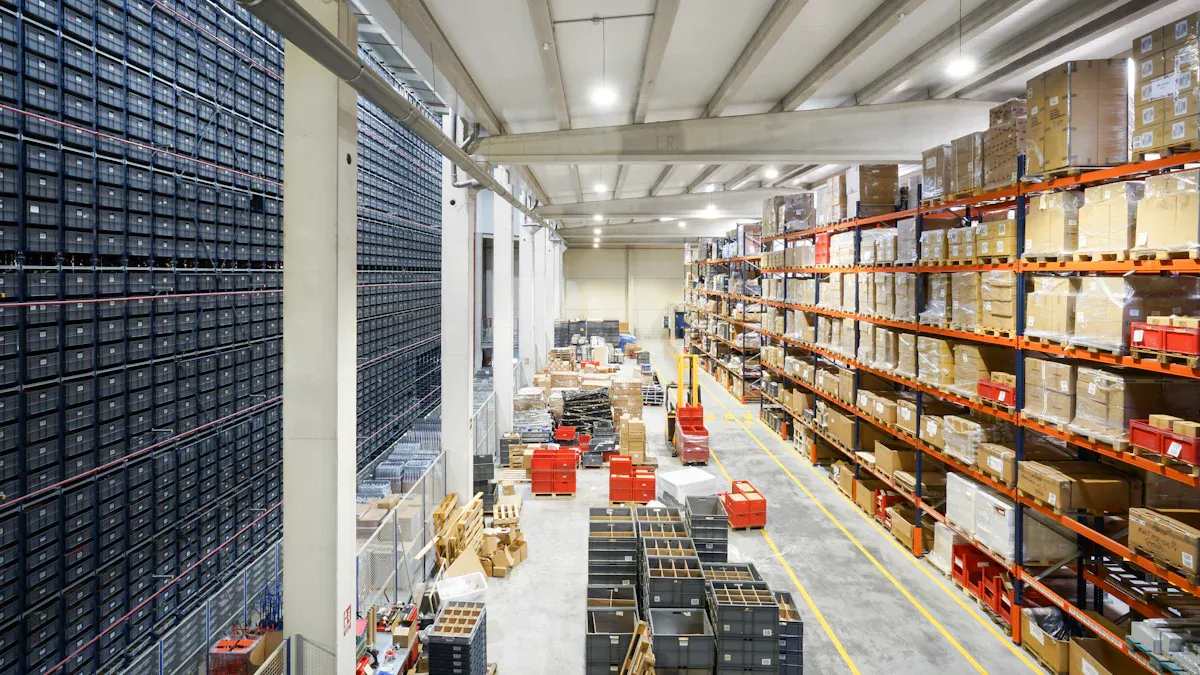
Warehouse lighting choices start with the layout, and the decision often comes down to UFO High vs Linear LED High. UFO high bay lights have a round shape that spreads light over a wide area, making them great for open spaces. Linear high bays use a long shape to light up narrow aisles and rows of shelves evenly. This guide compares how they spread light, how efficient they are, and what it takes to install them. Readers will find out which light fits their ceiling height and work needs. Both options save a lot of energy with LED technology. The right pick depends on measuring your space and knowing how each light pattern works. This article gives simple steps to help you choose wisely.
Key Takeaways
UFO high bays spread light in a round pattern. They suit open spaces with tall ceilings.
Linear high bays spread light in a rectangle. They fit narrow aisles and racking rows.
Choose UFO for ceilings above 35 feet. Choose linear for ceilings between 15 and 35 feet.
Both types save 50-70% energy compared to old lights. They also last longer.
Measure your space and consult experts. This ensures you pick the right light and avoid waste.
Defining UFO and Linear High Bays
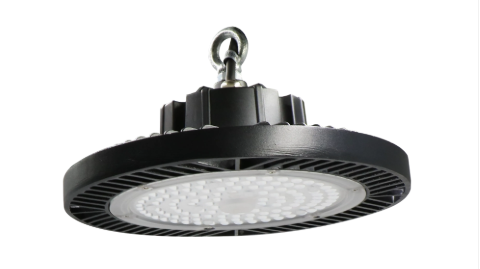
What is a UFO High Bay Light?
A UFO high bay light is named for its round, disc-shaped body that looks like a flying saucer. This small design takes up little space overhead, so it is a common pick for warehouses with tall ceilings. The light usually comes with beam angles of 90° or 120°, which controls how far the light spreads on the floor below. A 120° beam is good for open areas, while a 90° beam fits taller setups where light must travel farther down.
Several UFO models offer different wattage and lumen choices, so managers can match brightness to their ceiling height. The single-point mounting uses a hook or pendant, which makes setup easier and needs less structural support than longer fixtures.
Attribute | UFO High Bay | Linear High Bay |
|---|---|---|
Shape | Circular / Disc-shaped | Rectangular / Tube-style |
Size | Compact, minimal footprint | 2ft and 4ft configurations |
Mounting | Single-point hook or pendant | Dual-point V-hook or surface mount |
What is a Linear High Bay Light?
A linear high bay light has a long, rectangular body that sends light in a focused, straight pattern. This shape fits narrow aisles and rack rows where even lighting matters more than wide spread. The fixture comes in standard 2-foot and 4-foot lengths, with newer compact versions for tighter spots.
Installation differs from UFOs because linear lights mount in rows using V-hooks, chains, or direct ceiling attachment. This dual-point system spreads weight across two spots, which works well for long shelf runs. The rectangular beam cuts down shadows between racks, helping workers see items clearly at lower levels. For spaces with medium ceilings between 15 and 25 feet, linear high bays give steady light without the bright spots that round fixtures can cause in tight areas.
UFO High vs Linear LED High: Key Differences
Shape and Light Distribution
The main difference between these two lights is how they spread light. A UFO high bay gives off a round, even beam that fans out like a cone. A linear high bay gives off a long, rectangle-shaped beam that runs along the fixture. This key difference affects where you place them and how much area they cover.
The choice between UFO High vs Linear LED High starts with beam shape. A round beam works best for open floors where one light needs to reach all corners. A rectangle beam works best for narrow aisles where you want even light along a row of shelves. The beam shape also controls where shadows appear. A UFO light makes a wide circle of light with soft edges. A linear light makes a rectangle of light that fits the aisle width.
Feature | UFO High Bay | Linear High Bay |
|---|---|---|
Light Distribution | Focused, directional beam control | Wide, even rectangular distribution |
Typical Mounting Height | 20-50+ ft (tall, harsh environments) | 15-35 ft (mid-height, rectangular spaces) |
Uniformity | Good but can create hot spots if spacing is not optimized | Excellent across longer rows and broader floor plans |
Visual Comfort | Can produce brighter hot spots at lower heights | Better glare control and softer distribution |
Best Fit for Warehouse Layouts | Open bulk storage, tall ceilings, impact-prone zones | Aisles, rectangular layouts, precision assembly lines, task areas |
The table shows that UFO fixtures send a strong beam straight down. This makes them good for tall ceilings where light must reach the floor. Linear fixtures give a softer, more even spread. This cuts down glare for workers moving through aisles. The choice of UFO High vs Linear LED High depends on whether the space needs a focused beam or a broad, even wash.
Visual comfort also differs between the two types. A UFO light at a lower height can make a bright spot right under the fixture. This hot spot can bother workers who look up. A linear light spreads light over a longer area. This lowers the contrast between bright and dark zones. Workers feel less eye strain when moving through the space.
Mounting Height and Coverage Area
Mounting height changes how much area one fixture can cover. UFO high bays work best in warehouses with ceilings between 20 and 40 feet. At these heights, the round beam spreads out to a wide area on the floor. A single UFO fixture can cover a large open space, so you need fewer lights. For example, a UFO light with a 120° beam angle at 30 feet can cover a wide area on the floor.
Linear high bays suit medium-height ceilings between 15 and 25 feet. At these heights, the long beam gives even light along rack rows without bright spots or dark shadows. The rectangle shape matches narrow aisles, so workers see items clearly on both sides of the shelf. A linear fixture at 20 feet can light up a row of racks along its length.
Coverage area changes with height based on the inverse square law. If the mounting distance doubles, light drops to about one-quarter of the original value. This means a fixture at 40 feet needs a narrower beam to keep intensity on the floor. A fixture at 20 feet can use a wider beam to cover more area. UFO fixtures usually use medium or narrow beams for tall setups. Linear fixtures use wide beams for lower heights.
Mounting height also affects how far apart you place fixtures. For UFO lights in a 30-foot ceiling, spacing depends on the specific model's lumen output and beam angle. For linear lights in a 20-foot ceiling, spacing is typically closer along the aisle. The exact numbers depend on the lumen output and beam angle of the specific model. UFO models are available with both 90° and 120° beam angles to match different height needs. A 90° beam works well for ceilings above 35 feet where light must travel farther. A 120° beam suits ceilings between 20 and 35 feet where a wider spread helps.
The number of fixtures per square foot changes with the choice. A warehouse with 30-foot ceilings might need fewer UFO fixtures than linear fixtures to cover the same open area. However, in a narrow aisle layout, linear fixtures give better uniformity with fewer units because each fixture matches the row shape. The total cost of the system depends on fixture count, installation labor, and energy use.
Light Distribution and Visual Comfort
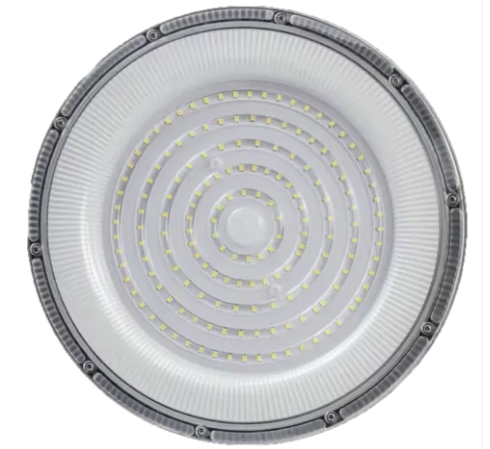
Symmetrical Spread for Open Spaces
UFO high bay lights make a round, even beam that spreads out from one point. This shape works well on open warehouse floors where people move around freely. The wide 120° beam gives broad, even light across the space. Special TIR (Total Internal Reflection) lenses or diffusers help create this wide spread.
LED UFO high bay lights use special TIR lenses or diffusers to make wide beam angles (120°+) that cover 200–300 square feet per fixture (at 10-meter ceilings). Their 360° optimized light spread makes sure every corner of the space is well-lit, so you need fewer fixtures and workers can be more productive.
This round spread eliminates dark spots between lights. Workers see the same brightness across the floor, which helps their eyes feel less tired during long shifts. The round shape also matches open storage areas where pallets sit in rows without tall racks blocking light.
But point-source lights can cause glare in some cases. When forklift drivers look toward a UFO light, the bright spot can bother their eyes. Anti-glare optical systems help fix this problem. Industry standards suggest a UGR (Unified Glare Rating) below 22 and light uniformity of at least 0.5 for spaces where forklifts run. Many modern UFO lights have reflectors or diffusers to spread light more evenly and reduce harsh contrast.
Fixture Type | Visual Comfort Impact | Application Context |
|---|---|---|
UFO High Bays | Good for open spaces; beam angle 90° or 120° gives wide coverage | General warehouses, distribution centers |
Linear High Bays | Directional light spread; works better in racking aisles | Medium-height racking aisles, spare-parts warehouses |
Uniform Illumination for Aisles
Linear high bay lights cast a long, rectangle-shaped beam that follows the shape of narrow aisles. This long shape matches the layout of racking systems where workers need to see both the floor and shelf labels clearly. The rectangle form directs light along the aisle's length, cutting down shadows that form between tall shelves.
Rectangular form factor: The linear high bay's shape sends light along the aisle's length, matching the layout of racking systems where workers need to see both floor and shelf labels.
Linkable design: Linear high bays can be connected end to end, making a continuous run of light above each aisle, which is described as the cleanest and most uniform approach for a racked warehouse.
Linear LED fixtures cast a wide, even light that can reach into narrow areas, making sure every detail is visible.
This continuous light run gets rid of the alternating bright and dark zones that point-source lights create in tight spaces. Workers moving through aisles see less glare because the light spreads across a longer surface instead of being in one spot. The diffused nature of linear lighting reduces harsh shadows, improving visual comfort and safety for workers who move through racking rows every day.
Efficiency and Lifespan
Lumens per Watt and Energy Savings
Both UFO and linear LED high bays use LED technology to turn electricity into light very efficiently. Older warehouse lights, like metal halide or fluorescent ones, waste a lot of energy as heat. LED fixtures make more light from each watt of power they use. This difference leads to big energy savings over the life of the lighting system.
The exact efficiency changes by model and wattage. UFO high bay lights support 0-10V dimming, allowing operators to lower brightness during slow times. This cuts energy use even more while still giving enough light when needed. Linear high bays also work well, though their longer shape may need more fixtures to light the same open space. The total energy savings compared to old lighting are significant, depending on setup and how the lights are used. Both types benefit from the natural efficiency of LED chips, which turn most input power into visible light instead of heat.
Heat Dissipation and Durability
Managing heat is key for LED lifespan. When LED chips get too hot, their light output drops and their useful life gets shorter. UFO high bay lights solve this problem with a strong aluminum alloy body. The body is made from ADC12 die-cast aluminum. This material conducts heat well and stays sturdy. It pulls heat away from the LED chips and moves it to the cooling fins.
The design also has a chimney airflow system. This system uses natural airflow. Air moves up and down across the fins without any fans or forced cooling. The result is a fixture that stays cooler and lasts much longer. Lab tests show that the UFO high bay light reaches L90 70,000 hours. This means it keeps 90% of its original brightness after 70,000 hours of use. At L80, the fixture lasts 152,000 hours. At L70, it reaches 244,000 hours under normal conditions with a 25°C room temperature. These numbers far exceed the common 50,000-hour standard. For a warehouse running lights 12 hours a day, 365 days a year, this means many years of reliable service without replacement. Linear high bays also use heat sinks to manage heat, but their longer shape may affect thermal management differently. The better heat control of the UFO shape leads to longer life and lower maintenance costs over time.
Installation and Mounting
Ceiling Height and Mounting Accessories
UFO high bay lights are easy to install. The hook mount is the simplest way. Workers hang the light from existing hooks. The pendant mount uses chains or conduit to place the light exactly where needed. The surface mount uses a U-bracket to attach the light right to the ceiling. Linear high bay lights use different methods. Chain mounts hang the light. Surface mounts attach it directly. Recessed mounts fit the light into the ceiling.
Fixture Type | Installation Options |
|---|---|
UFO High Bay | Hook, pendant, surface |
Linear High Bay | Chain, surface, recessed |
The aluminum alloy shell helps dissipate heat. The design makes it easy to set up with standard mounting hooks. Most places can install the lights without making big changes to the building.
Wiring and Retrofit Considerations
Switching from old high bay lights to LED lights needs careful planning. Workers must check that the circuit can handle the new LED lights. Most UFO high bays work on 120-277V. The team must make sure the voltage matches local rules and that the circuit is not overloaded.
There are three ways to upgrade to LED high bays. Plug-and-play LED bulbs keep the old ballast. They work best with a ballast that is three to four years old. The cost to buy them is low, between 3 and 20 dollars. But the lights do not last as long because the old ballast can break. Ballast bypass removes the ballast and connects the socket straight to line voltage. This method stops the ballast from wasting power. It needs careful wiring. Full fixture replacement swaps the whole light for a new LED high bay. This is best when the old lights are over ten years old. The new light has no ballast. It gives a faster return on investment with rebates. Other options include 0-10V dimming and motion sensors. A professional electrician should do the installation.
After wiring, the team does a safety check. They tighten all connections. They make sure the light is secure. They test the light. A smartphone camera can show flickering or banding, which may mean wiring problems. UFO high bay models have built-in drivers that support 0-10V dimming.
Application Scenarios
Best Uses for UFO High Bays
UFO high bay lights work best in open spaces with tall ceilings. Warehouses with wide open bays, manufacturing plants, and distribution centers gain from the round, 120-degree beam. This beam spreads light evenly over large floor areas. A single fixture can light up a big space. This cuts down the number of lights needed.
Large open indoor spaces with high ceilings also benefit from UFO fixtures. The compact, round design hangs easily with a single hook. The wide beam gets rid of dark corners. Some UFO models have reflectors or diffusers to adjust light distribution.
Fixture Type | Common Applications |
|---|---|
UFO High Bay | Open warehouse bays, tall ceilings, impact-prone zones |
Linear High Bay | Aisles, rectangular layouts, precision assembly lines, task areas |
Best Uses for Linear High Bays
Linear high bay lights shine in narrow aisles and racking rows. The rectangular beam follows the shape of the aisle. It sends light evenly along the length of the shelves. This cuts down shadows on vertical surfaces. It helps workers read labels and spot products at lower levels. Forklift operators also see better between tall racks.
Pick and pack stations and production lines work well with linear fixtures. These work areas need steady light along a set path. The long beam matches the workflow. It gives steady light without bright spots or dark gaps. Medium-height facilities with ceilings between 15 and 35 feet find linear high bays very useful. At these heights, the rectangular beam covers the aisle width without wasting light on rack tops.
Storage and fulfillment zones with tall pallet racks also gain from linear lighting. The fixtures can be mounted at higher heights in some setups. Motion sensors can pair with dimming controls to cut energy use in low-activity areas. Both fixture types are available from various manufacturers. Customization options for optics, wattage, and mounting are common. Photometric analysis helps avoid over-lighting or under-lighting racking systems.
Cost Comparison
Initial Investment and Rebates
The upfront cost between the two types can vary, but the total number of fixtures needed often matters more. A UFO high bay with a 120° beam can cover a wide area, potentially reducing the number of fixtures needed in open layouts. Utility rebates may be available for LED upgrades, but specific amounts depend on the utility.
Long-Term Maintenance and ROI
Long-term costs favor the fixture that lasts longer and uses less power. UFO high bay models with a premium aluminum alloy housing and chimney airflow design achieve L90 at 70,000 hours and L70 at 244,000 hours under normal conditions. This extended lifespan reduces maintenance. Both fixture types use LED technology, which significantly cuts energy use compared to older lighting. Dimming features like 0-10V allow operators to lower brightness during slow periods, further reducing energy costs. Proper photometric analysis helps prevent over-lighting or under-lighting, saving on equipment and electricity.
Making the Right Choice
Evaluating Your Warehouse Layout
The choice between UFO High vs Linear LED High starts with a simple walk through the building. A manager should check three things first: ceiling height, aisle width, and the work done below. These three numbers point to the right light type better than anything else.
Start with a checklist before comparing products:
Ceiling height
Rack arrangement
Aisle width
Required lux level
Beam angle
Mounting position
Glare
Uniformity
Ceiling height sets the first filter. UFO fixtures work best at 20 to 50 feet or more, where their strong throw distance pushes light down to the floor. Linear fixtures suit 15 to 35 feet, making them the better pick for mid-height spaces. A warehouse with ceilings above 35 feet should lean toward UFO. A facility under 35 feet should consider linear.
Aisle width and layout come next. Narrow, long aisles between tall racks favor linear fixtures because the rectangular beam follows the row shape. Open bulk storage areas favor UFO fixtures, where the round beam covers wide zones without creating hot spots. The table below summarizes the key trade-offs.
Decision Factor | UFO High Bay | Linear High Bay |
|---|---|---|
Ceiling Height | Best for 20-50+ ft | Best for 15-35 ft |
Aisle Width | Focused beam; may create hot spots in narrow aisles | Wide, even distribution along long rows |
Task Requirements | Rugged, impact-resistant for harsh zones | Better glare control for precision tasks |
Uniformity | Good with careful spacing | Excellent across broader floor plans |
Visual Comfort | Can produce hot spots at lower heights | Softer distribution, less glare |
Task requirements also matter. Precision assembly lines, inspection stations, and picking areas need uniform light with low glare, so linear fixtures work best there. Loading docks and machine shops need rugged fixtures, so UFO lights fit those zones. Many warehouses use both types by zone. Open staging areas get UFO fixtures, while conveyors and pick lanes get linear units.
Consulting with Lighting Experts
After measuring the space, the next step is a professional photometric analysis. A lighting specialist uses software to model the exact fixture placement, beam angles, and expected foot-candle levels across the floor. This analysis prevents over-lighting or under-lighting, which saves money on both equipment and electricity.
Many manufacturers produce both UFO and linear high bay fixtures and offer customization options for wattage, color temperature, or housing colors. Engineers can work directly with clients to adjust optics and mounting accessories for specific ceiling heights and aisle widths.
A lighting expert can also help with rebate paperwork. Many utility companies require photometric data and product specifications to approve LED upgrade incentives.
The final choice comes down to the layout. Tall, harsh, or impact-prone spaces favor UFO fixtures. Rectangular, aisle-based, or task-precision spaces favor linear fixtures. A warehouse manager who measures carefully and consults with a specialist will select the right mix. For tailored guidance, consult a lighting specialist to request a lighting layout consultation.
Choose UFO high bays for open, high-ceiling areas, and linear high bays for narrow aisles and racking systems. This decision between UFO High vs Linear LED High hinges on layout and light distribution needs. Both options deliver strong energy savings through LED technology. Managers should measure ceiling height, aisle width, and task requirements before purchasing. Many manufacturers offer both fixture types with customization options. Photometric analysis helps prevent over-lighting or under-lighting. Real projects show this approach reduces total fixture counts while improving illumination quality.
FAQ
Can UFO high bay lights dim to save energy?
Yes, many UFO high bay models support 0-10V dimming, allowing operators to lower brightness during slow times. This reduces energy costs while keeping the space safe.
How long do LED high bay lights last?
UFO high bay lights keep 90% brightness after 70,000 hours. That is called L90. If lights run 12 hours each day, they give many years of dependable service.
Can a warehouse combine both UFO and linear fixtures?
Yes, many warehouses mix both types by area. Open staging zones use UFO fixtures. Conveyor lanes and pick aisles use linear units. This setup spreads light well and cuts costs.
Does Liyinled manufacture both fixture types?
Yes, many manufacturers produce both UFO and linear high bays and offer OEM and ODM services. Clients can ask for custom wattage, color temperature, or housing colors.
What customization options does Liyinled offer?
Many manufacturers adjust optics, wattage, and mounting parts. Photometric analysis helps place UFO fixtures over open areas and linear fixtures above conveyor lanes for optimal results.